
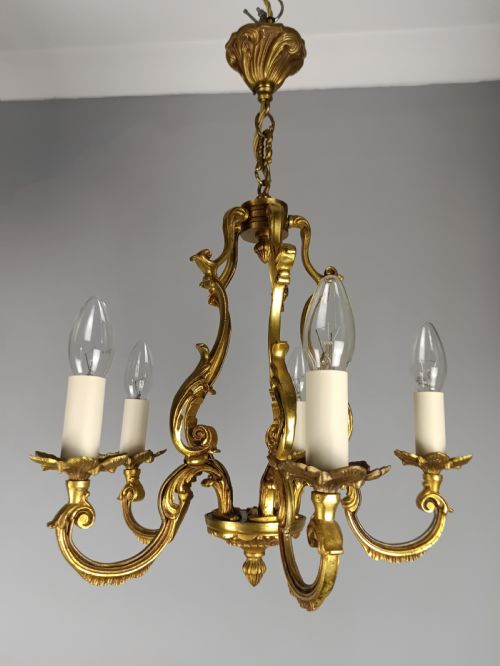
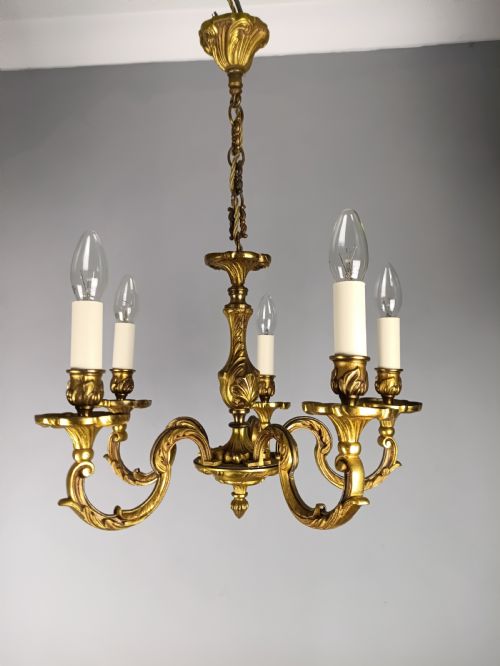
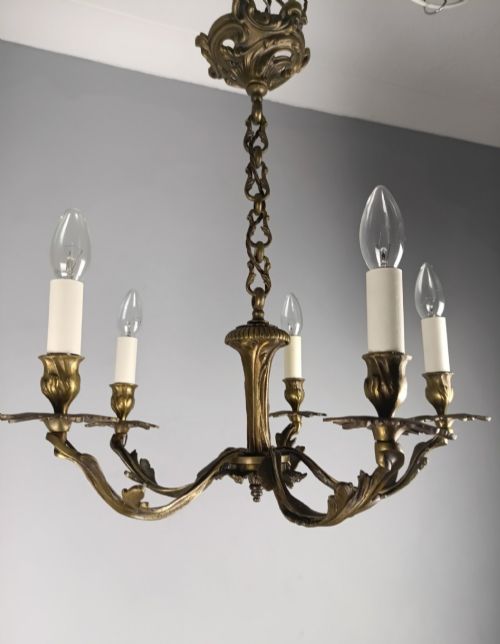
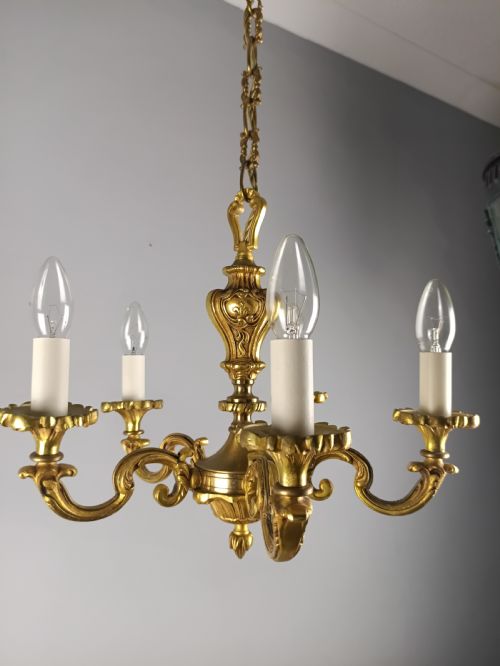



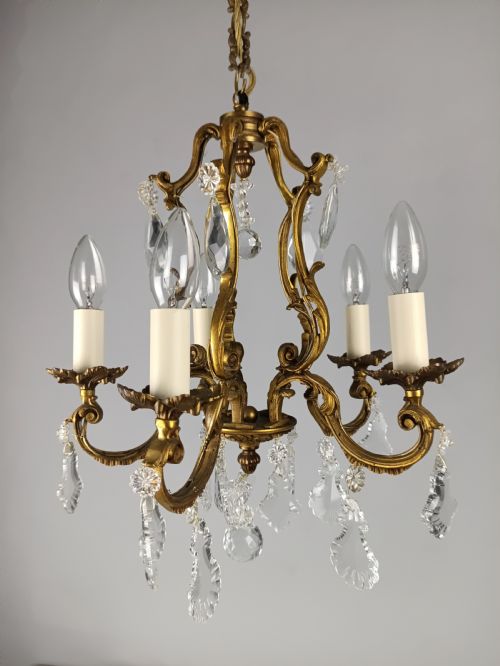


5 Arm Ceiling Light
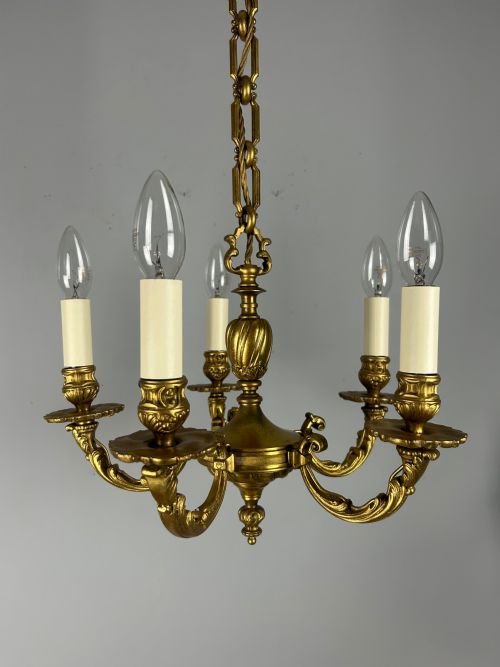
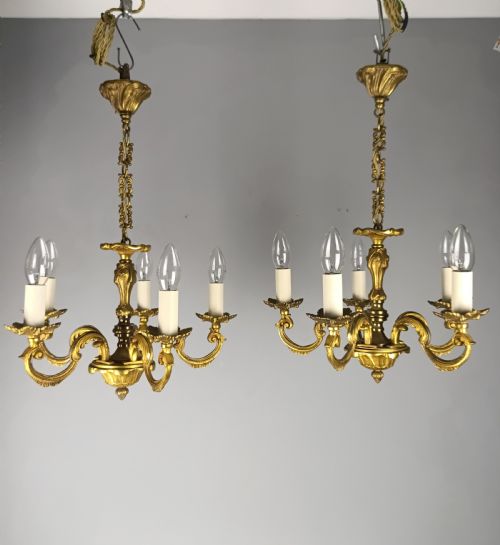
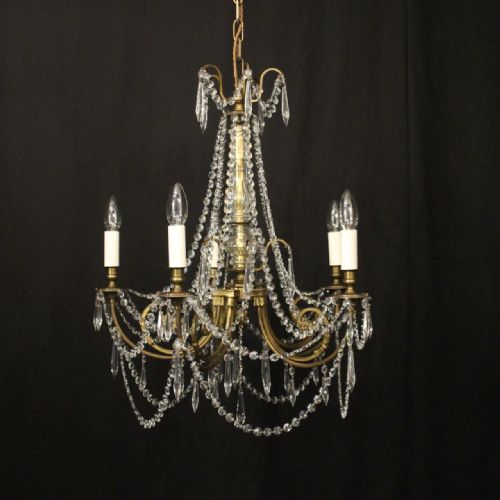
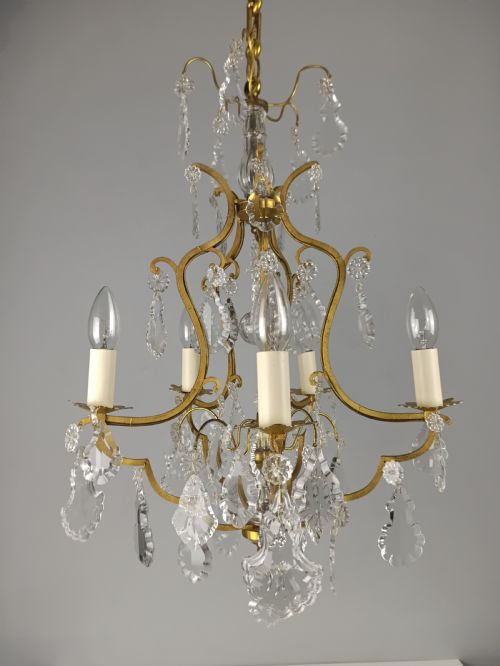
These 5 arm ceiling light examples bring period presence to a room, offering functional illumination through historical forms.
5 Arm Ceiling Light
A 5 arm ceiling light typically takes the form of a chandelier, hanging lantern, or multi-branch fixture suspended from above. These fittings emerge from periods spanning the nineteenth century through to the 1930s, encompassing Edwardian examples alongside earlier designs.
The aesthetic leans heavily toward continental tastes, with French styles such as Rococo, Empire, and Chateau appearing frequently alongside English and Italian interpretations. Buyers encounter brass, bronze, and gilt metal frames adapted to hold multiple lights securely overhead.
Materials and construction
Foundry work dominates the construction of these fixtures, utilising cast bronze, brass, and copper to form structural arms and central stems. Gilt finishes and applied bronze patination provide the primary surface treatments across the metalwork.
Transparent elements such as cut glass and crystal lustres frequently accompany the metal frames, hung to refract illumination outward. Selected pieces incorporate specialised glass elements like opalescent shades or coloured crystal components.
Several pieces preserve their heritage inside municipal town halls and grand French chateaux before reaching the open market.
Distinctions in craftsmanship
The standard of ciselure and metal chasing separates finer castings from simpler production, visible in the sharpness of leaf decoration and structural joints. Heavier gauge brass and bronze provide greater structural integrity to the frame.
The quality of the hanging elements alters the overall character, where hand-cut crystal lustres display superior light refraction compared to moulded glass alternatives. Integration of original wiring components and balanced arm symmetry determine the success of the finished piece.
The 5 Arm Ceiling Light Glossary
- Chandelier
- A branched decorative ceiling fitting designed to hold multiple lights. These fixtures suspend from chains or rods, distributing illumination across a space.
- Gilt Bronze
- Bronze metal coated with a thin layer of gold or gold-coloured alloy. This technique yields a durable metallic surface finish resistant to tarnishing.
- Crystal Lustre
- A cut glass pendant or drop hung from a chandelier frame. These elements catch and disperse light from the lamps.
- Tent and Waterfall Chandelier
- A specific hanging light configuration featuring strings of beads forming an upper tent shape above a cascading arrangement of crystals. This style gained popularity during the nineteenth century.
- Gasolier
- A light fixture designed originally for gas illumination before conversion to electricity. These pieces retain vintage gas keys and rigid supply arms.
5 Arm Ceiling Light: Frequently Asked Questions
How do I hang a heavy antique ceiling light?
Suspension requires fixing directly into ceiling joists or utilising a heavy-duty steel hook capable of supporting the combined weight of the metal and crystal elements. Professional electrical installation ensures the internal wiring safely handles the load.
Weight distribution matters because older brass and bronze structures exert significant downward force on mounting points. Distributing this weight prevents structural failure in plaster ceilings.
What periods do these chandeliers come from?
The available lighting spans from the nineteenth century through the Edwardian era up to the 1930s. Styles range from Gothic Revival and Dutch Baroque to French Empire and Art Nouveau.
Manufacturing dates reflect historical revival movements as well as early twentieth-century production. Each era brings distinct casting methods and decorative motifs to the metalwork.
Are these lights converted to electricity?
Most surviving fixtures arrive adapted for modern electrical wiring while retaining their historical sockets and candle tubes. Rewiring ensures compliance with current safety standards.
Conversions respect the original structure by threading cables discreetly through the central stems and arms. This maintains the visual integrity of the antique metalwork.
How do I clean crystal lustres?
Cleaning requires removing individual crystal drops and washing them in warm soapy water before drying with a soft cloth. Leaving lustres in place during cleaning risks damaging the surrounding antique metal frame.
Regular dusting prevents grime accumulation on the glass surfaces. Maintaining clarity allows the crystal to refract light effectively.