




Handwoven Wool Tribal Art
Handwoven wool tribal art comprises nomadic textiles and functional bags from Persia, Central Asia, and the Balkans created for daily use.
Handwoven Wool Tribal Art
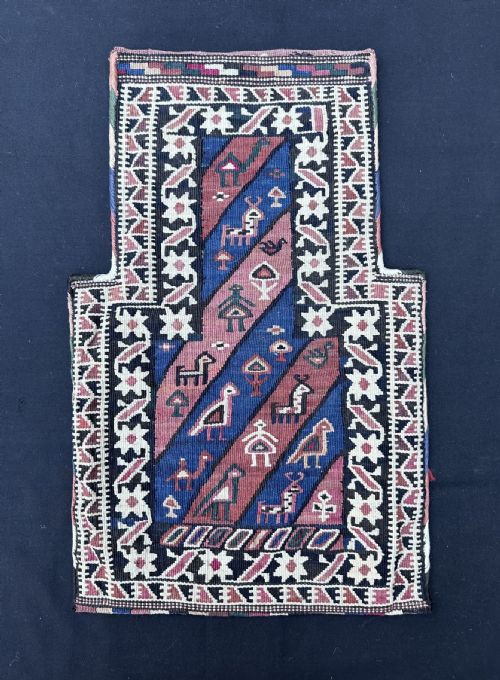
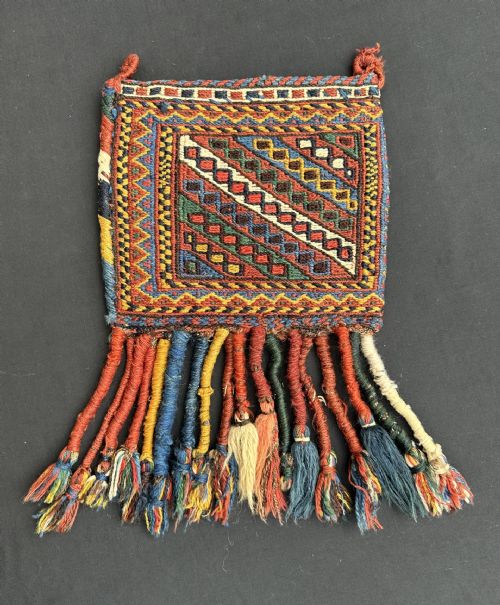
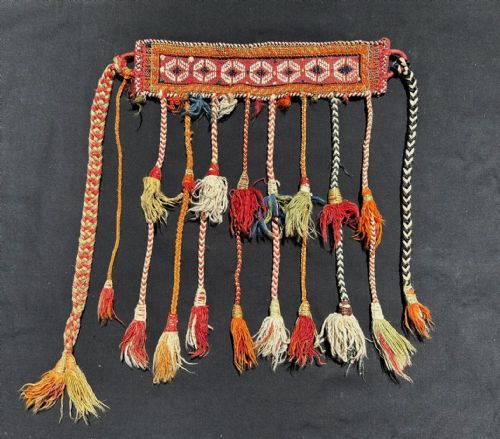
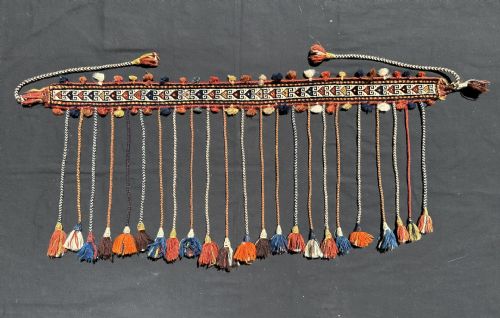
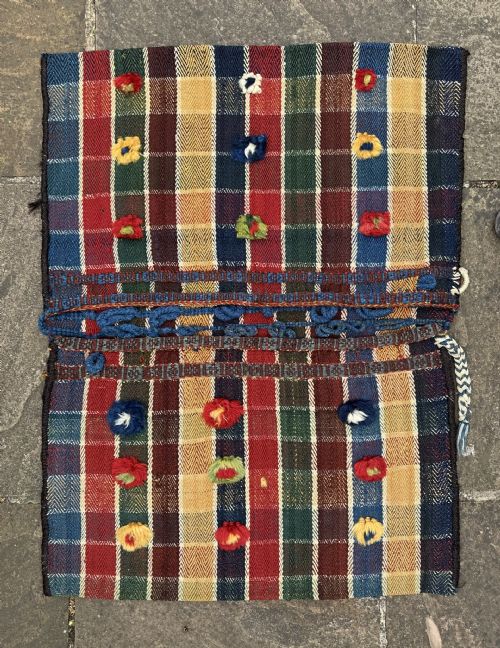
Handwoven wool tribal art consists of utilitarian objects produced by nomadic and village weavers across Persia, Central Asia, and the Balkans. These items include salt bags, tobacco pouches, horse decorations, saddle bags, and kilims originating from groups such as the Qashqai, Afshar, Yomut, and Baluch.
The pieces on this page span from the mid nineteenth century to the early twentieth century, reflecting traditional tribal patterns and regional weaving methods. Forms range from flatwoven storage pouches to pile rugs and wall hangings intended for practical camp life or ceremonial transport.
How they were made
Weavers utilised hand-spun wool and cotton foundations, often incorporating goat hair for added durability along edges and structural selvedges. Cowrie shells also appear on specific functional items as decorative or protective embellishments.
Colour derives from natural dyes applied to local wool, producing rich tonal variations across flatweaves and pile-woven surfaces. Techniques encompass intricate kilim flatweaving, banded designs, and pile knots executed on upright or horizontal looms.
Handwoven Wool Tribal Art Retail Price Guide 2026
Typical asking prices for handwoven wool tribal art among the pieces listed under this phrase on Sellingantiques today, from the lower quarter to the upper quarter. They describe what is for sale here now, not the wider market.
Listings feature pieces utilising natural dyes, hand-spun wool, cotton, goat hair, and cowrie shells across Persian, Central Asian, and Balkan origins.
What varies in quality
Quality rests upon the fineness of the weave, the handling of natural dye palettes, and the clarity of tribal design execution. Superior pieces demonstrate precise structural integrity in functional items like salt-bags and torbas alongside balanced proportions.
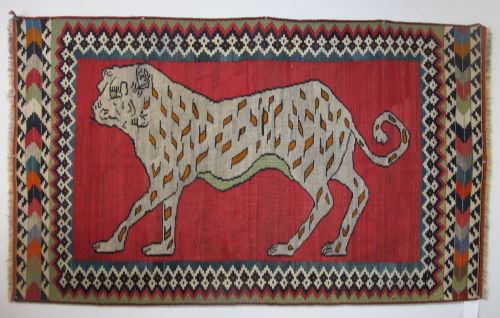
The handling of materials also distinguishes standard output from exceptional examples, notably the choice of hand-spun wool and the complexity of regional motifs such as animal decorations or lion kilims.
The Handwoven Wool Tribal Art Glossary
- Kilim
- A flatwoven textile produced without a pile, created by tightly interweaving warp and weft threads. This technique results in a lightweight, reversible fabric commonly utilised for storage bags and wall hangings.
- Torba
- A small nomadic storage bag traditionally used inside a tent for household possessions. These pieces often feature banded flatweave designs or detailed pile-woven faces.
- Asmalyk
- A large, pentagonal decorative trapping mounted on the flank of a camel during wedding processions. Central Asian tribes produced these intricate textiles for ceremonial occasions.
- Mafrash
- A rectangular storage sack used in pairs for bedding and household goods during seasonal migrations. They combine structural flatweave backs with patterned display faces.
Handwoven Wool Tribal Art: Frequently Asked Questions
What is handwoven wool tribal art?
Handwoven wool tribal art encompasses functional woven items created by nomadic and village weavers. These objects include utilitarian bags, animal trappings, and flatweaves produced for daily camp life.
Items span regions from Persia to Central Asia and the Balkans, reflecting distinct tribal identities through traditional patterns and local materials.
How were tribal bags used?
Tribal bags served essential practical functions in nomadic households and during seasonal migrations. Salt bags stored mineral provisions, while larger torbas and mafrash held bedding and household goods.
Other items functioned as tobacco pouches, spindle bags, or decorative trappings for horses and camels during ceremonies.
How do you identify different tribal designs?
Identifying tribal designs relies on recognising regional motifs, colour palettes, and structural weaving techniques specific to groups like the Qashqai, Yomut, or Afshar. Each region employed distinct geometric or figurative vocabularies.
Structural details such as flatweave bands or specific border arrangements further indicate the particular tribe or geographic provenance of a piece.
How should I live with tribal textiles?
Tribal textiles integrate easily into modern interiors as wall hangings, small floor coverings, or table displays. Their durable wool construction suits areas of moderate foot traffic when used as flatweaves or small rugs.
Protecting these pieces from prolonged direct sunlight preserves the natural dyes used by the original nomadic weavers.