


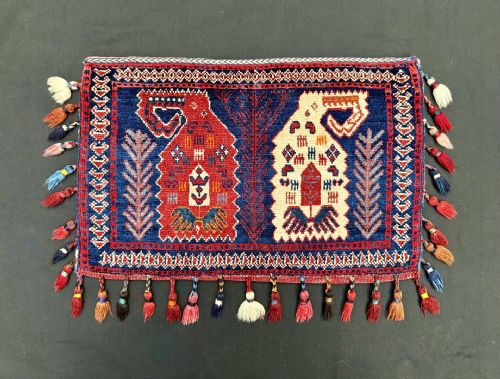


Handwoven Wool Saddle Rug
A handwoven wool saddle rug is a tactile piece of nomadic textile history, bringing authentic tribal character and rich pattern to a room.
Handwoven Wool Saddle Rug
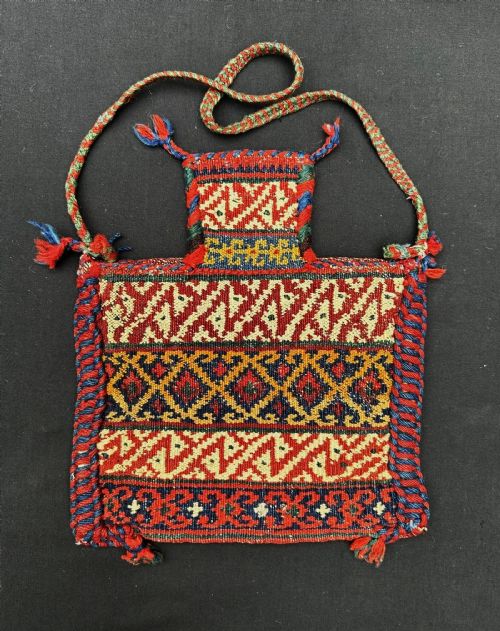
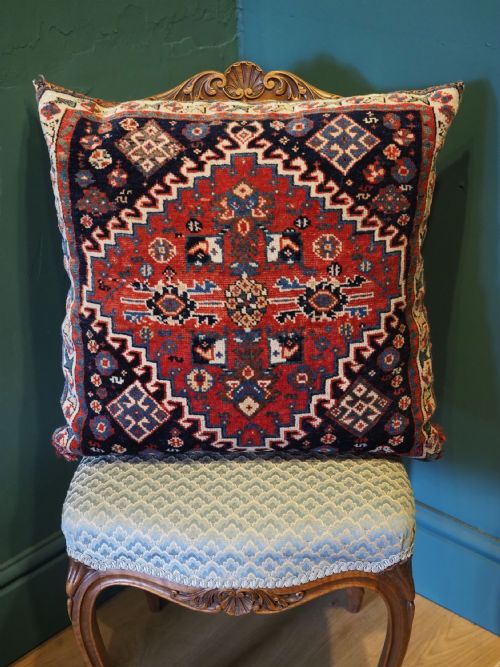
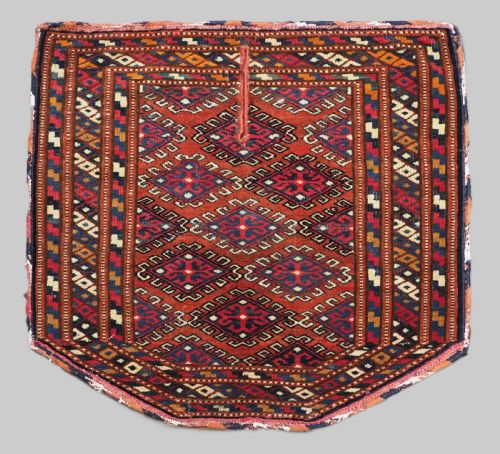
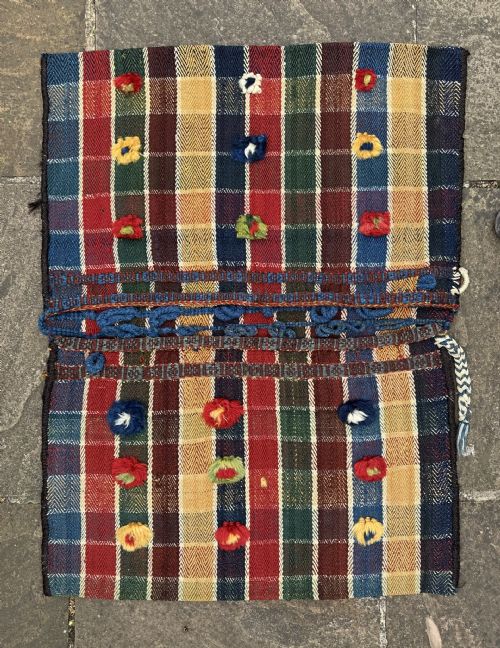
The selections available here reflect this heritage through diverse regional forms, including complete saddle bags, half bags, cushion conversions, and ceremonial covers. Dating predominantly from the late nineteenth and early twentieth centuries, they showcase the distinct visual vocabulary of groups such as the Qashqai, Yomut Turkmen, Shahsavan, and Afshar.
Buyers seeking a handwoven wool saddle rug will encounter dense piled surfaces alongside flatweave kilim constructions. Many items retain original structural elements such as plain weave backs or leather details, offering a direct connection to their original function in pastoral daily life.
Materials and construction
These textiles rely fundamentally on hand-spun wool, chosen for its resilience and ability to take rich colour from natural dyes. Artisans combined this wool with structural cotton foundations in certain regions, while metal elements and leather occasionally reinforced the heavy-use areas of equestrian equipment.
The making process involved rigorous manual labour, from shearing and spinning the fleece to applying traditional plant and mineral colorants. Weavers employed durable knotting techniques and flatweave methods to ensure the bags and covers could withstand the harsh conditions of nomadic migration.
Several items survive with their plain weave backs completely intact, having escaped being cut apart for modern scatter cushions.
Evaluating quality and execution
Quality in these tribal pieces rests on the tightness of the weave, the clarity of the regional motifs, and the depth of the natural dyes. Finer knotting and sophisticated palette control elevate a utility object into a masterwork of folk art.
Preservation of original form also distinguishes the pieces, particularly those retaining complete sets, matching faces and backs, or intact leather and metal components. Greater structural completeness offers a truer window into the original tribal context.
The Handwoven Wool Saddle Rug Glossary
- Khorjin
- The traditional Persian term for a double saddlebag used by nomads for transport and storage. These were often woven as a single continuous piece with a slit centre.
- Heybe
- The Turkish equivalent for a saddlebag or small storage bag, frequently produced by nomadic and village weavers in Anatolia and surrounding regions.
- Kilim
- A flatweave textile made without a pile, created by tightly intertacking warp and weft threads. Shahsavan makers frequently utilised this technique for durable transport bags.
- Natural Dyes
- Colourants derived from plants, roots, and minerals before the advent of synthetic alternatives. They impart a subtle variation in tone that deepens gracefully with age.
- Pile
- The upright yarn loops that form the plush surface of a rug, clipped evenly to display the geometric and figurative motifs clearly.
Handwoven Wool Saddle Rug: Frequently Asked Questions
How were saddle rugs used originally?
Nomadic tribes utilised these textiles draped over pack animals to carry personal possessions during seasonal migrations. They functioned as durable containers, blankets, and ceremonial trappings.
Over time, the wear patterns and structural attachments reflect this heavy outdoor service on horseback across rough terrain.
Where do these tribal pieces originate?
The pieces originate primarily from tribal groups across Persia, Anatolia, Central Asia, and Tibet. Specific regions include the Fars province, Kerman, Luristan, and the Caucasus.
Each region developed distinct geometric and symbolic design repertoires associated with particular nomadic confederations.
How can I date an old saddle rug?
Dating relies on assessing the materials, particularly the presence of early natural dyes and hand-spun wool variations. Structural analysis and stylistic markers characteristic of late nineteenth and early twentieth-century weaving traditions also provide guidance.
Comparison with documented tribal examples helps narrow the period of manufacture.
How do I care for a textile at home?
Protect the wool textile from direct sunlight to prevent natural dye fading over extended periods. Gentle vacuuming without a beater bar keeps dust from settling into the pile.
Professional textile conservators should handle any necessary cleaning to preserve the integrity of the natural fibres.