


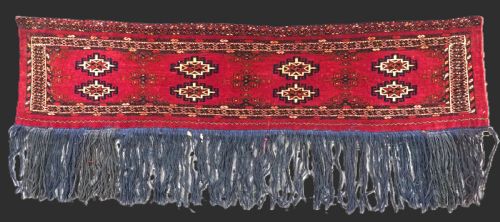


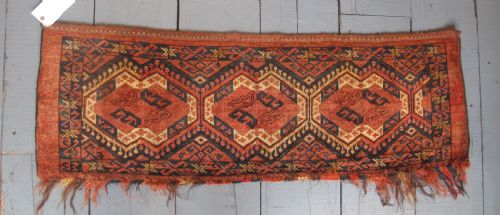


Handwoven Torba Rug
A handwoven torba rug brings Central Asian tribal heritage into a room, offering rich wool texture and intricate traditional guls.
Handwoven Torba Rug
A handwoven torba rug represents the traditional storage bag face or complete bag produced by Turkmen and Central Asian tribal weavers. These pieces date across the late nineteenth century and early twentieth century, spanning periods from the eighteen-seventies to nineteen-ten.
Buyers will encounter various tribal attributions on this page, including Tekke, Saryk, Yomut, and Ersari groups. Most examples appear either as complete bags with plain weave backs or as individual bag faces intended for tent storage.
The format typically showcases characteristic medallion motifs known as guls, alongside banded flatweave designs or ikat patterns. These portable textiles served practical domestic functions within nomadic households before entering the antique market.
How they were made
Weavers constructed these textiles using hand-spun wool and natural dyes to achieve durable pile surfaces and flatweave structures. The selection of materials dictated both the tactile quality and the longevity of each storage piece.
Production methods involved careful knotting and weaving techniques, with certain examples displaying exceptionally fine weaves associated with dowry production. Workshops and nomadic weavers utilised traditional looms to execute complex geometric patterns from memory.
Handwoven Torba Rug Retail Price Guide 2026
Typical asking prices for handwoven torba rug among the pieces listed under this phrase on Sellingantiques today, from the lower quarter to the upper quarter. They describe what is for sale here now, not the wider market.
Nomadic weavers packed these small bags with blankets and clothes, meaning your antique rug spent its youth as a wardrobe.
What varies in quality
The degree of fineness in the weave distinguishes standard production from superior examples, particularly in dowry pieces where knot density increases significantly. Finer execution allows for crisper definition in complex gul patterns and secondary ornaments.
The integrity of the surviving textile structure also separates individual pieces, with complete bags retaining original plain weave backs commanding particular attention. The depth and clarity of natural dye palettes further determine the visual impact of each weaving.
The Handwoven Torba Rug Glossary
- Gul
- A primary medallion motif used repeatedly across Turkmen weaving traditions. Each tribal group favoured distinct gul shapes to signal identity and lineage.
- Mafrash
- A larger rectangular storage bag or storage chest side panel produced in pairs. They share structural and design similarities with torbas.
- Flatweave
- A textile constructed without pile by interweaving warp and weft threads directly. Yomut pieces often incorporate banded flatweave sections.
- Natural dyes
- Colourants derived from plants, insects and minerals before the widespread adoption of synthetic alternatives. They impart nuanced tones that age with character.
Handwoven Torba Rug: Frequently Asked Questions
What is a torba rug?
A torba rug is a traditional Central Asian tribal storage bag face or complete pouch created by nomadic weavers. These textiles were historically used inside tents for household storage and possessions.
Today, collectors appreciate them as compact decorative rugs or wall hangings displaying rich tribal motifs and natural wool.
How do I identify different tribes?
Tribal attribution relies on specific design elements, particularly the primary gul medallions and border arrangements. Tekke, Saryk, Yomut, and Ersari weavers each utilised distinct geometric vocabularies.
Examining the structure, wool quality, and secondary ornaments helps narrow down the probable weaving origin.
What are guls?
Guls are repeated octagonal or repeating medallion motifs positioned systematically across the field of a Turkmen textile. These patterns identify the specific tribal group and weaving tradition.
Variations such as the kepse, aishk, or schemle gul indicate particular regional designs within the broader Central Asian repertoire.
Are these pieces complete?
Surviving examples appear either as individual bag faces or as complete torbas retaining their original plain weave backs. Many historical torbas were separated from their backing fabrics over time of use.
Pieces that retain their original backs offer a complete picture of the original nomadic storage form.