




Handwoven Persian Bag
A handwoven persian bag brings the tactile geometry of nineteenth-century nomadic life directly into a modern interior through durable tribal textile work.
Handwoven Persian Bag
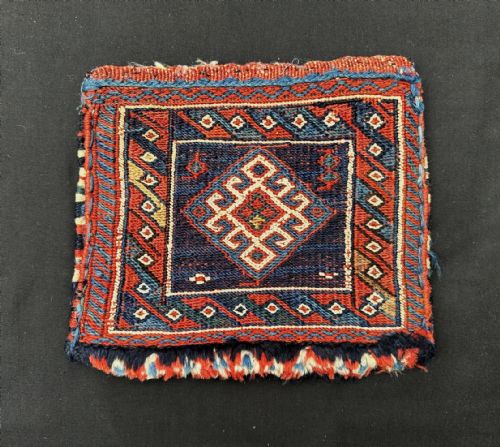
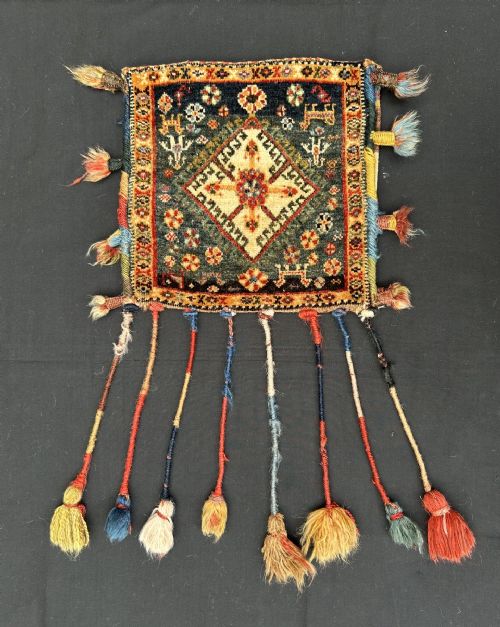
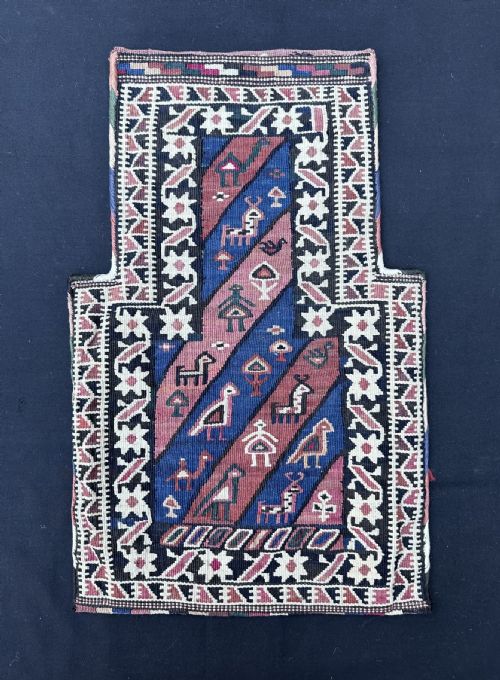
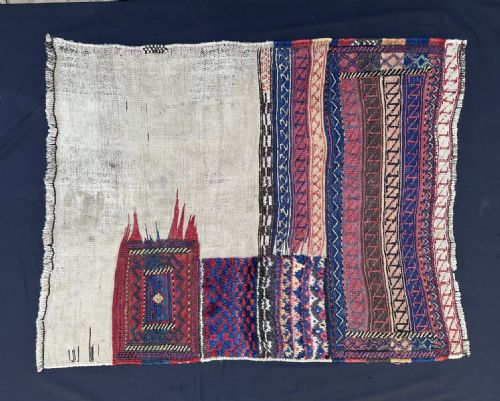
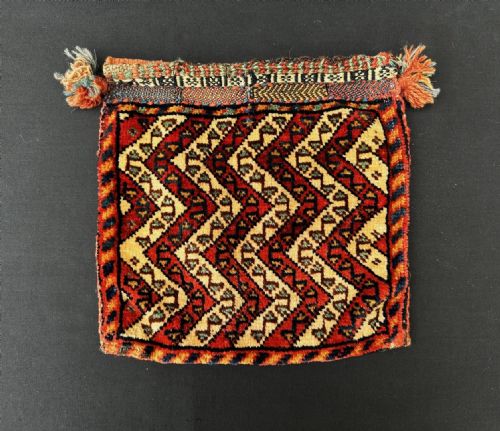
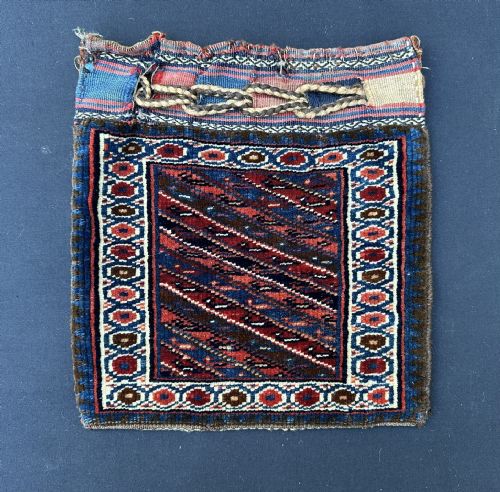
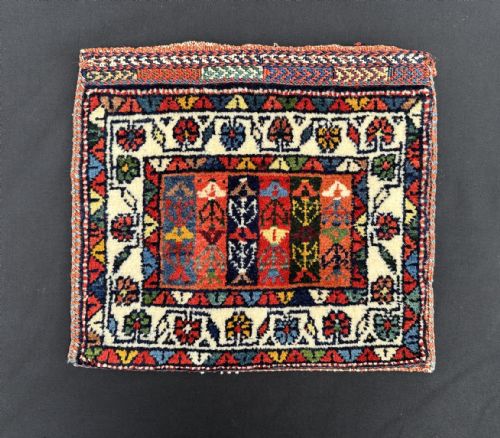
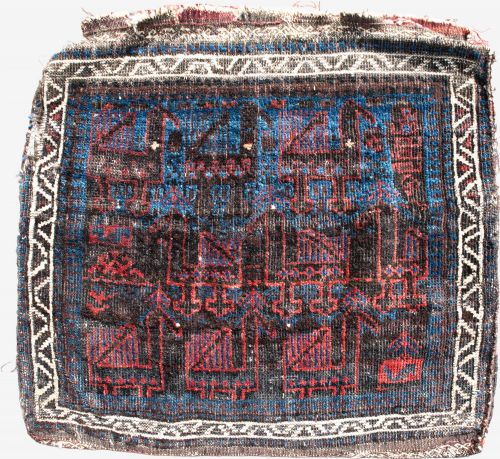
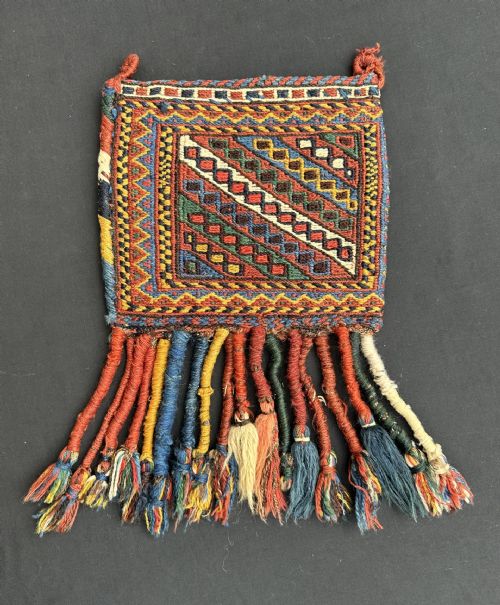
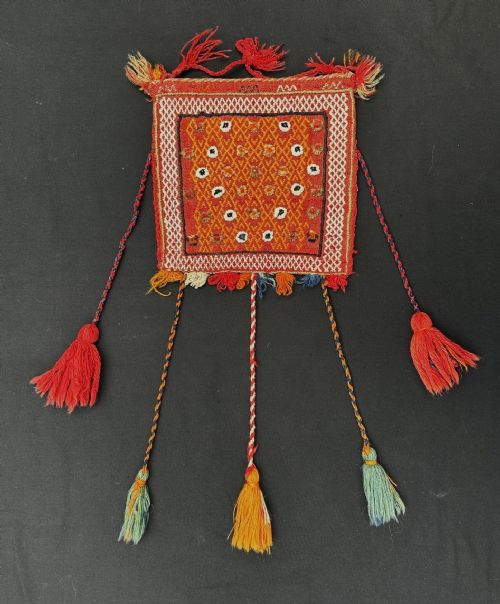
When searching for a handwoven persian bag, a buyer encounters utilitarian textiles made by nomadic and tribal groups across Persia. These pieces include vanity-bags, salt-bags, saddlebags, and grain sacks known as tachehs, produced primarily between the late nineteenth century and the early twentieth century.
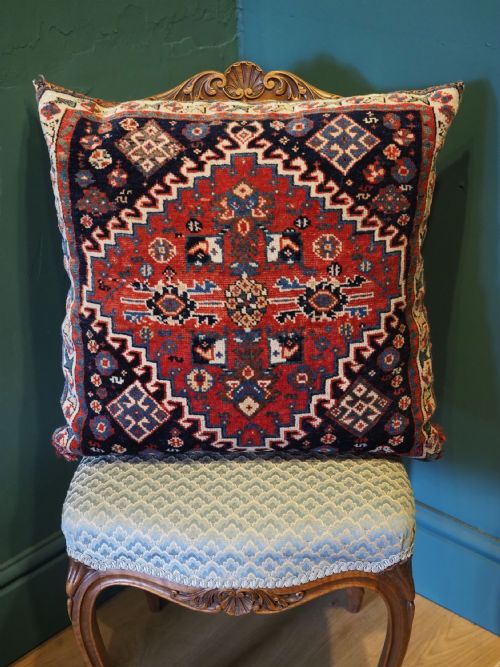
The versions most commonly met on this page are individual bag faces or complete saddlebags attributed to specific confederacies such as the Qashqai, Afshar, Bakhtiari, and Baluch. Many survive as fragments adapted into cushions or remain intact with their flatweave backs and hanging mechanisms.
How They Were Made
These textiles rely on hand-spun wool and cotton foundations, often utilising goat hair for durable structural edges and selvedges. Cowrie shells and leather additions appear on select utilitarian items to reinforce wear points or provide traditional ornamentation.
Weaving techniques combine pile knotting with flatweave structures such as kilim and supplementary weft-wrapping. Natural dyes derived from local plants and minerals produce the characteristic palette underpinning the tribal geometric patterns.
Several salt-bags retain their narrow necks designed specifically to prevent camels from sneaking a midday snack of sodium.
What Varies in Quality
Quality rests in the precision of the tribal design execution and the handling of natural dyes. Pieces with saturated, varied dye lots and tightly packed pile or crisp flatweave structures stand apart from simpler variations.
The integrity of the original wool spin and the survival of complete structural elements, such as plain-weave backs or hanging loops, define the upper tier of these ethnographic objects.
The Handwoven Persian Bag Glossary
- Namakdan
- A traditional salt-bag woven by nomadic groups for domestic storage use. These narrow-necked containers often display intricate geometric pile-work on the face.
- Tacheh
- A large grain or wheat sack produced by pastoral tribes in western Persia. They serve utilitarian storage functions and frequently employ durable flatweave techniques.
- Khorjin
- The Persian term for a double saddlebag designed for transport on pack animals. Complete examples retain both pouches and the connecting bridge web.
- Bag Face
- The decorative piled or flatwoven front of a utilitarian container that survived while the plain back deteriorated. Collectors often mount these panels as decorative textiles or cushions.
- Tribal Confederacy
- A political and social grouping of independent nomadic and semi-nomadic tribes. Groups such as the Qashqai encompass distinct sub-tribes with recognizable design repertoires.
Handwoven Persian Bag: Frequently Asked Questions
What is a handwoven persian bag used for originally?
Nomadic communities utilised these woven containers for practical storage and transport during seasonal migrations. They held salt, grain, vanity items, and personal possessions inside tents or on pack animals.
Over time, many of these functional pieces became valued decorative items, with surviving bag faces frequently adapted into small cushions for domestic interiors.
How do I care for an antique textile bag?
Protect antique wool and cotton textiles from prolonged direct sunlight to prevent natural dye fading. Gentle vacuuming through a mesh screen helps remove dust without damaging fragile fibres.
Avoid chemical cleaning agents and consult a specialist textile conservator for professional washing. Proper airflow prevents moisture retention in historic animal fibres.
How can I tell which tribe made a bag?
Attribution relies on specific geometric motifs, structural weaving techniques, and regional colour palettes. Groups such as the Afshar, Baluch, and Qashqai maintained distinct visual traditions passed down through generations.
Examining the selvedge construction, end finishes, and secondary wool colours provides further clues to geographic origin within Persia.
Are these bags from the nineteenth century?
Many examples date from the late nineteenth century through to the early decades of the twentieth century. Production methods remained tied to traditional nomadic pastoralism during this era.
Materials such as hand-spun wool and early natural dye formulations help establish the approximate age of each individual textile.