

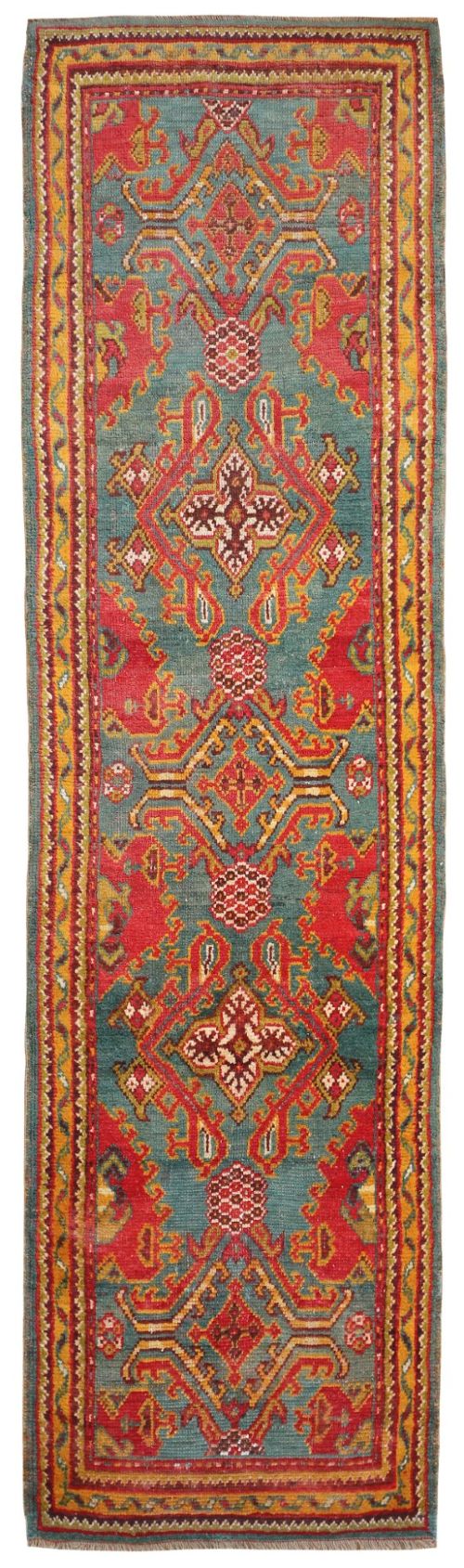
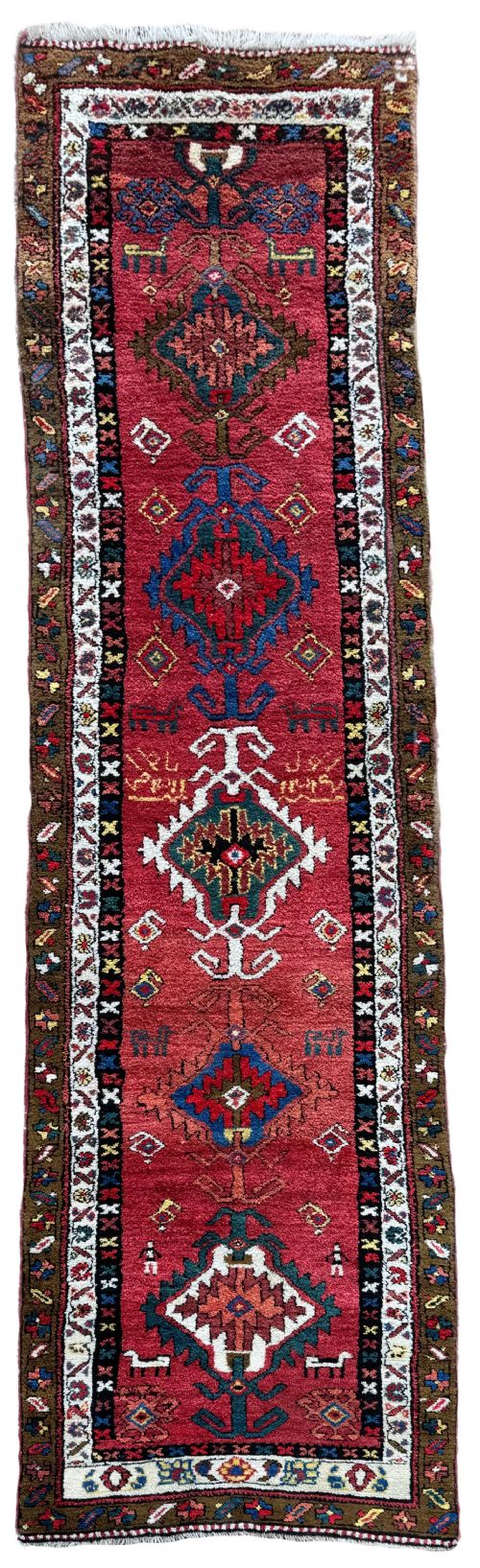
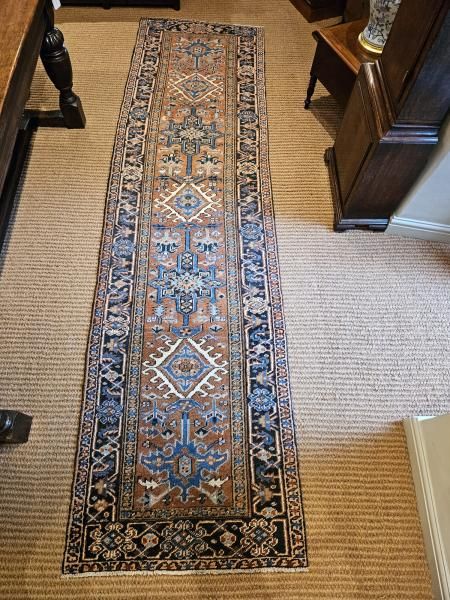
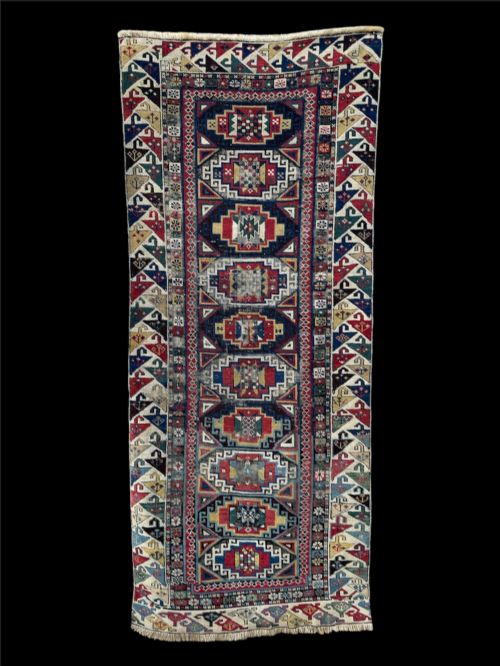

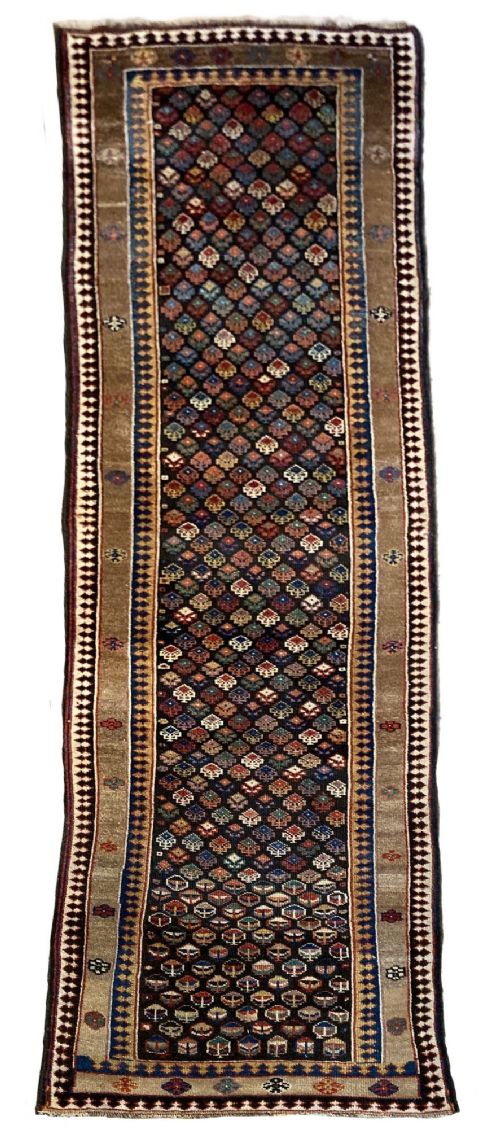


Handwoven Corridor Rug
A handwoven corridor rug brings immediate architectural weight to long halls, offering traditional floor coverings built for narrow spaces.
Handwoven Corridor Rug
A handwoven corridor rug provides a durable, elongated textile designed specifically for narrow passageways, hallways, and landings. When searching for a handwoven corridor rug, buyers encounter diverse regional traditions spanning Persian, Caucasian, Turkish, and Afghan origins.
The selections on this page draw from the late nineteenth century through the early twentieth century, encompassing periods from eighteen seventy to nineteen thirty. Common formats include narrow runners, long rugs, and specific tribal weaves shaped by regional weaving techniques.
How They Were Made
These textiles rely predominantly on wool foundations and piles, often supported by cotton structural elements to provide rigidity and straight edges along long spans. Certain pieces incorporate camel hair alongside standard wool to introduce natural colour variation without relying on dyed yarns.
Weavers knotted or flatwove these long formats by hand on vertical or horizontal looms, utilising traditional regional patterns such as Heriz medallions, Shirvan geometric motifs, and Memling guls. The resulting structures balance flexible drape with dense pile construction suited to heavy foot traffic.
Handwoven Corridor Rug Retail Price Guide 2026
Typical asking prices for handwoven corridor rug among the pieces listed under this phrase on Sellingantiques today, from the lower quarter to the upper quarter. They describe what is for sale here now, not the wider market.
The listings span several decades of production, incorporating nineteenth-century examples alongside pieces from nineteen thirty.
What Varies in Quality
Knot density and structural tightness dictate the crispness of geometric and floral motifs across different regions. Tighter knotting allows sharper pattern definition, particularly in Caucasian and Persian workshop pieces where intricate medallions repeat along the length.
The choice and stability of dyeing materials influence the visual depth of the pile over time. Natural dyestuffs yield mellow patinas that age with consistent harmony, whereas structural integrity depends on the evenly spun weight of the wool and the soundness of the selvedges.
The Handwoven Corridor Rug Glossary
- Runner
- An elongated, narrow rug proportioned specifically for hallways, corridors, and staircases. These pieces measure significantly longer than they are wide to fit restricted floor spaces.
- Kilim
- A flatwoven textile produced without a pile by tightly interweaving warp and weft threads. These rugs offer a smooth, lightweight finish compared to knotted pile carpets.
- Gul
- A medallion or octagonal design motif frequently repeated across Turkmen, Caucasian, and Baluch carpets. This heraldic emblem often identifies the specific tribe or clan of the weaver.
- Selvedge
- The finished, bound side edges of a rug that prevent the foundation threads from unravelling. Secure selvedges maintain the straight rectangular geometry of long corridor pieces.
- Warp
- The stationary vertical threads stretched across the loom that form the structural skeleton of the rug. Weft threads are inserted across these warp foundations to lock the knots in place.
Handwoven Corridor Rug: Frequently Asked Questions
How do I style a corridor rug?
Position the rug centrally in a hallway to create a clear pathway while exposing the surrounding timber or stone flooring. Ensure adequate clearance for doors to swing open freely over the pile height.
Combine the runner with neutral wall colours to let the traditional red, blue, or olive geometric patterns define the character of the entranceway.
Are these rugs suitable for high traffic?
Traditional village and tribal weaves utilise dense wool construction designed precisely to withstand heavy daily footsteps in active areas. The natural lanolin in the wool helps repel dirt and maintains resilience.
Regular gentle rotation prevents uneven wear patterns from forming along frequently travelled paths in the centre of the hallway.
How do I identify Persian versus Caucasian runners?
Persian pieces often display curvilinear floral motifs, Heriz medallions, or detailed Bakhtiari garden panels executed with softer colour gradations. These designs reflect established workshop traditions across western and northern Persia.
Caucasian runners, by contrast, favour sharp geometric polygons, angular hooks, and primary tones characteristic of Shirvan, Kazak, and Talysh weaving districts.
What underlay should I use?
A breathable, rubberised mesh underlay keeps the runner securely positioned on smooth wooden or tiled hallway floors. This prevents slipping and adds minor cushioning beneath the feet.
Choose an underlay slightly smaller than the rug dimensions so the edges remain flat against the floor without curling upwards.
How do I care for antique wool runners?
Vacuum the rug gently using suction only, avoiding revolving brush heads that can pull at ancient wool fibres. Shake small or flatwoven kilim pieces outdoors to dislodge embedded dust.
Address accidental spills immediately by blotting with a clean, damp cloth rather than rubbing the pile, and consult a specialist for thorough cleaning.