

Handled Serving Tray
A handled serving tray brings practical utility and period craftsmanship to the table, whether in mahogany, silver plate, or porcelain.
Handled Serving Tray
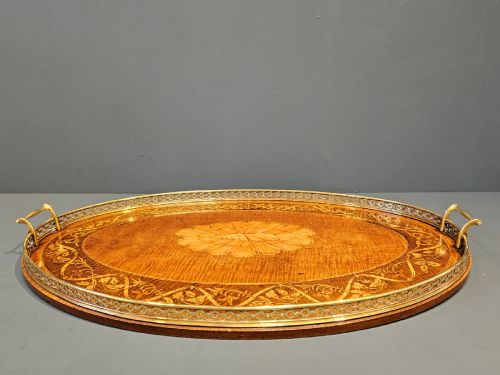
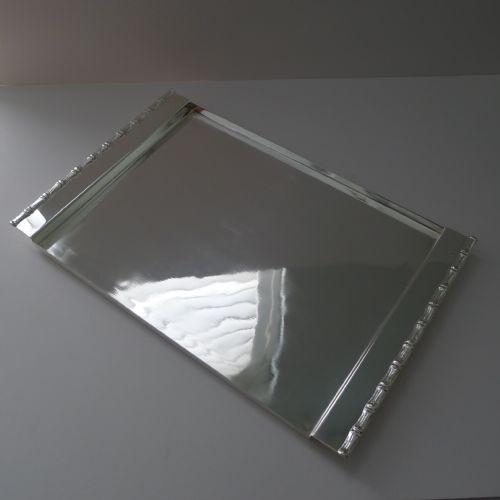
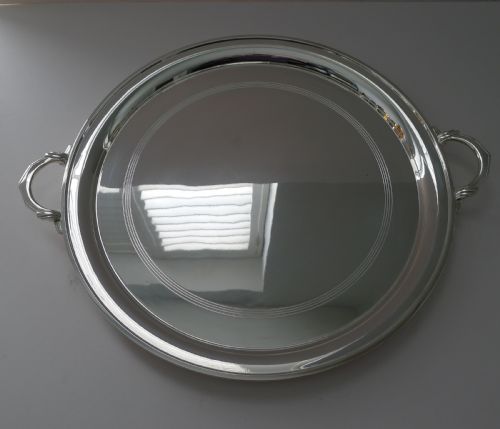
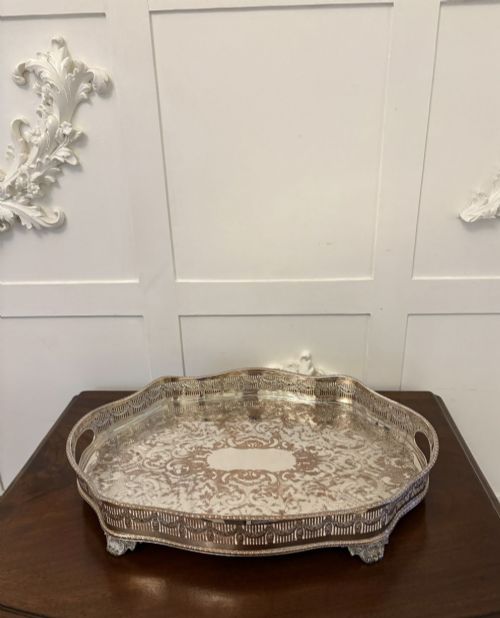
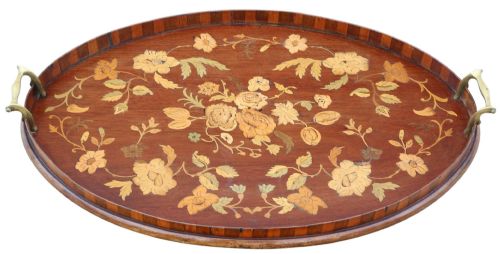
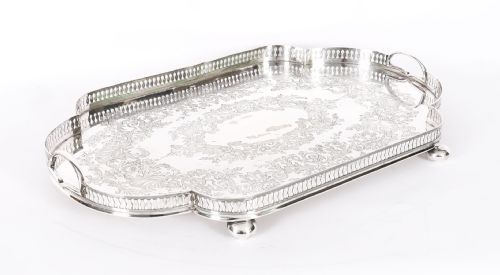
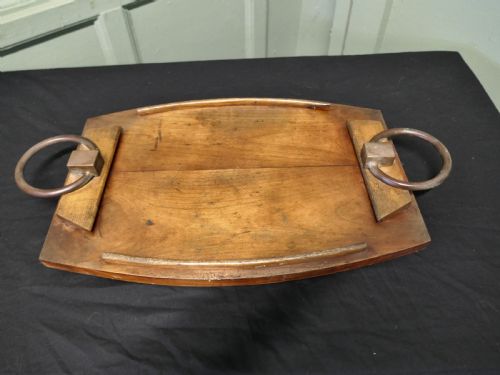
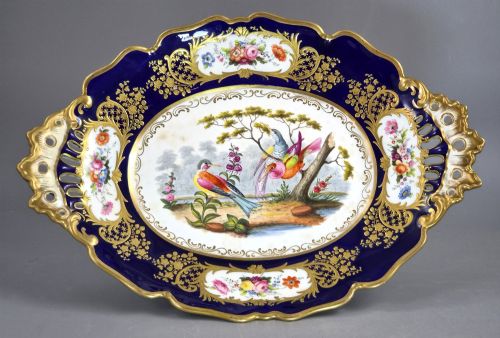
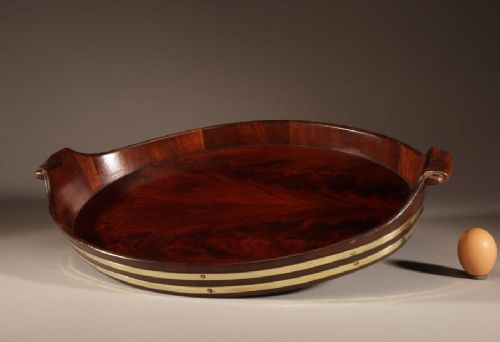
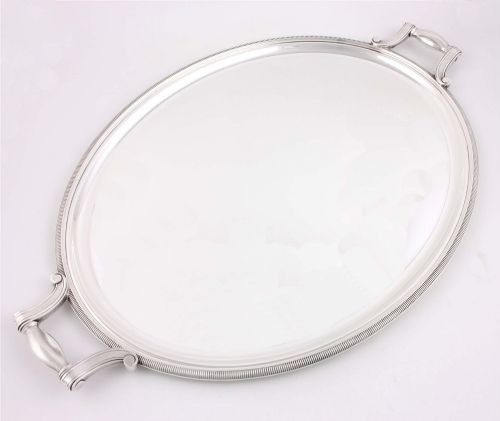
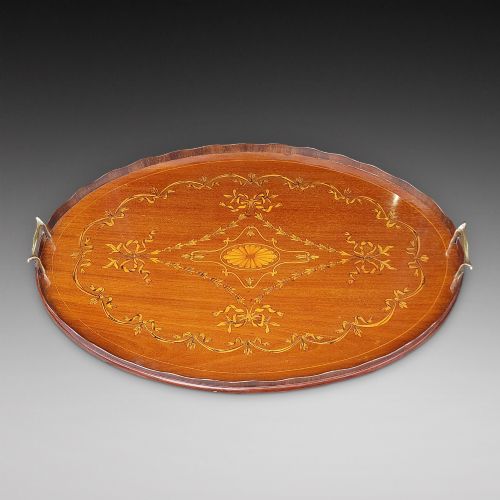
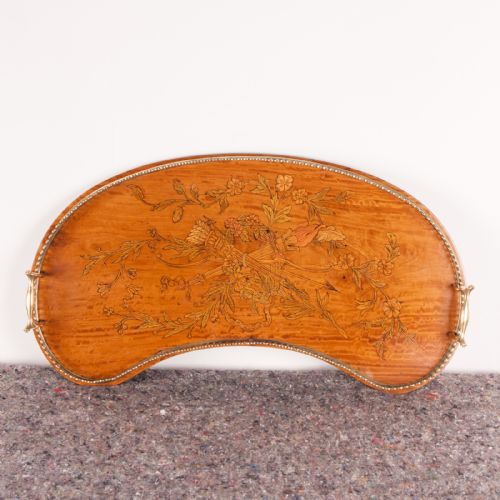
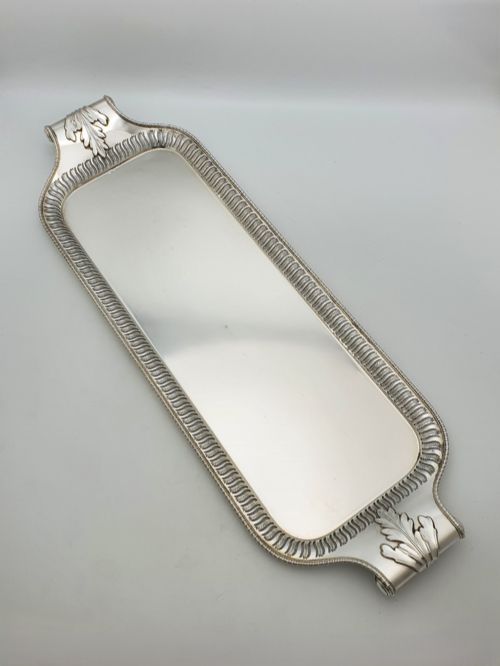
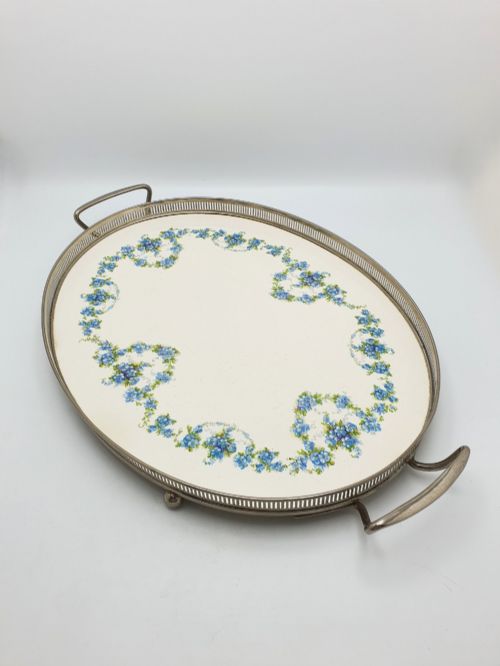
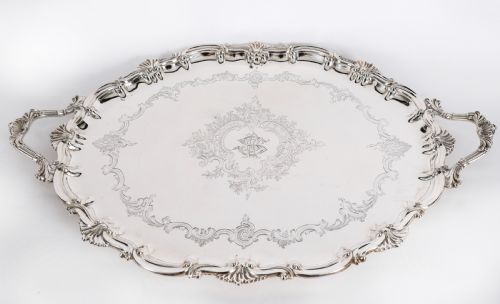
A handled serving tray is a functional domestic accessory designed for carrying and presenting tea, drinks, or food. Buyers searching for a handled serving tray encounter various forms across this selection, including oval tea trays, kidney-shaped presentation platters, and rectangular gallery trays with pierced brass borders.
The majority of pieces date from the Victorian and Edwardian eras through to the mid-twentieth century, alongside Georgian examples. Woods such as mahogany, satinwood, and golden elm appear frequently, often complemented by silver plate, sterling silver, and porcelain body types.
Makers and workshops range from notable English plate manufacturers to cabinet makers producing inlaid timber pieces. These items transition easily from functional serving accessories to decorative centrepieces on side tables and occasional stands.
How they were made
Timber trays rely on traditional cabinet-making methods, utilising solid mahogany or satinwood carcasses decorated with marquetry inlay, shell motifs, or contrasting stringing. Some examples incorporate brass handles and coopered construction.
Metal versions utilise silver plate, nickel silver, or sterling silver applied to base metals, often featuring hand-engraved surface patterns, cast handles, and pierced galleries soldered to the base. Porcelain and ceramic trays employ fired bodies with hand-painted floral centres or transfer-printed scenes.
Certain timber pieces retain the precise cut-out handgrips designed to stop eighteenth-century footmen from dropping the afternoon tea.
What varies in quality
The precision of the timber inlay and the depth of the cabinet work dictate the standard of wooden trays. Sharp, clean marquetry and solid timber framing separate standard utility items from finer parlour pieces.
For metal items, the weight of the silver plate and the crispness of the cast handles and engraved borders define the standard of execution. Well-defined pierced galleries and substantial gauge metal indicate higher workshop input.
Keith Murray For Mappin & Webb·James Deakin·Thomas Bradbury & Sons·Edwards and Roberts·John Hunt·Harrison Bros Sheffield·Mappin & Webb
The Handled Serving Tray Glossary
- Gallery tray
- A tray with a raised, upright metal or wooden border around the perimeter, often pierced with openwork patterns to secure decanters and glasses.
- Marquetry
- Decorative veneer work arranged in pictorial or geometric patterns using various coloured woods and shell.
- Silver plate
- A layer of silver fused or electroplated onto a base metal such as copper or nickel silver.
- Salver
- A flat tray, typically made of silver or silver plate, used for serving food or drinks.
- Butler's tray
- A removable tray with sides, often designed to sit upon a folding wooden stand for serving tea or drinks.
Handled Serving Tray: Frequently Asked Questions
How do I clean a silver plated handled serving tray?
Use a soft cloth and a specialised silver polish suitable for plated items to maintain the surface shine without abrasive scrubbing.
Avoid harsh chemical dips that strip the plating over time, and dry the piece thoroughly after cleaning.
Can I use an antique wooden tray for daily drinks service?
Most wooden trays tolerate regular use if protected from excessive moisture and heat from hot teapots or wet glasses.
Applying a gentle furniture wax periodically helps preserve the finish of mahogany and satinwood surfaces.
How do I identify an Edwardian mahogany tray?
Edwardian trays frequently display lighter satinwood banding, delicate floral marquetry, and slender brass or wooden handles.
They reflect the lighter, refined aesthetic popular around nineteen hundred, contrasting with heavier Victorian designs.