



Hand Woven Turkish Rug
When you search for a hand woven turkish rug, you step into centuries of village and town weaving traditions from Anatolia.
Hand Woven Turkish Rug
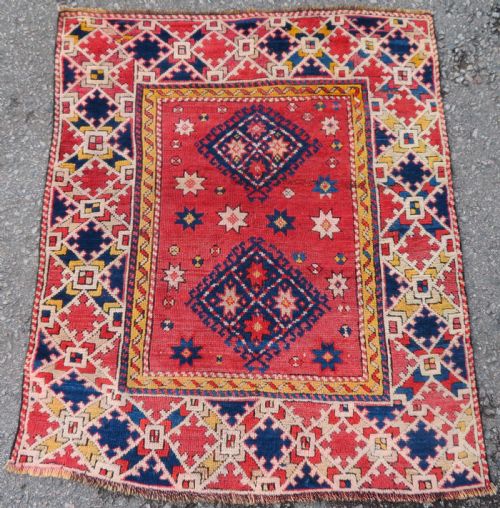
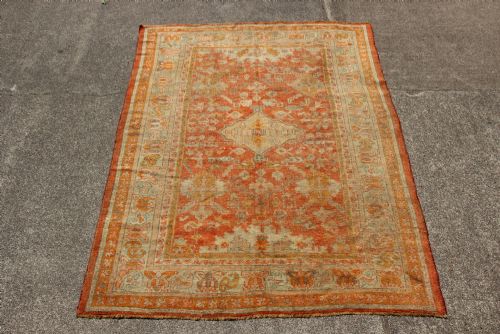
A hand woven turkish rug encompasses floor coverings, village mats, and prayer rugs produced across Anatolia from the mid-nineteenth century through the early twentieth century. The selections here range from expansive Ushak carpets down to compact village pieces originating from centres such as Bergama, Kirsehir, Konya, and Milas.
Buyers encounter distinct regional formats, including small scatter formats, long runners, and square carpets bearing geometric village motifs or classical town designs. Prayer rugs with characteristic architectural mihrab arches appear frequently alongside tribal bag faces and cushion covers.
How they were made
Weavers constructed these textiles primarily using hand-spun wool for foundations and pile, occasionally incorporating cotton for warp and weft threads. Certain town workshops utilised silk, art silk, or mercerised cotton to achieve finer detail and reflective surface finishes.
Dyes derived from natural botanical sources supplied the rich colour palettes seen in nineteenth-century examples, while later decades introduced chemical dyes that altered the fading characteristics. Individual knots tied by hand onto vertical looms determined the density and durability of the finished pile.
Listings feature nineteenth-century and early twentieth-century examples utilising wool, cotton, silk, and angora wool across various regional styles.
What varies in quality
Knot density and structural integrity dictate the baseline quality of an Anatolian carpet, determining how well the foundation holds the pile under foot traffic. Finer wool selection and careful preparation yield a softer handle and greater resilience in surviving examples.
Artistic execution and dye consistency separate standard village production from superior workshop pieces. Balanced proportions in medallion layouts and harmonious colour saturation elevate the visual impact of an individual textile.
The Hand Woven Turkish Rug Glossary
- Mihrab
- The arched niche design found on prayer rugs, which symbolises a doorway or prayer focal point pointing toward Mecca. This motif directs the visual weight of the composition.
- Warp
- The vertical threads stretched tightly on the loom that carry the structural load of the rug. Fringe ends typically emerge directly from these foundational cords.
- Weft
- The horizontal threads passed back and forth between rows of knots to bind the structure together. Weft tension influences the suppleness of the completed textile.
- Pile
- The cut ends of the knotted yarn that form the usable surface of the rug. Pile depth varies considerably between heavy village carpets and flat-woven variants.
- Medallion
- A central ornamental design motif placed in the field of a carpet. Town weavers often utilised large central medallions flanked by spandrels.
Hand Woven Turkish Rug: Frequently Asked Questions
How do I identify a village rug from a town carpet?
Village rugs generally display bolder geometric motifs, heavier wool, and asymmetrical designs rooted in local tribal traditions. Town carpets tend to feature balanced floral or medallion compositions with finer knot counts.
Production location names like Bergama or Ushak often signal the distinct aesthetic traditions associated with specific Anatolian weaving districts.
What is a prayer rug used for?
Prayer rugs served both devotional purposes and domestic floor placement within traditional homes. The characteristic mihrab arch identified the textile for sacred use during daily prayers.
Collectors prize these formats for their concentrated symbolic designs and careful symbolic geometry.
How should I care for an antique wool rug?
Regular gentle vacuuming without a rotating brush bar prevents dust accumulation in the wool pile. Professional specialist cleaning ensures natural fibres retain their oils without damaging historical dyes.
Placing a breathable underlay beneath the textile prevents slipping and reduces friction against hard flooring.
How do I date an older Turkish rug?
Dating relies on assessing dye types, wool quality, structural wear patterns, and stylistic design markers. Natural dye palettes and hand-spun irregularities typically point toward nineteenth-century origins.
Later pieces from the early twentieth century often display chemical brights or tighter, more uniform commercial yarns.