

Hand Woven Tribal Textile
When you seek a hand woven tribal textile, you are looking for nomadic and village weaving shaped by traditional patterns and natural materials.
Hand Woven Tribal Textile
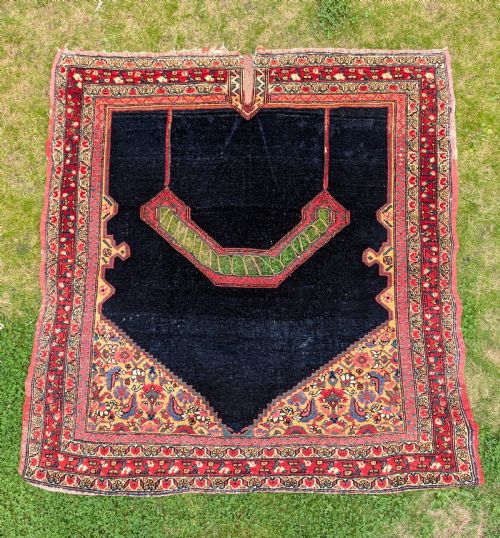
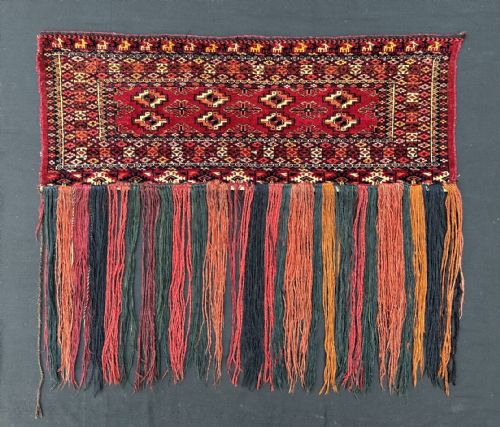
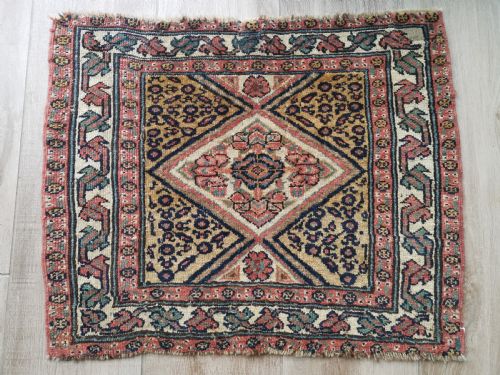
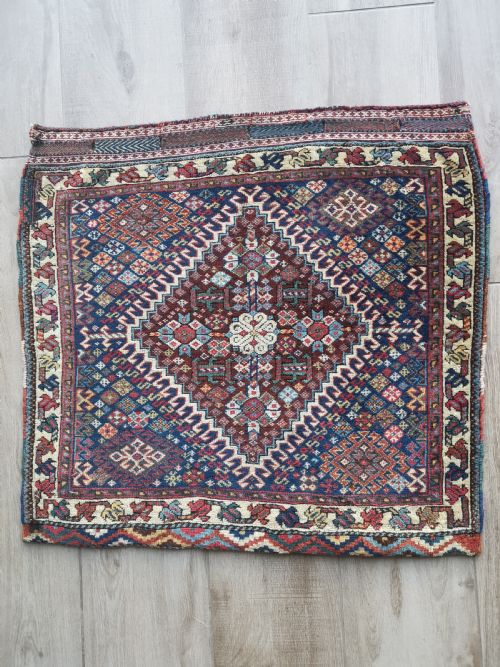
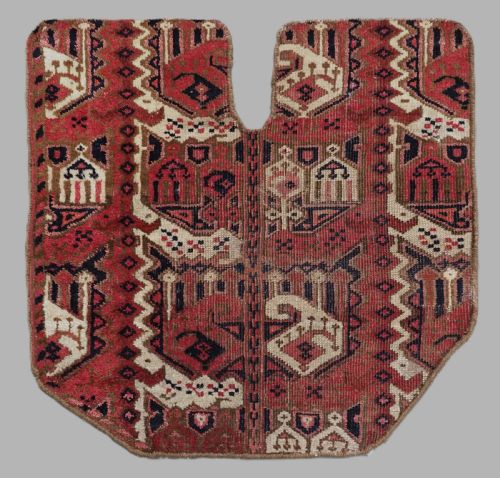
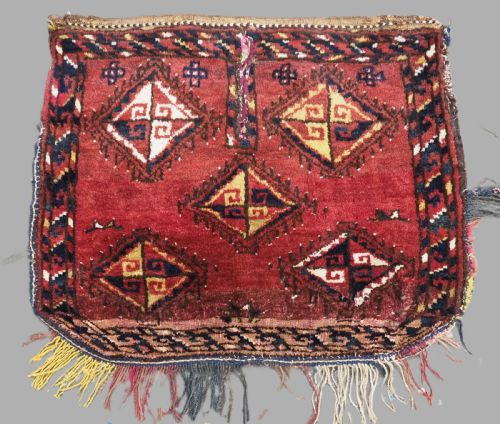
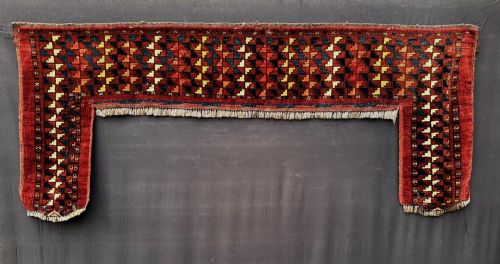
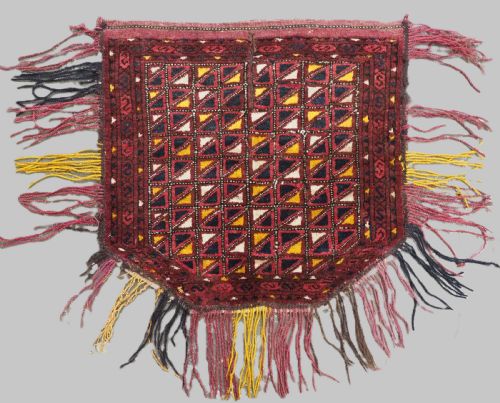
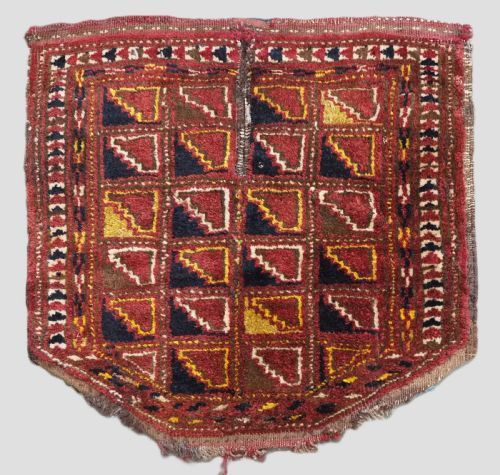
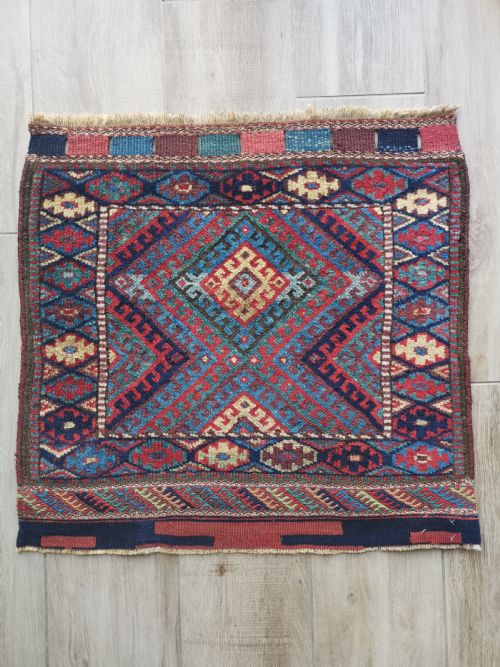
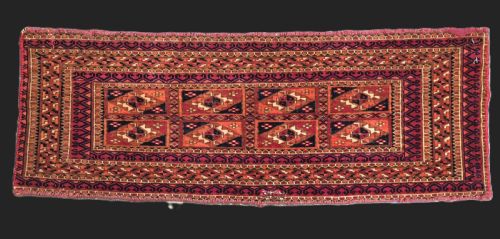
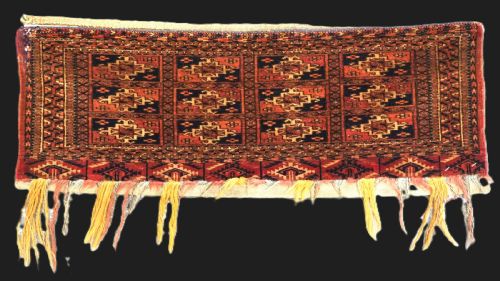
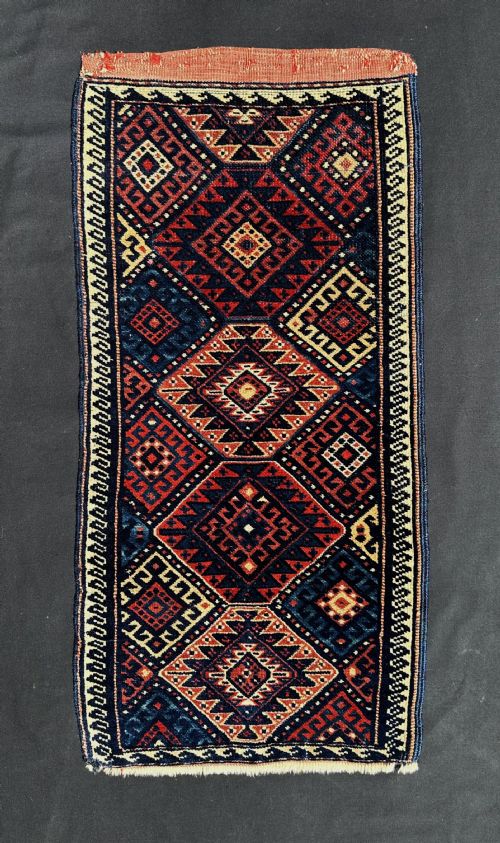
A hand woven tribal textile encompasses practical household objects, storage bags, saddle covers, and rugs produced by nomadic and village groups. Examples on this page range from nineteenth century Turkmen tent bags to Persian bagfaces and Caucasian weavings.
Many items survive as fragments or individual panels, including torbas, asmalyks, and chuvals created for daily use within tribal communities. These pieces represent the textile traditions of regions spanning Central Asia and Persia.
How They Were Made
Weavers utilised hand-spun wool and natural dyes, sometimes incorporating cotton, silk thread, and linen to create varied surface textures and durable structures. The interplay of these traditional materials results in rich colour palettes achieved through botanical and mineral colourants.
The construction relies on precise knotting and flatweave techniques executed on portable vertical or horizontal looms. Artisans formed dense structures designed to withstand the rigours of nomadic existence and frequent transport.
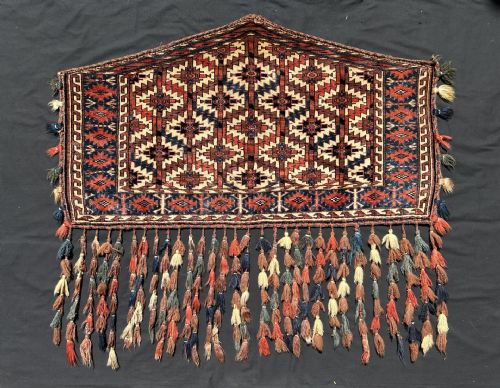
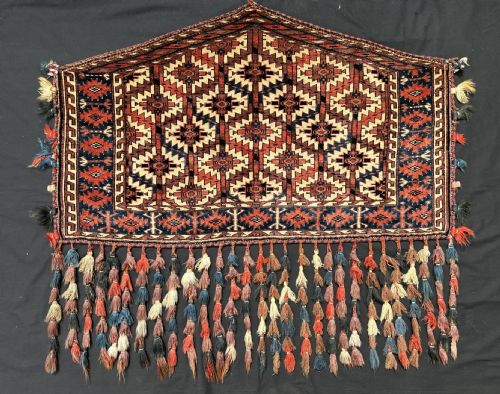
Several saddle covers retain their original tassels, surviving centuries of desert travel ready for the tent floor.
What Varies in Quality
The standard of a weaving depends upon the precision of the knotting, the handling of the wool, and the depth of the natural dyes. Tighter construction and carefully balanced palettes distinguish the finer examples from simpler utilitarian pieces.
Design clarity and the preservation of original borders or plain weave backs also define the merit of a textile. Pieces exhibiting crisp geometry and well-maintained edges reflect a higher level of tribal craftsmanship.
The Hand Woven Tribal Textile Glossary
- Torba
- A small storage bag produced by Turkmen tribes, traditionally used inside a tent for household possessions. These items often feature characteristic gul motifs arranged across the face.
- Chuval
- A large tent bag used for storage by nomadic groups, typically wider than it is tall. Examples frequently display repeated primary medallions.
- Asmalyk
- A ceremonial pentagonal trapping hung on the flank of a camel during Turkmen wedding processions. They showcase elaborate weaving and symbolic designs.
- Gul
- A medallion pattern or repeating octagonal motif used extensively in Turkmen and Central Asian weaving traditions. Each design often identifies a specific tribe or sub-group.
- Bagface
- The decorated front panel of a utilitarian nomadic pouch, detached from its plain weave back or preserved intact. These panels display concentrated tribal iconography.
Hand Woven Tribal Textile: Frequently Asked Questions
How were these bags used?
Nomadic families utilised these textiles primarily for storage inside tents, hanging bags from lattice walls to keep clothing, bedding, and provisions organised. Larger examples served specific roles during migrations or weddings.
Specialised pieces like saddle covers and camel trappings were designed for transport and ceremonial display, combining practical utility with tribal identity.
How do I care for a textile?
Protect these historic weavings from direct sunlight to prevent natural dyes from fading over time. Gentle vacuuming without a rotating brush helps remove dust without damaging the wool fibres.
Keep the items in dry environments and avoid excessive moisture. Professional textile conservation cleaning is recommended if deeper maintenance becomes necessary.
How do I identify different tribes?
Tribal attribution relies on specific design motifs, colour combinations, and structural characteristics unique to each weaving group. Characteristic patterns like repeating guls often point toward particular regions or confederations.
Comparing the border arrangements, knotting density, and wool quality helps distinguish pieces made by Yomut, Tekke, Ersari, or Persian nomadic weavers.