




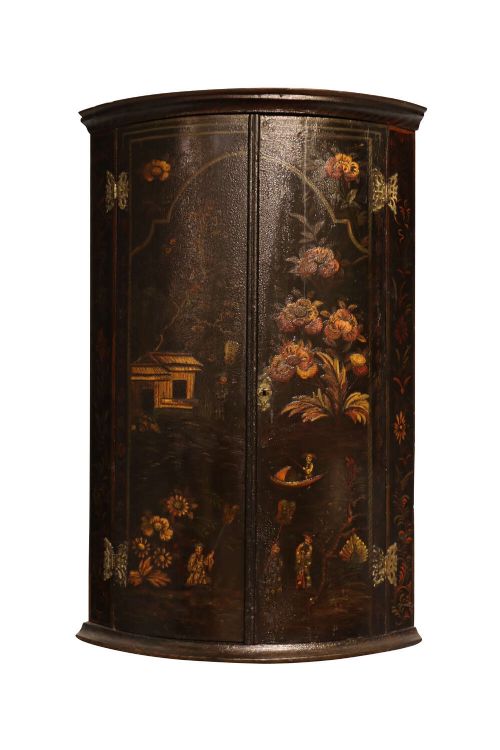


Hand Painted Wall Hangings
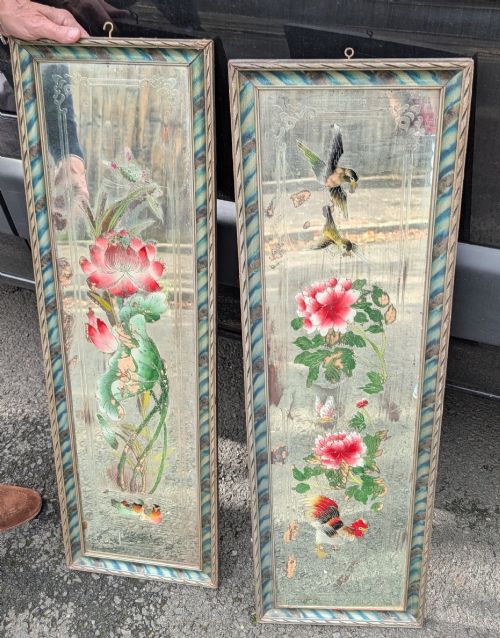
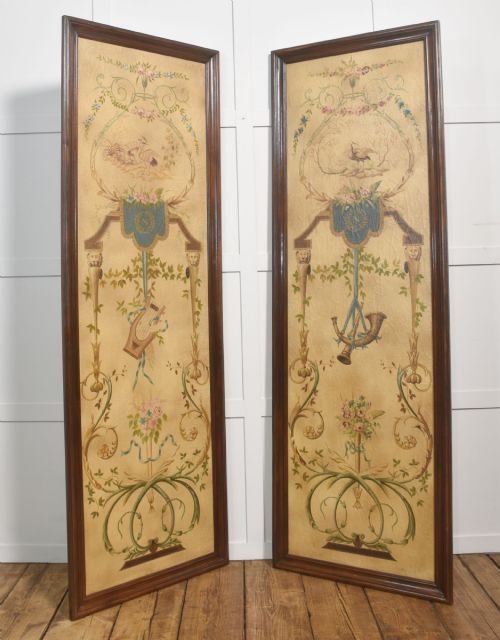
These hand painted wall hangings offer rich pictorial and decorative surface work across panels, textiles, mirrors, and pottery spanning multiple centuries.
Hand Painted Wall Hangings
When you search for hand painted wall hangings, you encounter a diverse range of decorative objects designed to be mounted, including painted panels, textiles, mirrors, and earthenware plaques. The selection spans the eighteenth, nineteenth, and early twentieth centuries, bringing together distinct regional traditions and domestic furnishings.
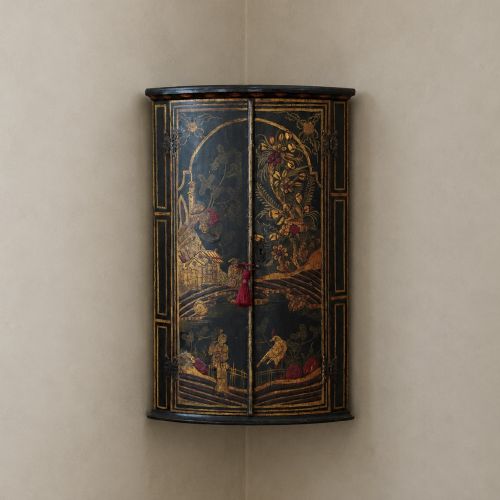
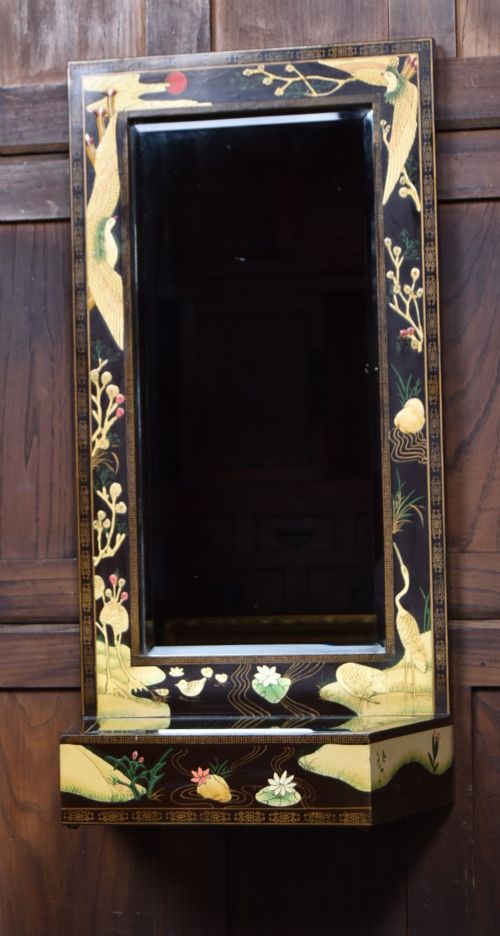
You are most likely to meet pieces finished in styles such as Chinoiserie, traditional Indian Kalamkari, and Victorian decorative arts. These range from large architectural remnants like painted cart doors and corner cupboards to delicate porcelain plaques and fabric wall cloths.
The form encompasses both functional items adapted for display and dedicated works of art intended solely for visual impact. Their origins stretch from British workshops to Asian, Persian, and European centres of production.
How they were made
Makers utilised wood, glass, earthenware, and textiles as the primary base materials for these hanging pieces, applying paint, glaze, gold leaf, and lacquer directly to the surface. Techniques involved detailed brushwork on prepared wooden panels, reverse painting on glass, and block printing on fabrics.
Cabinetry elements and structural supports frequently incorporated brass fixtures and solid timber framing, while lacquerwork required multiple cured layers to achieve a deep sheen. Earthenware and porcelain plaques utilised traditional firing and hand-glazing methods before receiving their final painted motifs.
Materials across the inventory range from glass, brass, and earthenware to textiles, lacquer, and gold leaf.
What varies in quality
The standard of a piece rests upon the execution of the hand-painted detail and the preservation of the original surface pigments. Fine brushwork, careful linework, and complex figurative or floral composition separate superior artistic output from simpler commercial decoration.
The integrity of the underlying material, whether aged timber, intact lacquer, or unblemished ceramic glaze, dictates the overall calibre. Pieces retaining their original framing, hanging mechanisms, and untouched polychrome finish command greater appreciation among collectors.
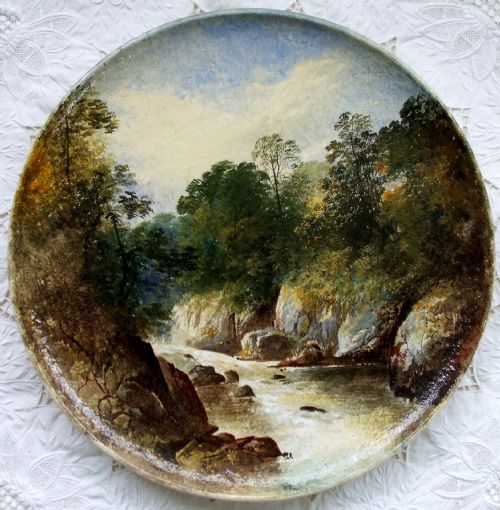
William Yale·Copeland Pottery
The Hand Painted Wall Hangings Glossary
- Chinoiserie
- European decorative style inspired by Chinese artistic traditions, featuring motifs of landscapes, figures, and pavilions. It is frequently seen on lacquer cabinets and painted panels.
- Kalamkari
- Traditional Indian textile painting or block printing technique executed on cotton cloth using natural dyes. These works often depict narrative scenes from Hindu epics.
- Japanned
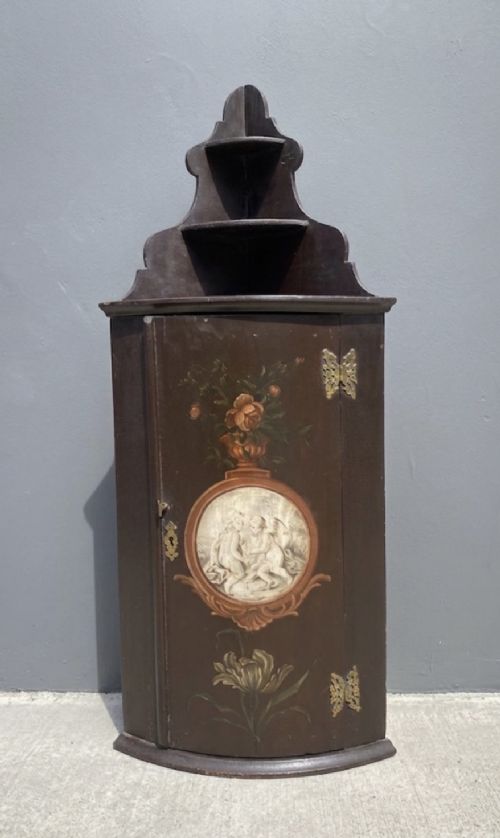
- European imitation of East Asian lacquerwork, created by applying layers of varnish and metallic dust to wood surfaces. It is commonly found on eighteenth and nineteenth-century corner cupboards.
- Polychrome
- Decoration employing multiple distinct colours on a single ceramic, wooden, or plaster object. This technique enhances the visual depth of Dutch Delft and European plates.
- Papier-mâché
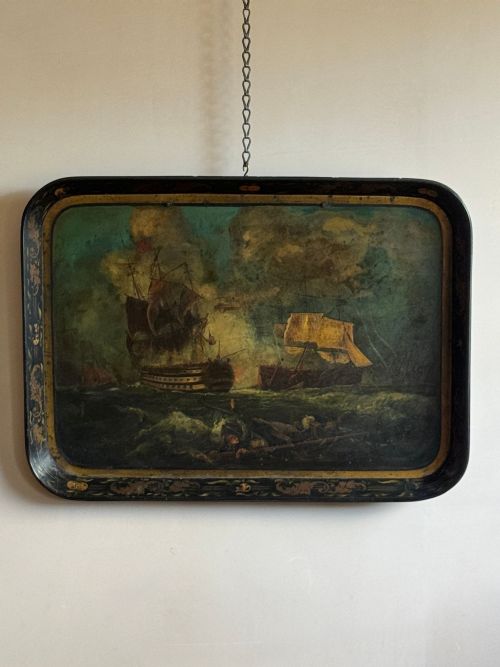
- Composite material made from paper pulp or layers of paper bound with glue, then moulded and painted. It provides a lightweight yet durable base for decorative trays and wall pieces.
Hand Painted Wall Hangings: Frequently Asked Questions
How do I hang heavy wooden wall panels?
Heavy wooden panels and corner cupboards require secure wall fixings distributed evenly across their structural frame to support the weight safely.
Consult a professional installer to assess the wall type before mounting older pieces securely.
Where should I display fabric wall hangings?
Fabric wall hangings and painted textiles need placement away from direct sunlight to prevent the natural pigments and dyes from fading.
Mounting them on interior partition walls helps maintain stable environmental conditions.
How do I distinguish eighteenth-century lacquerwork?
Eighteenth-century lacquerwork displays deep, hand-polished resin layers with subtle crazing and authentic wear patterns built up over decades of age.
Examine the edges and recessed areas to observe the hand-applied ground beneath the top decorative coats.
Can ceramic wall plaques be cleaned safely?
Ceramic and porcelain wall plaques should be dusted gently with a soft, dry brush to avoid disturbing any delicate surface glazes or gold leaf.
Avoid liquid cleaners entirely, as older hand-painted finishes can prove sensitive to moisture.