


Gold Neoclassical Wall Art
Gold neoclassical wall art brings ancient Greek and Roman motifs into interiors through gilt frames, delicate watercolours, and classical engravings.
Gold Neoclassical Wall Art
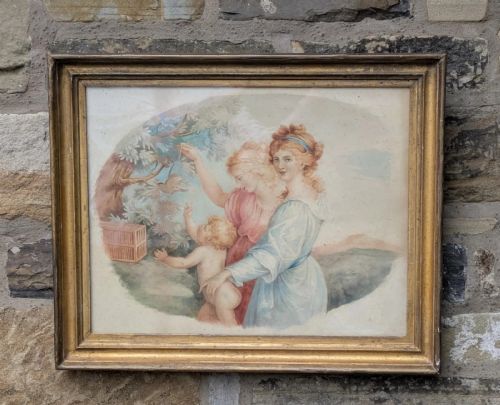
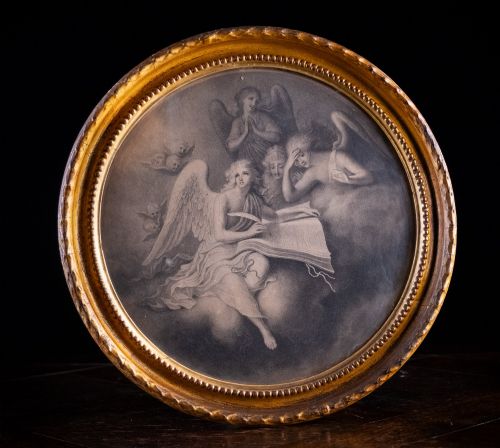
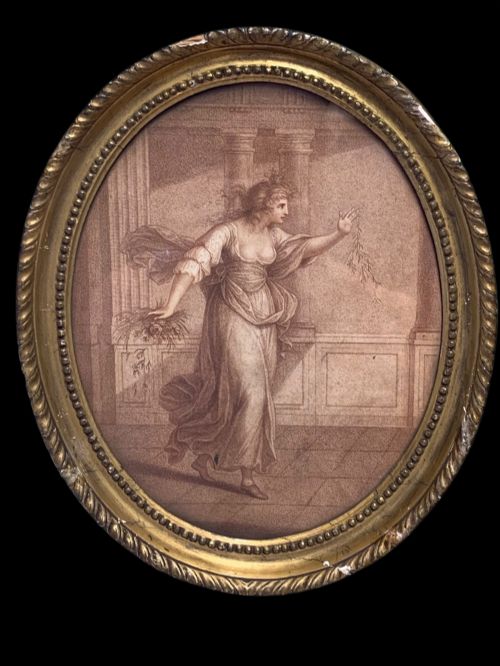
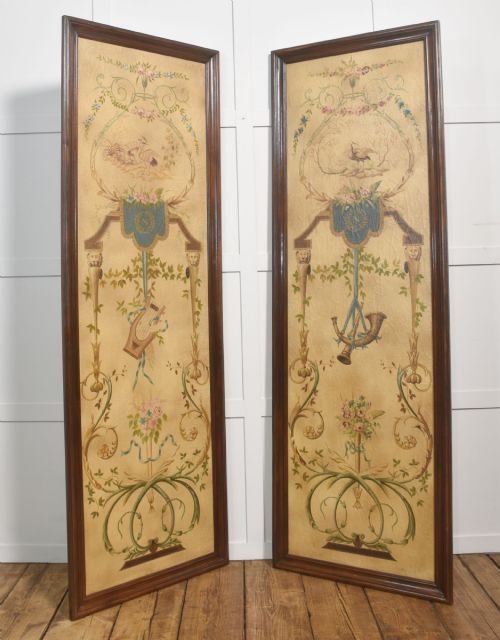
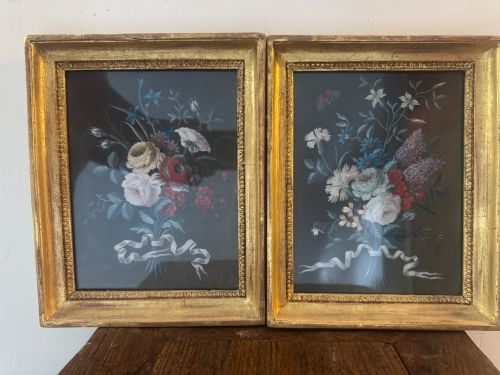
Gold neoclassical wall art encompasses framed paintings, watercolours, gouache flower still lifes, and stipple engravings created across the eighteenth, nineteenth, and early twentieth centuries. These works draw heavily on classical mythology, depicting cherubs, nymphs, gods, and historical scenes in the neoclassical, French Empire, and Georgian styles.
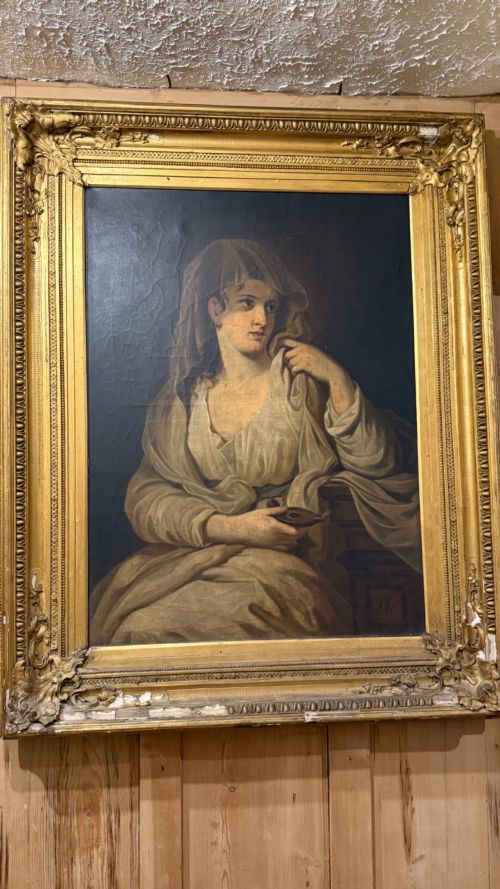
Buyers seeking gold neoclassical wall art will most frequently encounter nineteenth-century framed prints, eighteenth-century engravings, and oil paintings housed in decorative giltwood frames. Pieces range from single portraits to pairs of Grand Tour paintings and decorative panels.
The selection spans various periods including the Georgian era, the 1800s, and later revivals from the 1910s and 1920s, reflecting enduring interest in ancient forms.
How they were made
Artisans and artists employed oil on canvas, watercolour, gouache, and paper to create the central visual works, often executing detailed engravings after major classical frescoes and designs. Frames and panels utilise wood, plaster, and glass, finished with gold leaf or giltwood to achieve a bright, reflective surface.
Printmakers utilised stipple engraving and plate techniques on paper, while painters worked on canvas or board to render mythological figures and portraits with fine precision.
Listings include works on paper, oil on canvas, and glass, framed in giltwood and wood.
What varies in quality
Quality in gold neoclassical wall art rests on the fineness of the hand execution in the painting or engraving and the preservation of the original gilt frame. Early impressions of engravings and master-attributed works display sharper detail and finer line work than later copies.
The integration between the artwork and its period giltwood or gesso frame distinguishes finer decorative statements from ordinary secondary mountings.
Adam Buck·Jean Baptiste Isabey·Louis Léopold Boilly·Guiseppe Mazzolini·Giovanni Liberotti
The Gold Neoclassical Wall Art Glossary
- Giltwood
- Wood that has been coated with gold leaf or gold paint. This finish defines many frames associated with neoclassical wall art.
- Grand Tour
- A traditional trip through Europe undertaken by upper-class young men in the eighteenth and nineteenth centuries. Souvenirs from these journeys often included classical art and engravings.
- Neoclassical
- A Western cultural movement inspired by the classical art and culture of ancient Greece and Rome. It appears widely in the motifs of these framed works.
- Stipple engraving
- An intaglio printmaking technique using dots to create tonal gradations rather than continuous lines. It produces soft, painterly effects on paper.
Gold Neoclassical Wall Art: Frequently Asked Questions
What periods do these pieces come from?
The pieces span from the eighteenth century through the Georgian and Victorian periods into the early twentieth century. Many works reflect revival styles from the 1910s and 1930s.
Dates and attributions follow the specific details recorded in each individual listing.
What subjects appear in this wall art?
Common subjects include classical mythology, ancient gods, nymphs, cherubs, and scenes from Homer's Odyssey. Portraits and flower still lifes also feature frequently.
Engravings often reproduce famous frescoes and classical designs from European collections.
How should I hang these framed works?
Display these pieces away from direct sunlight to protect delicate watercolours, paper engravings, and oil on canvas surfaces. Ensure wall fixings securely support the weight of giltwood and plaster frames.
Pairs and sets look balanced when hung symmetrically at eye level.
Are the frames original to the art?
Many listings feature period giltwood, gold leaf, or metal frames that match the age of the artwork. Some pieces pair older prints with complementary decorative frames.
Material details in each listing specify the construction of both the art and the frame.