


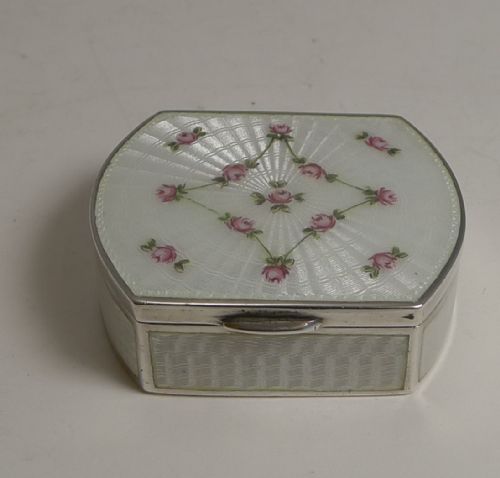
Hand Painted Vanity Box
These hand painted vanity box selections span from Georgian patch boxes to Art Deco powder bowls, offering charming storage for small personal treasures.
Hand Painted Vanity Box
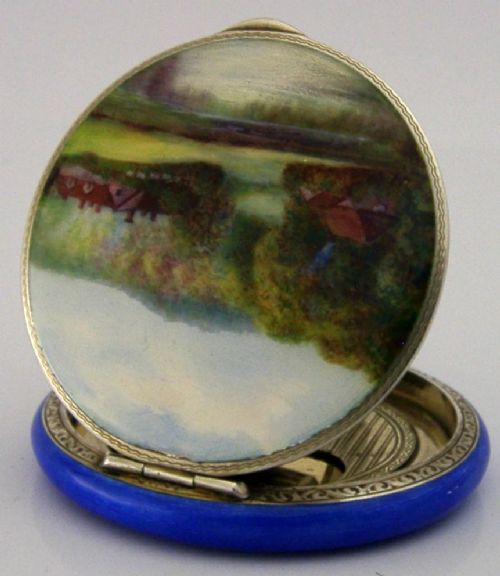
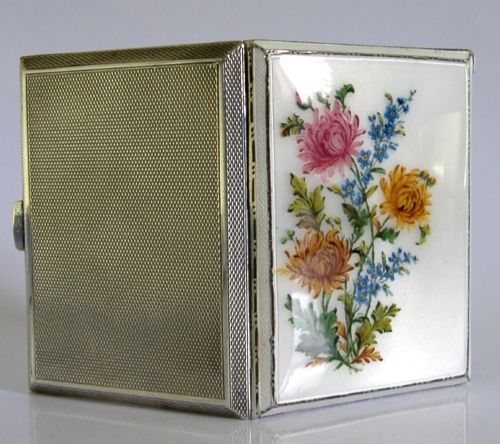
A hand painted vanity box encompasses a broad range of dressing table items, from compacts and cigarette cases to porcelain jewellery caskets and trinket jars. The selections on this page draw from periods including the Georgian era, the nineteenth century, and Art Deco decades.
Buyers frequently encounter sterling silver and enamel compacts alongside French porcelain round boxes and lacquered wooden pieces. These items served functional roles on historical dressing tables, holding cosmetics, patches, or jewellery.
How They Were Made
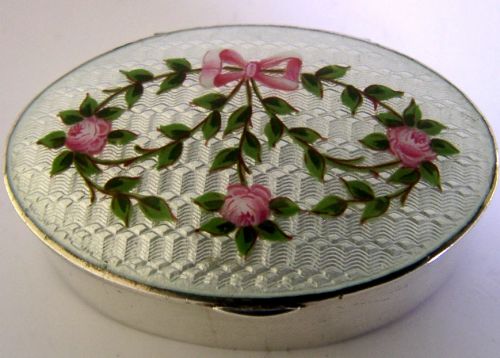
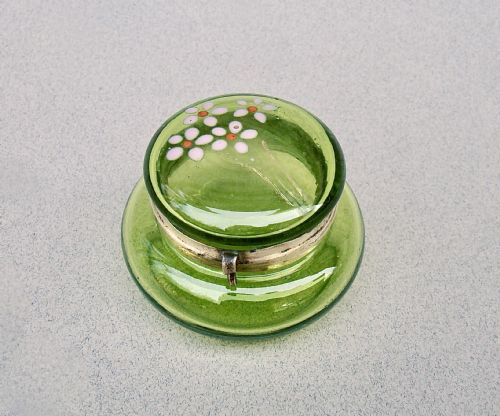
Craftsmen utilised sterling silver, brass, and metal as structural bases for compacts and pill boxes, often applying guilloche or painted enamel to the metal surfaces. Glass items such as Bristol blue dressing table jars relied on traditional glassmaking techniques combined with surface enamelling.
Porcelain pieces from French and Italian workshops featured hand painted decoration paired with gilt detailing and gold leaf accents. Wooden objects incorporated lacquer finishes, including Chinoiserie styles on yellow and black grounds.
Georgian ladies used tiny patch boxes to store artificial beauty spots cut from velvet, ensuring their faces communicated the correct political allegiance at court.
What Varies in Quality
Quality in a hand painted vanity box depends upon the precision of the miniature painting and the integrity of the enamel work. Finer examples display crisp botanical or figural details without blurring or fading.
The choice of base material also defines the tier of the piece, with heavy sterling silver mounts and Sevres or Limoges porcelain sitting distinctly apart from simpler brass or base metal wares.
Giuliano Spinelli·Sevres·Bilston·Limoges
The Hand Painted Vanity Box Glossary
- Guilloche enamel
- A decorative technique where an engraved metal background is covered with translucent enamel, creating geometric patterns beneath the coloured glass surface.
- Patch box
- A small container originally used in the Georgian period to hold cosmetic patches made of silk or velvet used to cover facial blemishes.
- Chinoiserie
- A European artistic style reflecting Chinese motifs and decorative techniques, frequently seen on lacquered boxes from the Georgian era.
- Casket
- A larger decorative box designed for storing precious items such as jewellery or letters, often featuring hinged lids and gilt metal mounts.
Hand Painted Vanity Box: Frequently Asked Questions
What fits inside a vanity box?
These small containers were traditionally used for items such as loose powder, cosmetic patches, pins, and rings. Today they suit modern dressing tables for holding everyday trinkets.
Larger pieces like jewellery caskets accommodate rings and small brooches safely on velvet or silk linings.
How do I date enamel boxes?
Dating relies on stylistic markers, hallmarks on silver mounts, and the specific composition of the enamel colours. Georgian and Victorian pieces often show distinct hand-applied pigments.
Later Art Deco examples feature geometric motifs and brighter industrial colour palettes typical of the nineteen thirties.
Are painted glass jars fragile?
Enamelled glass requires careful handling to preserve the applied surface decoration from scratching or flaking over time. Regular dusting with a soft cloth keeps the glass clean.
Storing them away from direct sunlight protects the painted pigments and prevents any fading of the cobalt or Bristol blue hues.
What is guilloche enamel?
Guilloche is a technique where metal is engine-turned with a precise repeating pattern before translucent enamel is applied over the top. This allows the engraved texture to shine through.
It appears frequently on silver compacts and pill boxes from the early twentieth century.