

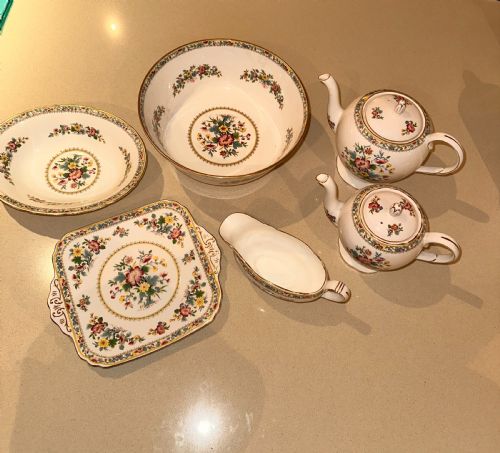


Hand Painted Tea Service
A hand painted tea service brings table rituals to life through fine porcelain and personal brushwork.
Hand Painted Tea Service
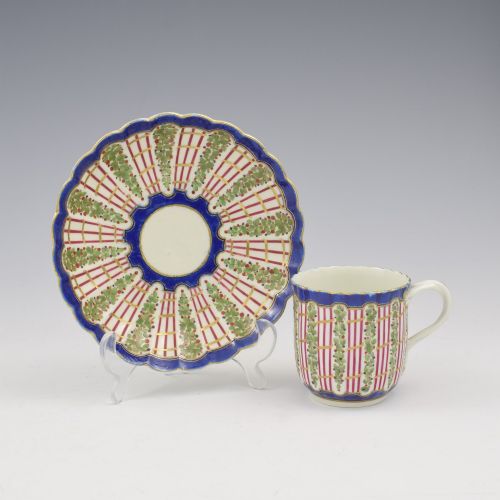
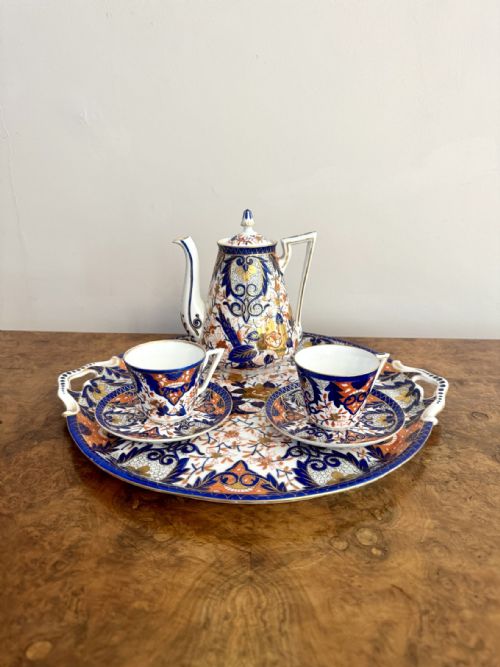
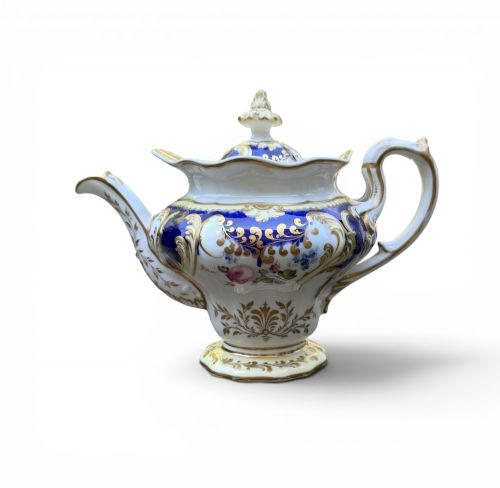
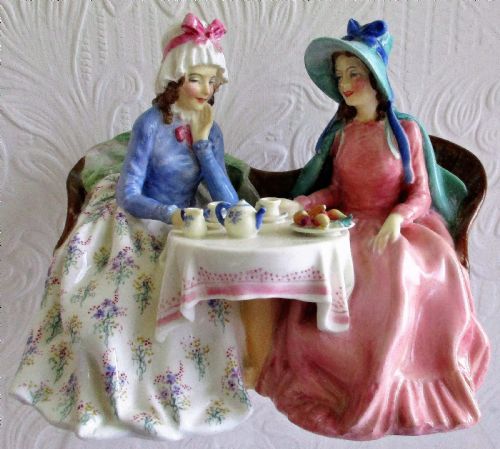
When you search for a hand painted tea service, you encounter coordinated sets spanning the eighteenth, nineteenth, and early twentieth centuries. These groupings often comprise teapots, sugar bowls, and cups alongside larger breakfast sets and coffee services.
The pieces on this page emerge from English, French, Russian, and Japanese workshops, representing periods from Georgian and Regency to Victorian and later decades. You will frequently meet eighteenth-century Worcester porcelain alongside nineteenth-century Staffordshire items and twentieth-century earthenwares.
What varies in quality
The standard of a painted tea service rests upon the precision of the brushwork and the complexity of the pattern. Skilled painters executed crisp enamel details and balanced compositions that elevate simple ceramic forms into fine art.
The refinement of the porcelain paste and the quality of the gilding also distinguish different tiers of manufacture. Greater mastery in kiln firing and enamel adhesion produces pieces with lasting visual depth and superior tactile weight.
A complete child's nursery tea service proves that even historical toddlers took their afternoon refreshments very seriously.
Royal Doulton·Royal Crown Derby·Royal Worcester·Clarice Cliff·Minton·Ridgway
The Hand Painted Tea Service Glossary
- Sucrier
- A small sugar bowl or sugar box equipped with a matching cover. These vessels formed an essential component of historical tea groupings.
- Enamel
- Opaque glass-like pigments applied over fired ceramic bodies to create colourful hand-painted designs. Artisans fixed these colours with a secondary low-temperature kiln firing.
- Gilding
- The application of gold leaf or liquid gold onto porcelain surfaces for decorative enrichment. This technique highlights rims, handles, and painted motifs.
- Kakiemon
- An asymmetric Japanese porcelain style featuring restrained enamel palettes of iron red, blue, green, and yellow. European factories frequently copied these distinct aesthetic arrangements.
- Knop
- A small decorative knob or handle positioned on top of a teapot or sucrier lid. These elements assist in lifting the cover during service.
Hand Painted Tea Service: Frequently Asked Questions
How do I date an antique tea service?
Examine the physical characteristics, ceramic body types, and painted styles present on the pieces. Factory marks and pattern numbers recorded on the bases often provide precise chronological markers.
Comparing potting techniques and enamel palettes against known historical periods helps narrow the decade of manufacture. Consultation with documented manufacturer archives confirms these attributions.
Were these sets meant for daily use?
Historical tea services served social functions in polite households during the Georgian and Victorian eras. Wealthy families used them to host guests and demonstrate refined taste.
Over time, many surviving sets shifted from active dining tables into display cabinets and collections. Their preservation often depends on how gently previous owners handled the fragile painted surfaces.
What is the difference between porcelain and bone china?
True porcelain utilises hard-paste ceramic materials fired at extremely high temperatures to produce a dense, vitreous body. Bone china incorporates animal bone ash into the clay mixture, resulting in a lighter weight and a slightly translucent appearance.
Both materials provided smooth white surfaces ideal for holding detailed hand-painted enamel decoration. Makers selected specific bodies depending on regional traditions and factory recipes.