



Gilded Ceramic Tea Service
A gilded ceramic tea service brings weight and lustre to the table, uniting porcelain bodies with bright metallic enrichment.
Gilded Ceramic Tea Service
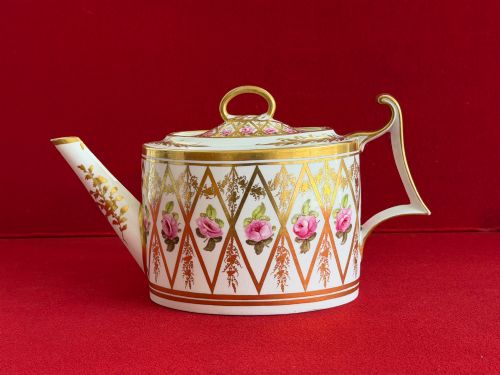
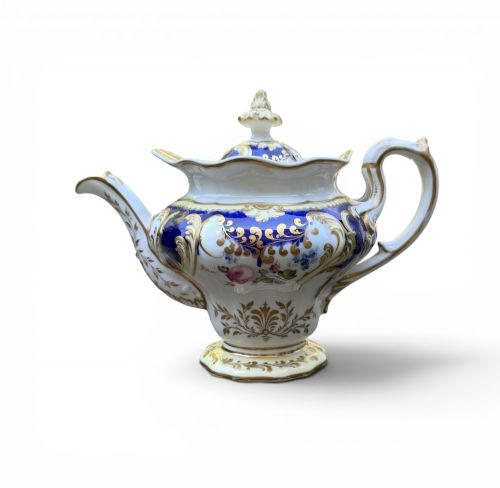
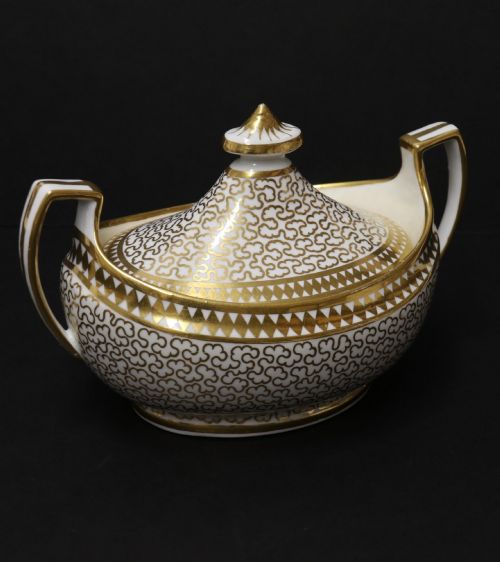
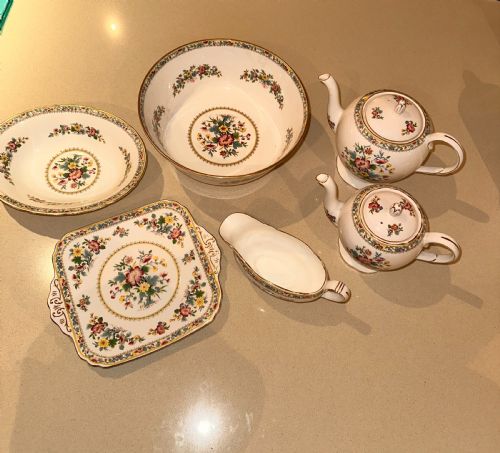
A gilded ceramic tea service comprises matched or assembled vessels designed for the formal serving of tea, coffee, or chocolate. When searching for a gilded ceramic tea service, buyers encounter varied compositions spanning tea sets, coffee sets, and breakfast sets alongside individual teapots and sucriers. The pieces appear in Georgian, Regency, Victorian, Edwardian, and Art Deco styles, often carrying rich hand-painted motifs alongside metallic highlights.
The material foundations range from bone china and Felspar porcelain to ironstone and standard ceramic bodies. Many sets provide complete settings for six or ten persons, incorporating cups, saucers, sugar bowls, and teapots. Others survive as smaller solitaire sets or child toy services, each reflecting the domestic habits of its period.
Materials and production methods
Potters shaped these wares from refined ceramic bodies, bone china, or ironstone, throwing or moulding them into teapots, sucriers, and cups before firing. Artisans then applied underglaze or overglaze enamels in polychrome palettes, including Imari and Kakiemon designs, to decorate the surfaces. Gold leaf, gilt, and liquid gold gilding were painted onto handles, rims, and borders before a final low-temperature fixative firing.
Makers utilised specialised techniques such as blush ivory grounds and bat printing to achieve varied surface textures beneath the metallic highlights. The application of gold required steady hands and precise brushwork, ensuring the precious metal adhered securely to the glazed ceramic body.
Origins range across English manufactories, French workshops, Bohemian studios, and Japanese kilns.
Distinctions in craftsmanship and design
Quality rests in the crispness of the porcelain moulding, the refinement of the ceramic body, and the precision of the hand-painted enamel work. Superior sets demonstrate careful alignment of hand-gilded motifs that follow the contours of handles, spouts, and rims without heavy bleeding or wear.
The depth and purity of the gold leaf or gilt surface separate standard domestic output from finer manufactory productions. Well-preserved gilding retains its full reflective quality and density, showing minimal rubbing from historical use and cleaning.
Derby Porcelain·Chamberlains Worcester·Spode Porcelain·Royal Crown Derby·Royal Worcester·Coalport·Hicks Meigh Johnson·Old Paris·Royal Davenport·Ridgway Porcelain·Macintyre Florian Ware·Minton·Ahrenfeldt Asalvary·Moser·Masons Patent Ironstone·Wileman Foley Shelley·Doric China Longton Stafford·Barr Flight and Barr·Gladstone potteries
The Gilded Ceramic Tea Service Glossary
- Sucrier
- A covered sugar bowl or sugar box designed as part of a matching tea service. These vessels often feature fitted lids and twin handles.
- Gilt
- A thin layer of gold applied to the ceramic surface for decorative effect. It appears on rims, handles, and painted motifs.
- Bone china
- A type of soft-paste porcelain incorporating bone ash, known for its high strength, whiteness, and translucency. It forms the base for many English tea sets.
- Imari
- A decorative style characterised by a palette of underglaze blue, iron red, and abundant gold. It was widely adopted by English porcelain factories during the Georgian and Victorian periods.
- Ironstone
- A heavy, durable type of earthenware patented in the nineteenth century. It provides a robust alternative to porcelain for utilitarian tableware.
Gilded Ceramic Tea Service: Frequently Asked Questions
What pieces comprise a standard set?
A standard set generally includes a teapot, sugar bowl or sucrier, milk jug, and multiple cups with matching saucers.
Larger configurations expand to twenty pieces or more, accommodating up to ten persons for afternoon tea or breakfast.
How should I clean these items?
Gilded ceramics require gentle hand washing in lukewarm water with mild soap.
Harsh detergents, scrubbing brushes, and mechanical dishwashers will erode the delicate enamel and wear away the gold leaf over time.
Are these sets safe for daily use?
While structurally sound, antique tea services feature historical gold leaf and hand-painted enamels that suffer under heavy modern use.
Many collectors reserve them for display or occasional special dining occasions to preserve the fragile surface decoration.
How do I identify the manufacturing period?
Period identification relies upon factory backstamps, paste composition, and stylistic markers such as Rococo Revival curves or Art Deco geometric forms.
Comparing the pattern numbers and decorative techniques against known factory archives helps narrow down the production decade.