


Hand Painted Pottery Plaque
These hand painted pottery plaque examples are historic wall-hung works ranging from Victorian British landscapes to tin-glazed continental chargers.
Hand Painted Pottery Plaque
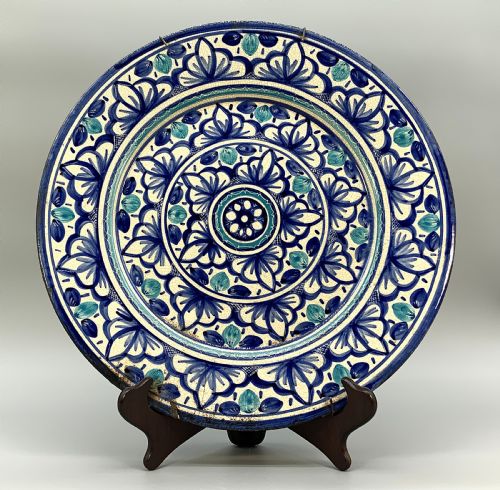
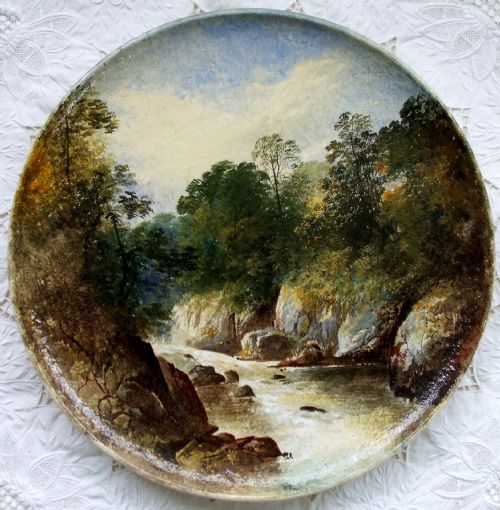
A hand painted pottery plaque is a decorative ceramic piece designed primarily for wall display, encompassing everything from large charger plates to framed artistic scenes. When searching this phrase, buyers encounter diverse forms including large Moorish style dishes, devotional Madonnas, and detailed landscape paintings on ceramic.
The pieces on this page span several distinct periods, most notably the eighteenth and nineteenth centuries, alongside twentieth-century continental works. Common formats include round wall chargers and rectangular decorative plaques, often bearing specific titles or maker inscriptions on the reverse.
Origins vary widely across European ceramic traditions, taking in English Victorian factories, French faience works, Italian majolica, and Dutch delftware. Buyers frequently meet Copeland landscape plaques from the nineteenth century or tin-glazed earthenware chargers from earlier European centres.
Materials and production methods
Makers utilised earthenware, ceramic bases, and tin-glazed earthenware bodies as the foundation for these works. These substrates provided a stable surface suited to receiving liquid glazes and detailed pigments.
Decoration relied upon pigment, paint, and enamel glaze applied directly to the surface before firing. Tin-glazing and specialised polychrome techniques allowed artists to achieve rich blue and white designs or multi-coloured pictorial scenes.
A salesman's miniature plaque allowed travelling reps to demonstrate factory wares without carting full-sized wall chargers around the country.
Factors of quality and execution
Quality rests heavily on the skill of the brushwork and the precision of the painted subject, separating standard decorative wares from master-painted pictorial plaques. Fine portraiture and detailed landscape rendering by named artists elevate a piece significantly above generic factory production.
The integrity of the glaze and the preservation of the enamel colours over centuries dictate the visual impact of the object. Rich polychrome depth and clean tin-glazed surfaces demonstrate superior kiln control and raw material selection during manufacture.
William Yale·Bassano pottery works·C. Ravier·Copeland
The Hand Painted Pottery Plaque Glossary
- Majolica
- A type of Italian tin-glazed pottery known for bright colours and opaque glazes. The term also describes nineteenth-century Victorian colourful lead-glazed earthenwares.
- Charger
- A large decorative plate intended for display on a wall or sideboard rather than for dining use. These often feature prominent painted scenes or geometric motifs.
- Polychrome
- Decoration utilising multiple distinct colours rather than a single monochrome palette like blue and white. It allows for more naturalistic representation in painted ceramic scenes.
- Devotional plaque
- A religious ceramic piece created for personal or domestic worship, frequently depicting sacred figures such as the Madonna with Child.
Hand Painted Pottery Plaque: Frequently Asked Questions
How do I hang a heavy ceramic plaque?
Most antique plaques were made with integrated foot rings or mounting holes at the back for cord or wire suspension. It is essential to use fixings rated well above the weight of the ceramic.
For large chargers or heavy salesman sample pieces, professional wall hooks secured directly into wall studs provide the safest display method.
Were these pieces meant for the wall?
Many larger examples, such as charger plates and pictorial plaques, were specifically produced for decorative wall display rather than utility. Artists treated the ceramic surface much like a canvas for landscape or portrait painting.
Smaller formats might have served as cabinet pieces or devotional items, but suspension holes are common across the historical spectrum.
How do I clean an antique painted plaque?
Dusting gently with a dry, soft brush is the safest way to maintain the surface without disturbing fragile enamel glazes. Moisture can infiltrate historic hairline cracks or damage unglazed areas.
Harsh cleaning products must be avoided entirely to preserve the original pigments and the integrity of the tin glaze.
How can I tell an eighteenth-century piece from a nineteenth-century copy?
Examining the body paste, the characteristics of the glaze, and the style of the hand painting helps determine the likely period of manufacture. Eighteenth-century pieces often exhibit distinct glaze pooling and hand-mixed pigments characteristic of earlier workshops.
Victorian productions and later revivals frequently display more uniform factory bodies and distinct maker stamps or registration numbers on the reverse.