
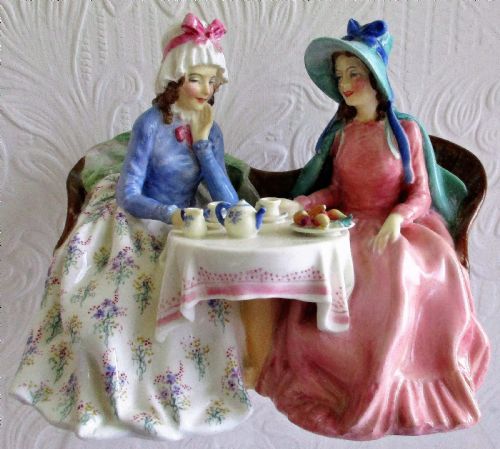


Hand Painted Porcelain Group
These hand painted porcelain group pieces bring together figures, musicians and pastoral scenes shaped in clay, painted in enamel and touched with gold leaf.
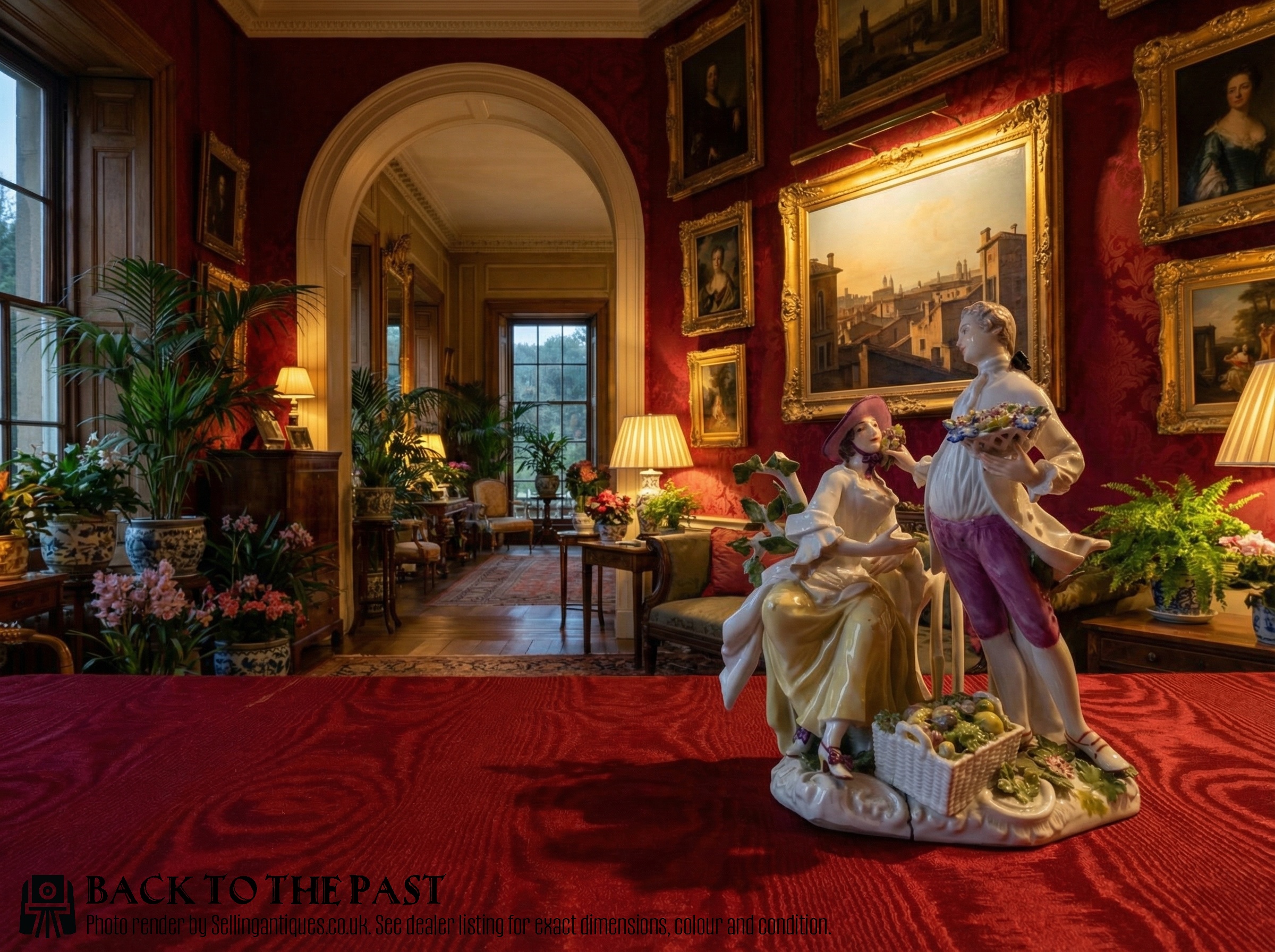
Hand Painted Porcelain Group
A hand painted porcelain group consists of multi-figure ceramic sculptures depicting romantic couples, gardeners, allegorical scenes and musicians. These works appear in styles ranging from Rococo Revival and French Rococo Revival to Victorian and Dresden porcelain. Pieces span the eighteenth century, the nineteenth century and the early twentieth century.
Buyers encounter individual porcelain figurines, decorative figurines, candlesticks, spill vases and complete figure groups on this page. Subjects vary from pairs of lovers and children in gardens to allegorical representations of the seasons and musical performances.
Origins stretch across European centres of ceramic production, including German, French and English workshops. Meissen, Derby, Volkstedt, Carl Thieme and Staffordshire factories produced these figural compositions across multiple generations.
What varies in quality
The refinement of the hand painting determines much of the visual success in these figural groups. Subtle shading on facial expressions and detailed work on garments separate accomplished modelling from simpler production.
Intricacy of the ceramic form itself distinguishes the work, particularly in delicate elements like floral bocage, lace work and multi-figure compositions. The precision of the moulding and the crispness of the gilt and enamel application define the upper tier of these pieces.
Musicians strum porcelain harps while gardeners tend ceramic cabbage patches, frozen mid-song in eternal plaster pastoral bliss.
Royal Doulton·Bourdois and Bloch·Meissen·Carl Thieme·Derby·Volkstedt·Eugene Clauss·Ludwigsburg
The Hand Painted Porcelain Group Glossary
- Bocage
- An ornamental background of carved or modelled foliage and leaves surrounding figures. This decorative element appears frequently on eighteenth century English and continental candlestick figures.
- Hard-Paste Porcelain
- A dense, durable ceramic paste fired at high temperatures using kaolin and petuntse. This material forms the body for many continental porcelain groups.
- Bisque
- Unglazed ceramic fired once to produce a matte, biscuit-like finish. This porous material captures fine sculptural detail without surface glaze.
- Gilt
- A thin layer of gold applied to ceramic surfaces for decorative highlights. Makers utilised this technique on garments, bases and floral motifs.
- Flatback
- A ceramic figure moulded with a flat, unpainted back designed to stand against a wall. Staffordshire potters produced these earthenware pieces in quantity during the Victorian era.
Hand Painted Porcelain Group: Frequently Asked Questions
How do I identify a Meissen porcelain group?
Meissen pieces often feature modelled figural scenes like pairs of lovers or seasonal allegories produced across the eighteenth and nineteenth centuries. Look for characteristic painting styles and refined details in the porcelain bodies.
Continental factories utilised distinct modelling techniques that evolved from Rococo styles into later nineteenth century interpretations.
What is a Staffordshire flatback figure?
Staffordshire flatback figures are earthenware pieces moulded with finished fronts and flat, unglazed backs meant for display on mantelpieces. These nineteenth century items often depict popular figures, domestic scenes or moral groups like the Band of Hope.
Potteries in Staffordshire produced these earthenware works in sets and pairs for everyday Victorian homes.
Where were porcelain lace groups made?
Porcelain lace groups originated in continental workshops, with firms like Bourdois and Bloch in Paris producing notable examples. Real lace dipped in slip and fired at high temperatures created the stiffened drapery effects.
French and German makers utilised this delicate technique to render elaborate nineteenth century garments.
How should I display porcelain figures?
Display porcelain figures and groups away from direct sunlight and heavy foot traffic to protect delicate elements like applied flowers, lace and bocage. Stable shelving inside enclosed cabinets provides secure housing for fragile ceramic limbs and instruments.
Handle each piece from the solid base rather than protruding arms, instruments or delicate foliage.
What does a spill vase figure group do?
A spill vase figure group combines a decorative ceramic sculpture with a vertical cylindrical holder designed to store taper spills for lighting fires. These functional items integrated figural art with household utility in nineteenth century rooms.
Staffordshire and other potteries shaped these earthenware pieces to serve both decorative and practical purposes.