


Hand Painted Marriage Chest
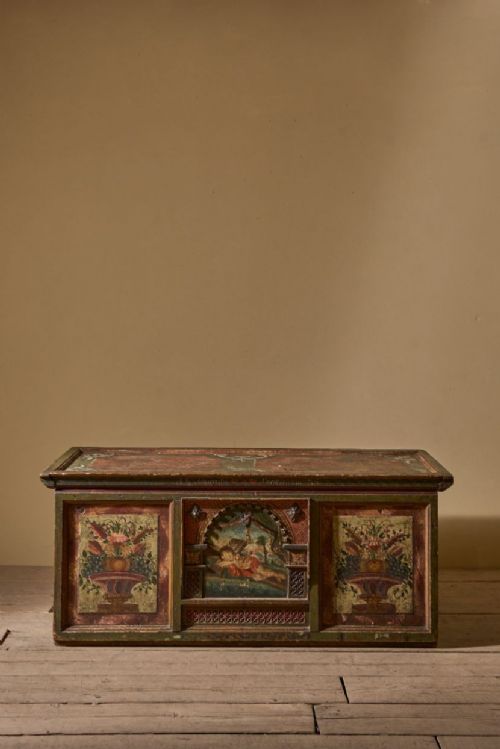
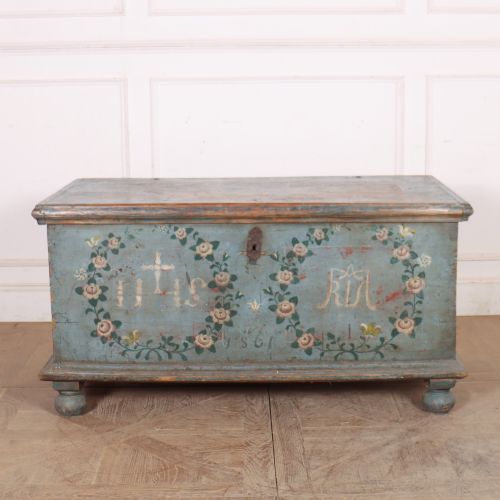
A hand painted marriage chest is a rustic wooden storage piece commissioned for a wedding, bringing vibrant folk art colour and regional history directly into your home.
Hand Painted Marriage Chest
When you examine a hand painted marriage chest, you are looking at utilitarian wooden storage containers transformed by regional folk art traditions. These pieces served a practical domestic purpose while functioning as ceremonial gifts for newly married couples. They originate from various European and international regions, reflecting distinct local customs through their decoration.
On this page, the version you are most likely to meet is a pine trunk or coffer from the nineteenth century. Swedish examples dominate the selection, often featuring a dome top construction and traditional folk art motifs. Alongside these Scandinavian pieces, you will encounter items from the Alpine region, Spain, Italy, Hungary, and Romania.
The forms vary from flat-topped blanket boxes to robust dome top coffers fitted with iron or wrought iron hardware. Some pieces bear specific dates alongside their painted decoration, marking the exact year of the union they celebrated. Each chest represents a distinct vernacular style, ranging from Scandinavian country aesthetics to Spanish colonial and Moorish-influenced design.
How they were made
Makers constructed these storage pieces primarily from solid pine, utilising sturdy timber joined to withstand heavy domestic use. Oak appears occasionally in regional variants, providing an alternative sturdy substrate for the painted surface. Iron and wrought iron hardware, including strap hinges and carrying handles, reinforced the structural corners and lid.
Artisans applied various paints and pigments directly to the wood to create elaborate decorative schemes. Surviving finishes include tempera paint, mineral pigment, and standard oil or oil-based paints. These materials yielded rich, matte surfaces that aged characteristically over the decades.
Some nineteenth-century Swedish brides stored their entire futures inside a dome top painted box.
What varies in quality
The distinction between a standard piece and a superior example rests primarily in the preservation and execution of the painted surface. Original, untouched paintwork displaying crisp regional motifs commands greater interest than pieces with extensive later overpainting. The complexity of the folk art design, whether floral scrolling or architectural panels, also dictates the visual impact.
Structural integrity and the survival of original ironwork separate the finer pieces from heavily restored items. Retaining the original wrought iron hinges, locks, and carrying handles maintains the historical coherence of the trunk. Furthermore, pieces that preserve legible dates or maker inscriptions offer a clearer provenance.
The Hand Painted Marriage Chest Glossary
- Cassone
- A traditional Italian chest or coffer used for storing a bride's trousseau. These pieces often featured elaborate painted or carved decoration.
- Cofer
- An alternative historical spelling for coffer, denoting a robust storage chest with a lid. They frequently featured reinforced iron bands for security and transport.
- Tempera paint
- A permanent, fast-drying painting medium consisting of coloured pigment mixed with a water-soluble binder medium. It produced a durable matte finish on many early folk art pieces.
- Mineral pigment
- Naturally occurring earthy substances ground into powder and mixed with a binder to colour the wood surfaces. These materials provided the vibrant hues seen on nineteenth-century regional chests.
Hand Painted Marriage Chest: Frequently Asked Questions
What is a marriage chest?
A marriage chest is a large wooden storage box commissioned or given to celebrate a wedding. Families used them to hold the bride's household linens, garments, and dowry items.
Over time, these trunks transitioned from utilitarian bedroom storage into decorative focal points in domestic interiors.
How do I care for a painted chest?
Keep the piece away from direct sunlight and strong heat sources to prevent the wood from warping and the historic paint from fading. Dust the surface gently with a soft, dry cloth rather than using liquid polishes or modern cleaning chemicals.
Maintain stable indoor humidity levels to protect both the pine timber and the fragile pigment layers from cracking.
How can I tell a Swedish chest from an Alpine one?
Swedish chests from the nineteenth century frequently feature pale pine, dome tops, and distinct Scandinavian folk art motifs painted in contrasting tones. Alpine region pieces often display bolder regional pigments and specific mountainous design characteristics.
Examining the structural construction and the palette helps distinguish the Scandinavian country style from southern European variations.
Were these chests used for travel?
These robust coffers served primarily for static storage within the home rather than frequent travel. Their heavy pine construction and iron hardware made them secure for holding valuable textiles and household goods.
Handles attached to the sides allowed two people to lift and reposition the trunk within the household when necessary.