
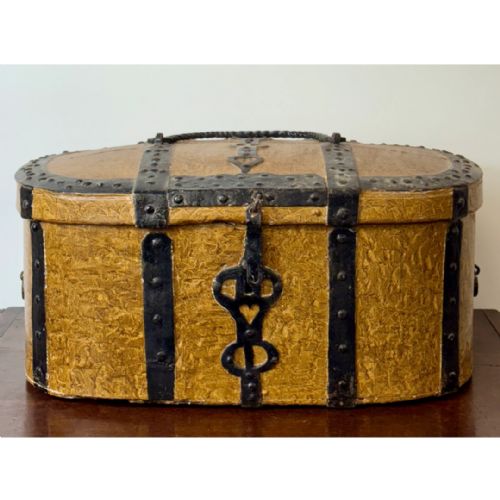
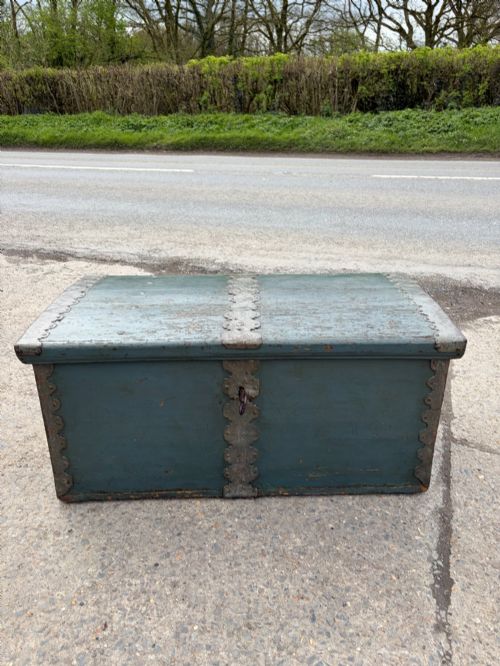


Vintage Domed Wooden Trunk
A vintage domed wooden trunk brings rustic character and practical storage to a room, offering deep lids and robust timber construction.
Vintage Domed Wooden Trunk
A vintage domed wooden trunk provides a distinct curved lid designed to shed water during travel and offer generous internal capacity. These pieces range from substantial 18th century European folk art coffers to smaller Victorian painted pine strong boxes.
Most examples encountered here span the 19th century, featuring traditional joinery in pine, oak or teak. Buyers often find Scandinavian painted pieces alongside sturdy travel chests bound in iron.
The form stretches from large blanket chests down to decorative boxes and caskets. Each object balances utility with decorative folk art traditions across various regions.
How they were made
Construction relies on solid timbers such as pine, oak and teak, shaped to form the signature curved lids. Workshops utilised traditional joinery methods to house belongings securely.
Iron and wrought iron reinforcement bands, hinges and locks were fastened to secure the wooden structures. Surfaces frequently display original paint finishes, canvas coverings or polished wood.
Several of these travel companions survived rough Atlantic crossings only to end up holding spare duvet covers.
What varies in quality
Quality rests in the preservation of original painted surfaces and folk art details. Pieces retaining their early paintwork or untouched decorative finishes command greater visual interest.
Structural integrity of the curved lid and the presence of original wrought iron hardware distinguish finer examples. The sophistication of regional folk art motifs also elevates the character of individual trunks.
The Vintage Domed Wooden Trunk Glossary
- Dome top
- A curved lid design originally intended to shed moisture during travel. This profile provides extra vertical storage space inside.
- Coffer
- A heavy wooden chest traditionally used for storing valuables. These often feature robust construction and secure locking mechanisms.
- Folk art
- Decorative design and craftsmanship rooted in regional cultural traditions. Painted motifs on these trunks reflect local rural aesthetics.
- Strong box
- A heavily reinforced small chest designed to protect money or documents. They typically incorporate iron bands for added security.
Vintage Domed Wooden Trunk: Frequently Asked Questions
How do I clean a painted trunk?
Dust the surface gently with a soft, dry cloth to protect fragile original finishes. Avoid harsh modern chemical cleaners that might strip historic paint.
Test any conservation products on a hidden area first. Keeping the timber away from direct heat sources prevents the wood from drying out.
What were domed trunks used for?
Travellers utilised these trunks for shipping personal belongings on ships and carriages. The curved lid prevented luggage from being stacked on top and shed rain effectively.
Inside the home, families stored blankets, linens, and valuables. Their sturdy build allowed them to double as seating benches in modest dwellings.
How do I date a wooden trunk?
Examine the construction marks, hand-cut nails, and type of hinges used. Older pieces from the 18th century often feature pegged joints and distinct regional folk art.
Later Victorian and 19th-century examples introduce machine-sawn timber and different locking mechanisms. Original paint and surface wear also offer clues to the age of the piece.
Are these trunks suitable for daily use?
These pieces function well for storing household items like blankets and out-of-season clothing. Their deep interiors make them practical additions to modern living spaces.
Ensure the interior is clean and free from old odours before storing textiles. Placing them out of direct sunlight helps preserve the historic wood and paint.