





Hand Painted Lustre Jug
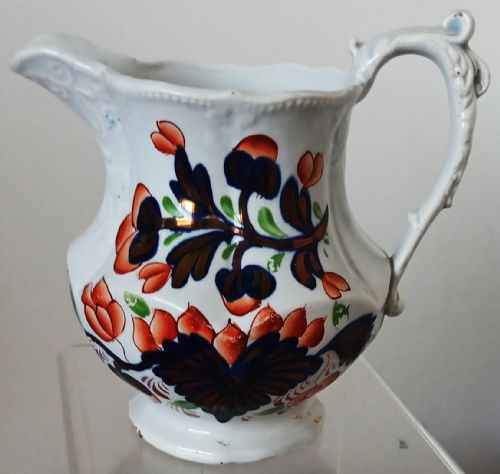
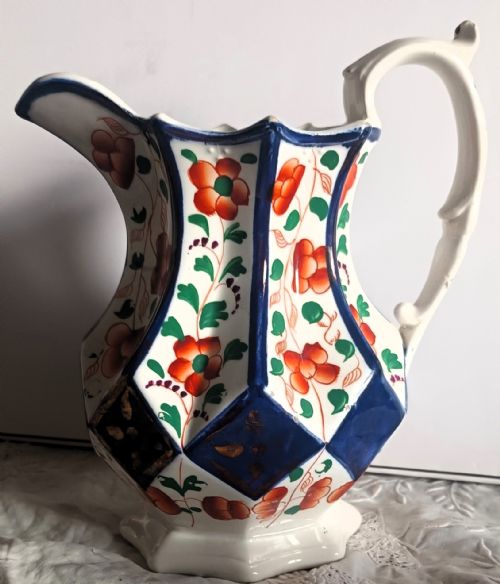
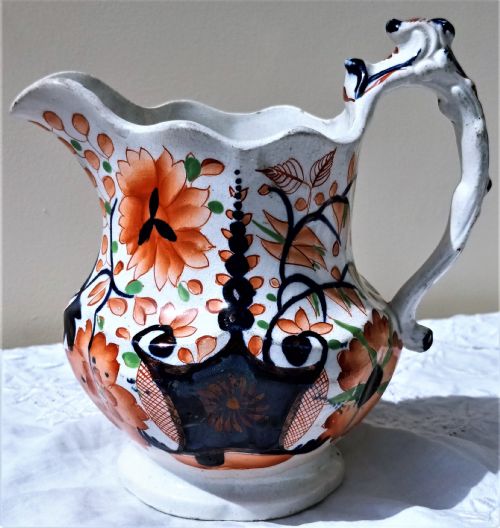
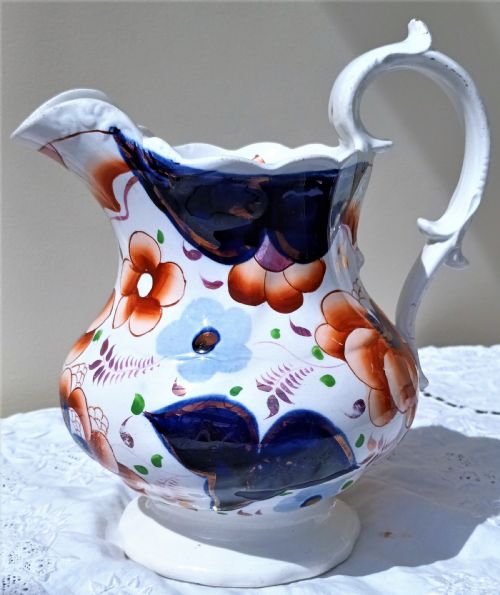
These hand painted lustre jug examples bring striking metallic glazes and vibrant painted patterns to a room, offering genuine nineteenth-century character for a table or shelf.
Hand Painted Lustre Jug
When you search for hand painted lustre jug items, you encounter Staffordshire and Gaudy Welsh earthenware and ironstone pieces from the nineteenth century. The selection spans pitchers, cream jugs, milk jugs and water jugs created during the Victorian and Georgian periods.
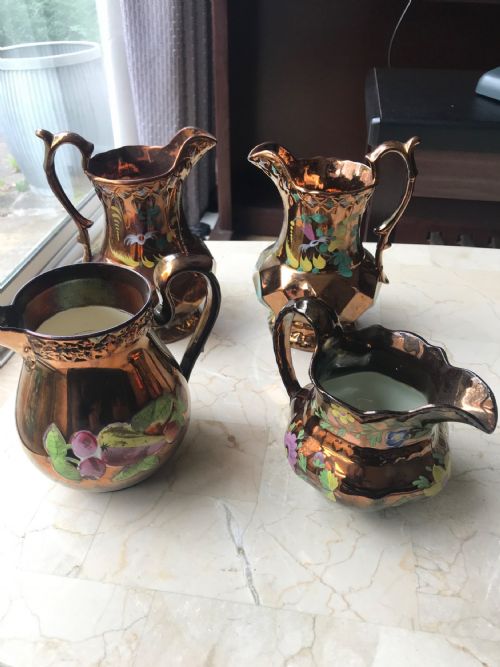
You are most likely to meet Victorian Staffordshire copper lustre jugs decorated with hand painted fruit, alongside Gaudy Welsh pottery jugs bearing named patterns such as Bethesda, Grape, Drape, Pagoda, Harlech, Aberaeron and Conwy.
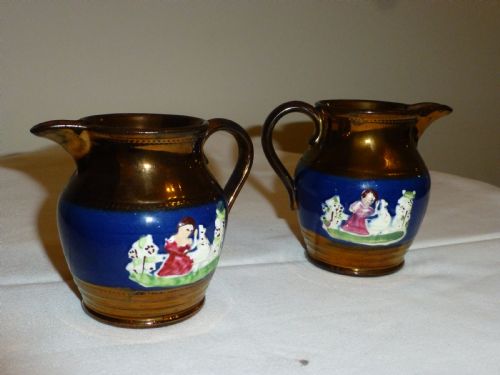
These vessels range from small cream jugs to larger milk and water jugs, reflecting domestic tea and tableware needs of the nineteenth century. Each piece carries hand-applied decoration, uniting metallic lustre glazes with enamel painting.
How they were made
Potters shaped these vessels from earthenware and ironstone, applying a glaze before introducing copper lustre techniques that created the characteristic metallic sheen. Enamel colours were then hand painted over or under the glaze to form floral and architectural motifs.
Staffordshire workshops and Welsh potteries relied on manual skill for both the ceramic forming and the subsequent hand decoration with fruit patterns and named designs. The application of metallic salts during firing produced the distinctive reflective copper lustre finish.
All listed pieces date from the nineteenth century, uniting Victorian and Georgian eras through earthenware, ironstone and copper lustre glaze.
What varies in quality
Quality rests upon the crispness of the hand painted enamel work and the evenness of the copper lustre glaze across the earthenware body. Pieces with detailed fruit decoration or well-defined named patterns display superior artisan skill compared to simpler executions.
The visual impact depends on the preservation of the metallic sheen and the brightness of the hand-applied enamel colours. Larger milk and water jugs often show bolder proportion and more ambitious painted decoration than smaller cream jugs.
The Hand Painted Lustre Jug Glossary
- Copper Lustre
- A metallic glaze technique containing copper that imparts a reflective, coppery sheen to ceramic surfaces. It defines the appearance of many nineteenth-century Staffordshire jugs.
- Ironstone
- A dense, durable type of earthenware developed in the nineteenth century for sturdy domestic tableware. It provides a strong body for transfer-printed and hand-painted patterns.
- Gaudy Welsh
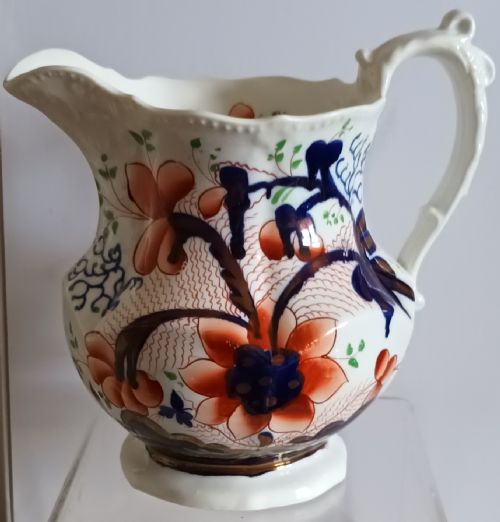
- A style of colourful pottery produced in the nineteenth century featuring bright cobalt blue, copper lustre, iron red and green enamels. Named patterns include Bethesda, Grape, and Pagoda.
- Staffordshire
- A major English pottery-producing region known for earthenware figures and utility jugs. Workshops here turned out large quantities of copper lustre and decorated milk jugs.
- Enamel
- Opaque glass-like paint applied over the glazed ceramic surface and fired at a lower temperature. It provides the vibrant red, blue and green details seen on Gaudy Welsh and Staffordshire pieces.
Hand Painted Lustre Jug: Frequently Asked Questions
How do I date a lustre jug?
Nineteenth-century examples are identified through their ceramic bodies, typically earthenware or ironstone, combined with characteristic copper lustre glazes. Stylistic clues such as Victorian flower motifs and named Gaudy Welsh patterns help narrow the period.
Examining the base and the weight of the ceramic further distinguishes early Victorian and Georgian production methods from later industrial wares.
Were these jugs used daily?
Most of these pitchers and jugs served practical functions on nineteenth-century tea and breakfast tables for holding milk, cream or water. Their robust earthenware and ironstone construction made them suitable for everyday household service.
Over decades of use, handling wear often developed around the handles and rims, recording their active domestic history.
What is Gaudy Welsh pottery?
Gaudy Welsh refers to a distinctive type of nineteenth-century pottery featuring vibrant enamel colours combined with copper lustre embellishments. Popular patterns included floral and architectural themes like Grape, Drape, and Pagoda.
These pieces were widely exported and used in homes, prized for their bright palette that enlivened modest tableware settings.
How should I display my jug?
The metallic copper lustre finish reacts well to natural daylight, making open shelving or mantelpieces ideal locations to catch the light. Grouping pieces by form, such as pairing cream jugs with larger milk jugs, highlights their varied scale.
Ensure they are placed away from edge hazards, as nineteenth-century earthenware benefits from stable, secure placement.