


Victorian Ceramic Milk Pitcher
A victorian ceramic milk pitcher brings sturdy nineteenth-century utility and vivid transfer-printed or hand-painted patterns straight to the morning table.
Victorian Ceramic Milk Pitcher
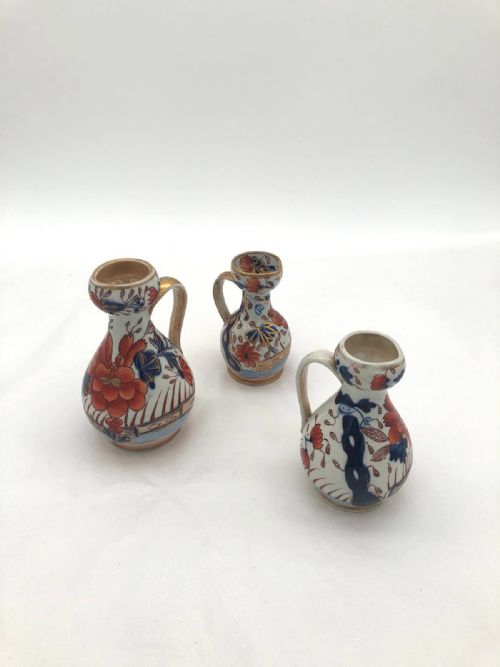
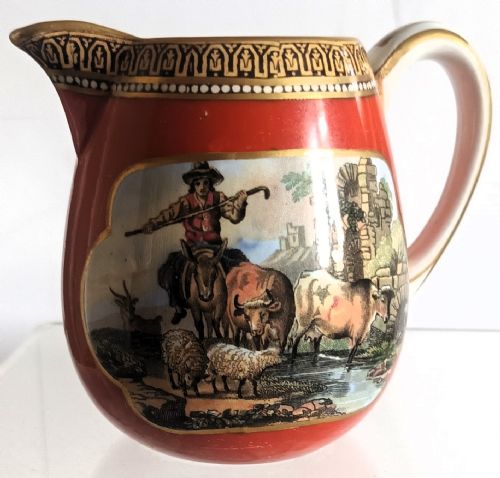
A victorian ceramic milk pitcher encompasses a wide variety of pouring vessels produced across the nineteenth century, including cream jugs, milk jugs, and larger utilitarian pitchers. The forms appearing on this page span several decades, reaching from Georgian precursors through the height of the Victorian era up to 1900, with many pieces originating from Staffordshire potteries.
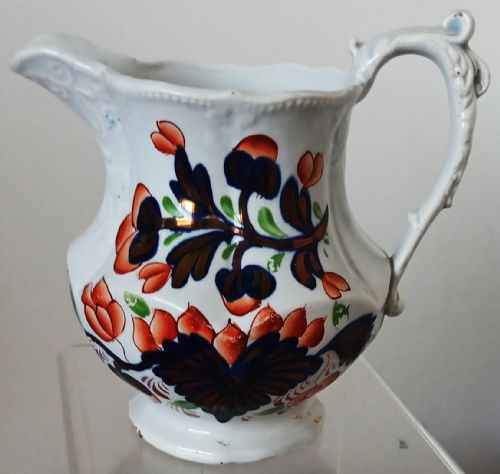
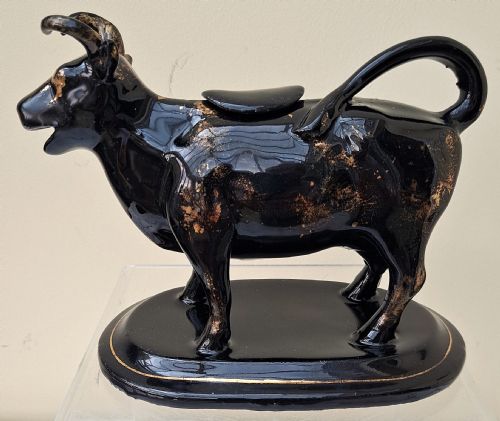
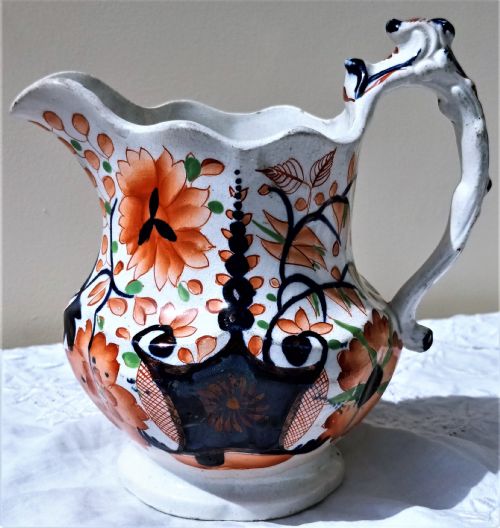
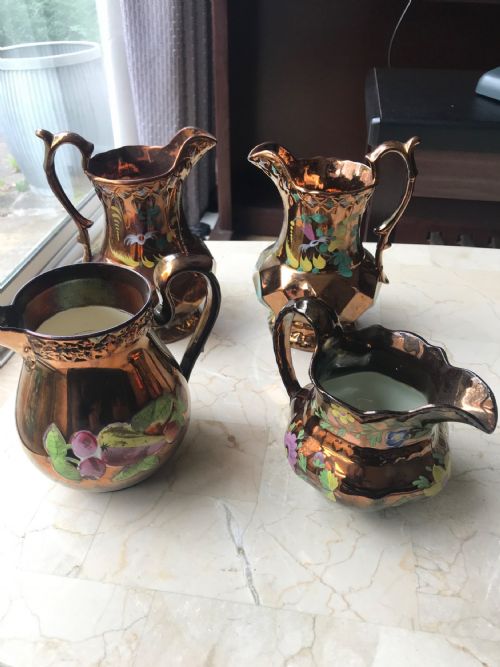
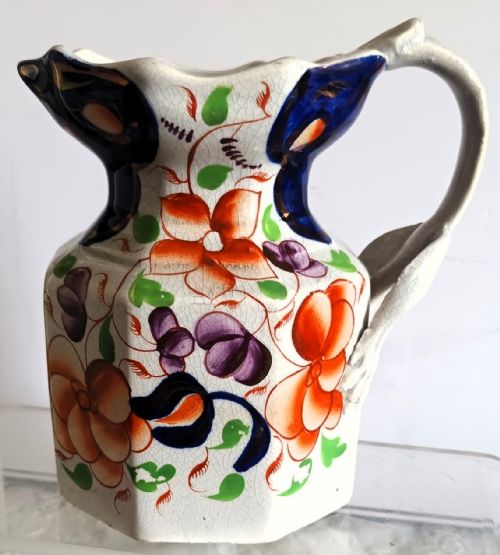
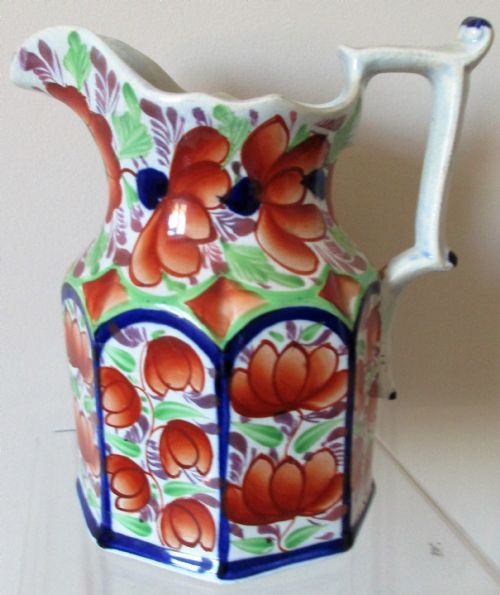
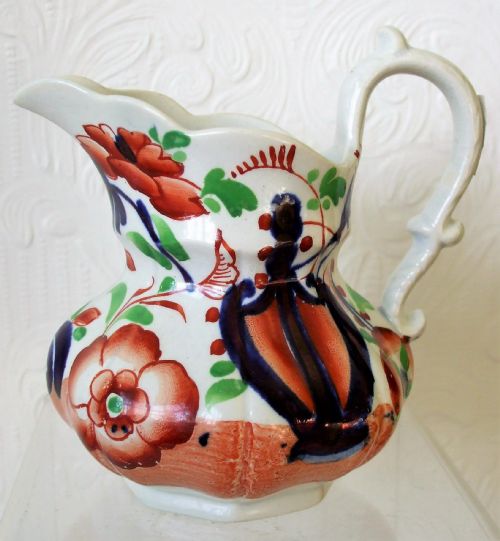
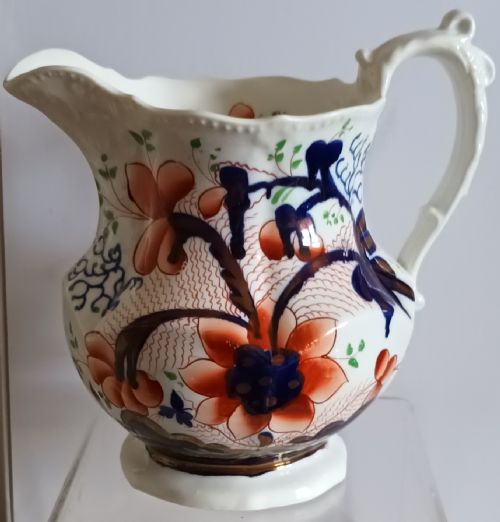
Buyers will encounter diverse regional patterns, notably Gaudy Welsh designs such as Pagoda, Gwent, and Conwy, alongside Ironstone jugs, copper lustre ware, and novelty cow creamers. These domestic items served daily dairy needs in the nineteenth-century household, shifting between plain utilitarian service and brightly decorated parlour display.
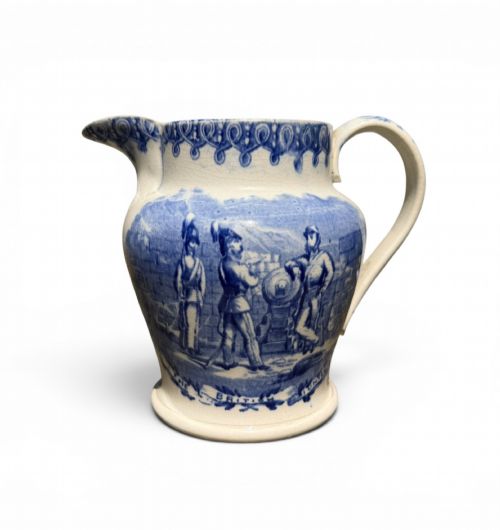
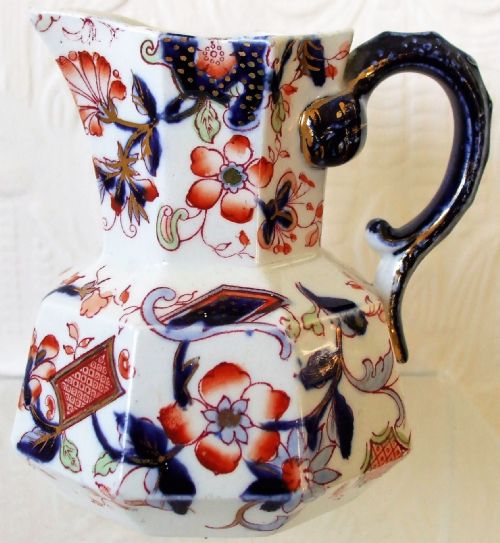
Stylistic influences range from traditional Staffordshire folk art and transfer-printed blue and white landscapes to Regency Chinoiserie and early Art Nouveau curves. This variety ensures that whether a collection calls for a miniature Mason's Hydra jug or a large copper lustre milk jug, the nineteenth-century ceramic output provides a suitable vessel.
Materials and Techniques
Potters constructed these pitchers using dense bodies such as ironstone, earthenware, stoneware, and pearlware, fired to withstand daily kitchen and table use. Ironstone and heavy stoneware provided durability for utilitarian dairy work, whilst refined earthenware and porcelain accommodated delicate decorative treatments.
Decoration relied heavily on copper lustre glazes, enamel paints, and purple or blue transfer printing to create bold surface patterns like fruit motifs and oriental-inspired scenes. Hand-decoration often added polychrome touches over transfer lines, particularly visible on Gaudy Welsh wares and Pratt-ware pieces.
Listings feature nineteenth-century materials including ironstone, earthenware, stoneware, and copper lustre across various regional pottery traditions.
Judging Quality
Quality rests primarily on the crispness of the moulding and the alignment of transfer-printed or hand-painted details across complex shapes like Hydra handles and faceted bodies. Superior pieces exhibit clean lines in relief-moulded designs and precise application of enamel and lustre colours without blurring.
The sophistication of the ceramic body and glaze finish also separates standard utilitarian wares from finer parlour pieces. Rich, deep copper lustre applications and evenly fired glazes indicate superior kiln work and higher grade materials.
Mason's·Keeling & Co.·Doulton Lambeth·Royal Worcester·Livesley Powell & Co·Copeland Spode
The Victorian Ceramic Milk Pitcher Glossary
- Ironstone
- A patented ceramic body developed to imitate porcelain while offering exceptional strength and durability. It resists chipping and forms the sturdy base for many nineteenth-century jugs.
- Copper Lustre
- A metallic glaze technique that imparts a reflective, coppery sheen to the ceramic surface. Potters often combined this finish with painted fruit or floral bands.
- Hydra Jug
- A specific pitcher shape featuring a snake-like handle and distinctive flared rim moulding. This classical revival form appears frequently on Mason's and Keeling & Co. pieces.
- Gaudy Welsh
- A style of colourful, hand-painted earthenware featuring cobalt blue, iron red, and copper lustre accents. The patterns were largely exported to Wales and remain highly collectible.
- Pearlware
- A fine earthenware developed by Josiah Wedgwood featuring a bluish-white glaze that pooled slightly in recesses. It bridges the gap between creamware and later white ironstone.
Victorian Ceramic Milk Pitcher: Frequently Asked Questions
What is a victorian ceramic milk pitcher used for?
These pitchers served to hold and pour milk or cream during tea service and daily meals in the nineteenth-century home.
Today, collectors use them primarily for floral displays, kitchen shelf decoration, or as part of larger antique ceramic table settings.
How do I tell ironstone from earthenware?
Ironstone is considerably heavier, denser, and more opaque than standard earthenware, often ringing slightly when struck gently.
It was formulated to withstand heavy domestic use, whereas ordinary earthenware has a more porous body and softer glaze.
What makes copper lustre jugs distinctive?
Copper lustre jugs feature a metallic glaze that creates a highly reflective, warm bronze or copper finish across the entire body or in decorative bands.
Potters achieved this by applying metallic salts to the ceramic surface during a specialised kiln firing.
Are cow creamers functional?
Cow creamers are small milk jugs modelled in the shape of a cow, with milk poured through an opening on the animal's back.
While fully functional for serving cream, their whimsical folk art appeal made them popular display pieces in Victorian homes.
How do I clean an antique ceramic jug?
Antique ceramic jugs require gentle hand washing in warm water with mild washing-up liquid and a soft sponge.
Avoid soaking pieces with delicate overglaze enamels, copper lustre, or gilt decoration, as harsh scrubbing can damage the historic surface.