



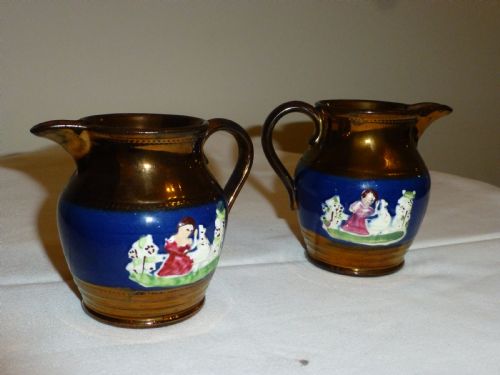
Staffordshire Earthenware Creamer
A Staffordshire earthenware creamer is a small ceramic vessel designed for the tea table, bringing tactile charm and historical utility to any room.
Staffordshire Earthenware Creamer
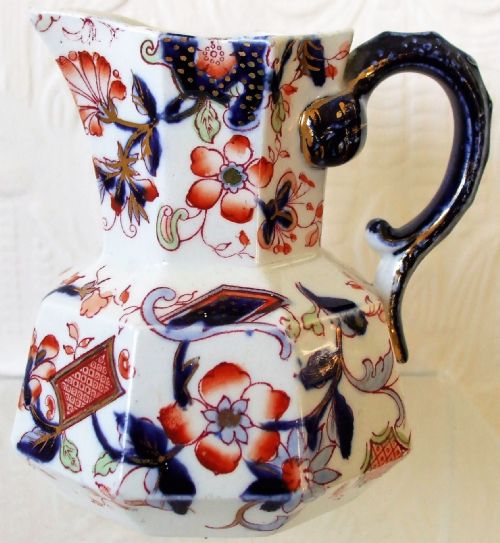
A Staffordshire earthenware creamer takes several distinct forms on this page, including animal figures and handled jugs from the nineteenth century. These pieces encompass Victorian and Georgian periods, showcasing regional British pottery traditions.
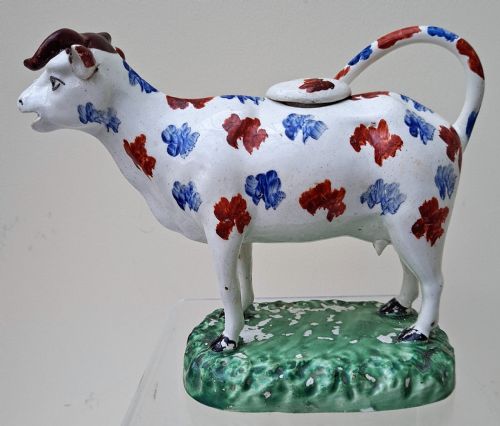
The cow creamer is a frequent form amongst these listings, often modelled with a lid on the back and a painted hide. Alongside these whimsical animals, buyers will find simpler cream jugs and milk jugs finished in copper lustre or blue and white.
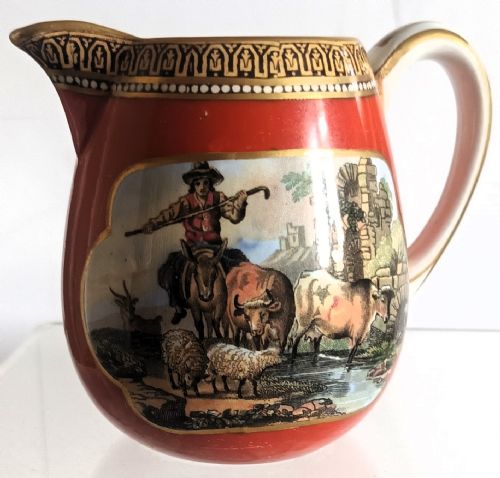
Origins span English and Welsh workshops from the nineteenth century. The selection ranges from Pratt-ware and Jackfield pottery to graduated sets of blue and white jugs.
How They Were Made
Potters shaped these vessels from earthenware and ceramic bodies, applying glaze and enamel to seal the porous clay and add colour. Many pieces incorporate gilt and gilding to highlight rims and handles.
Specialised techniques distinguish specific wares, such as the dark metallic sheen of Jackfield pottery or the transfer-printed blue and white patterns on domestic jugs. Copper lustre applications create a reflective, metallic surface finish on nineteenth-century bodies.
Cows serve cream while horses remain in the stable.
What Varies in Quality
The preservation of surface decoration, particularly delicate gilt highlights and metallic lustre finishes, separates superior examples from heavily worn pieces. The depth of the glaze and the uniformity of the ceramic body also indicate the skill of the original workshop.
Keeling & Co.
The Staffordshire Earthenware Creamer Glossary
- Earthenware
- A porous pottery fired at lower temperatures, requiring a glaze to hold liquids. This material forms the primary body for nineteenth-century creamers.
- Jackfield
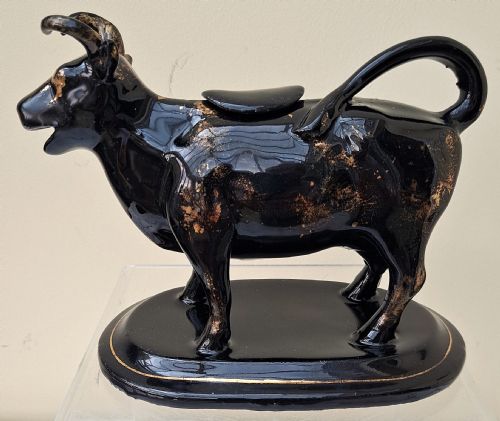
- A type of British pottery characterised by a deep black glaze, often enriched with gilt. It was frequently utilised for novelty cow creamers.
- Pratt-ware
- An early type of earthenware decorated under the glaze with specific colours like blue, ochre, brown, and green. It appears on Victorian cream jugs.
- Copper lustre
- A ceramic finish achieved by applying a metallic film that produces a reflective, coppery sheen. This technique adorns nineteenth-century jugs.
- Gilt
- A thin layer of gold applied to ceramics to embellish rims and details. It is seen on various Victorian and Georgian pieces.
Staffordshire Earthenware Creamer: Frequently Asked Questions
What is a cow creamer?
A cow creamer is a hollow ceramic figurine of a cow with an opening on its back for milk or cream and a pouring spout at the mouth. These whimsical vessels were popular on nineteenth-century tea tables.
They combine practical function with figurative sculpture, often including a small lid attached by a chain or simply resting on the back.
How do I date these creamers?
Most pieces on this page originate from the nineteenth century, spanning both the Georgian and Victorian eras. Stylistic markers and finishing techniques help narrow down the period.
Pottery styles like Pratt-ware and Jackfield, alongside copper lustre finishes, point directly to nineteenth-century production methods and aesthetic tastes.
Were these jugs used daily?
These ceramic creamers and milk jugs were made for domestic service on the tea and breakfast table. Their primary function was holding and pouring milk or cream.
While many survived through careful use, their survival also reflects a shift towards collecting and displaying smaller ceramic forms in modern interiors.
What is Jackfield pottery?
Jackfield pottery is a distinct British ceramic style known for its glossy black earthenware body. It provides a dark, reflective surface that often contrasts with gilt highlights.
This technique is frequently found on novelty animal creamers from the Victorian period.