




Staffordshire Ceramic Milk Jug
These Staffordshire ceramic milk jug examples bring practical history to the table, offering tactile appeal for daily service or display.
Staffordshire Ceramic Milk Jug
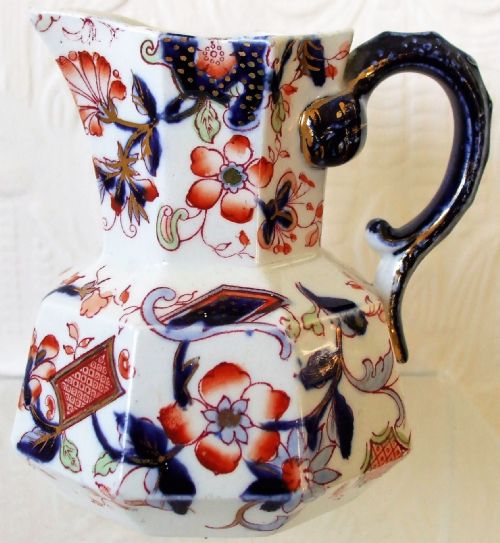
A staffordshire ceramic milk jug spans utilitarian kitchenware and ornamental pottery shaped across the Georgian, Regency, and Victorian eras. These vessels served to pour milk or cream at the dining table, taking forms from simple creamers to graduated sets.
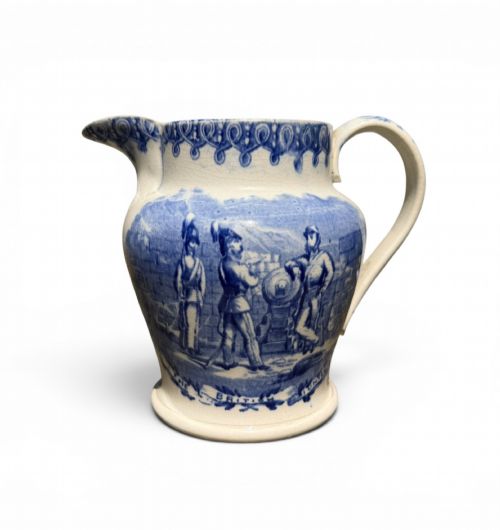
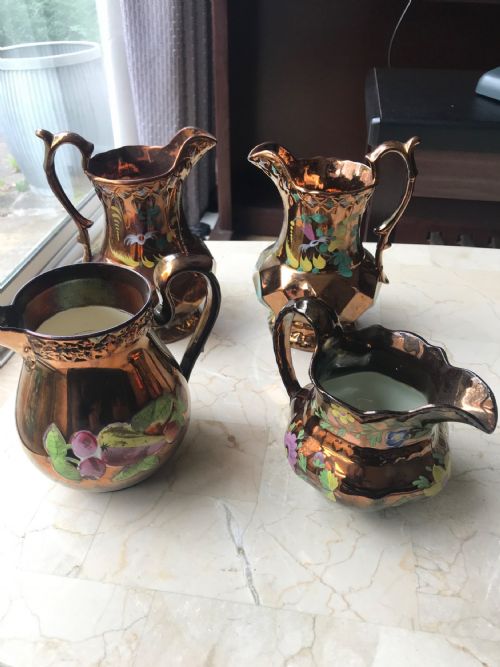
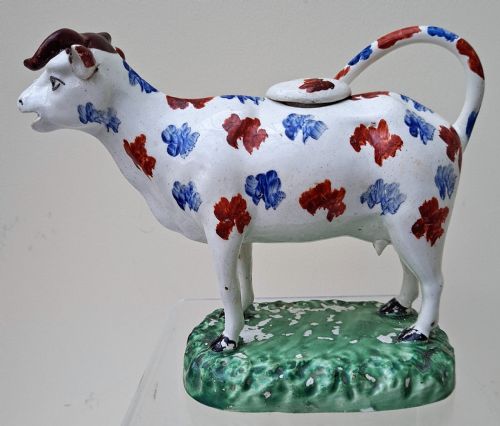
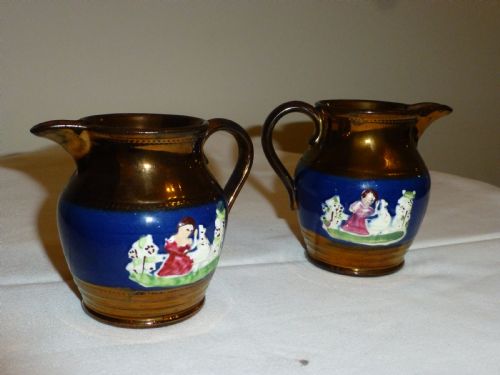
Buyers will most frequently encounter nineteenth century earthenware and pearlware pieces, often decorated with copper lustre glazes, enamel, or transfer printing. Animal forms such as cow creamers also appear alongside faceted and hand-decorated jugs.
How They Were Made
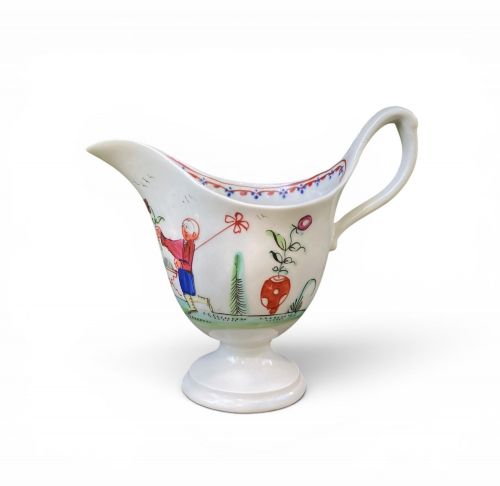
Potters shaped these pieces primarily from earthenware, pearlware, and porcelain, applying liquid clay bodies into moulds or onto the potter's wheel. Surface decoration relied on hand painting, enamel colours, and copper lustre glazes to achieve metallic sheens.
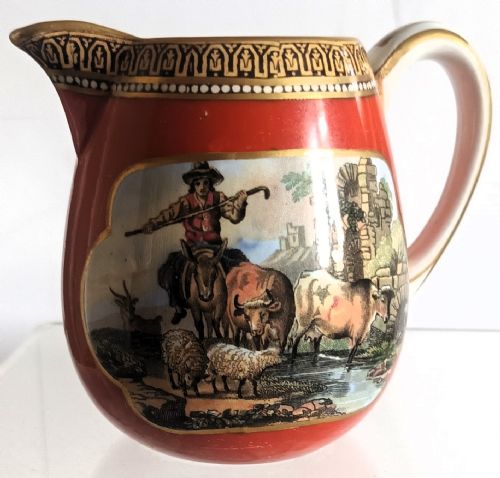
Many items incorporated transfer printing for intricate background scenes, frequently finished with hand-applied gilding. Firing took place in traditional kilns, setting the glazes and pigments onto the ceramic body.
Listings feature earthenware, pearlware, and porcelain across the Georgian, Regency, and Victorian periods.
What Varies in Quality
The preservation of delicate gilt highlights and the evenness of copper lustre glazes mark superior examples. Early pearlware bodies and fine porcelain display a finer material quality than standard utilitarian earthenware.
Keeling & Co·H & R Daniel·Copeland Spode
The Staffordshire Ceramic Milk Jug Glossary
- Pearlware
- A refined earthenware developed by Josiah Wedgwood that featured a subtle blueish glaze pooling in crevices. This material bridged the gap between creamware and true porcelain.
- Copper Lustre
- A metallic glaze technique producing a warm, coppery sheen across the ceramic surface. It gained widespread popularity on nineteenth-century jugs.
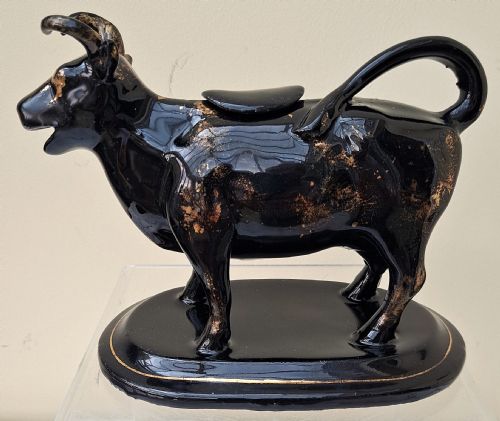
- Cow Creamer
- A hollow animal figurine designed with a lid on the back and milk pouring from the mouth. These whimsical vessels were popular throughout the Georgian and Victorian periods.
- Pratt-ware
- Early earthenware characterised by underglaze colour decoration in muted ochres, blues, and browns. It is frequently associated with Staffordshire potters.
- Jackfield
- A glossy black-glazed earthenware often associated with Staffordshire production. It provides a dark, mirror-like finish to utilitarian vessels.
Staffordshire Ceramic Milk Jug: Frequently Asked Questions
What is a cow creamer?
A cow creamer is a ceramic jug modelled in the shape of a cow, designed to hold cream or milk for the table. Liquid is poured through the animal's mouth while a removable lid sits on its back.
These whimsical pieces were produced extensively in Staffordshire and Wales throughout the Georgian and Victorian eras, combining practical utility with folk art charm.
How do I date a jug?
Dating relies on observing material characteristics such as the blue-tinted glaze of pearlware or the bright white body of nineteenth-century porcelain. Decoration styles, including copper lustre and transfer printing, also point to specific manufacturing decades.
Pottery marks stamped on the base, where present, offer more precise chronological clues, though many early folk pieces remain unmarked.
Are these jugs safe for daily use?
While these pieces were originally made for functional kitchen and dining service, age brings vulnerability to antique glazes and historic repairs. Hairline cracks or fragile gilt highlights mean modern owners generally keep them for display rather than heavy daily use.
Gentle hand washing in warm water without harsh detergents preserves the enamel and lustre finishes safely.