

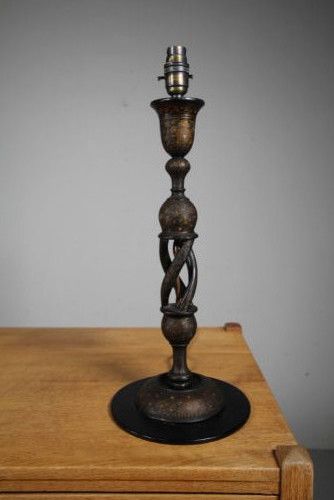
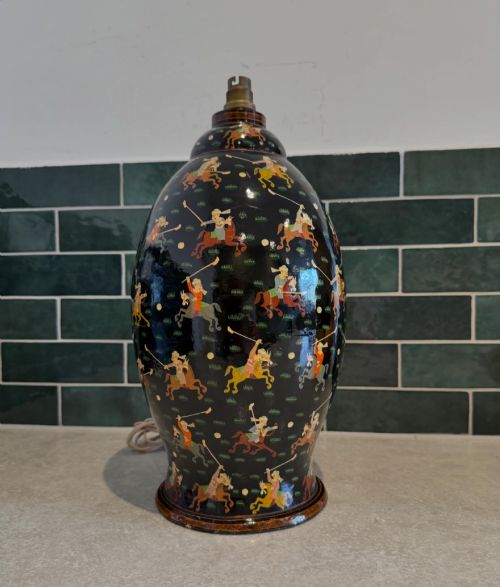
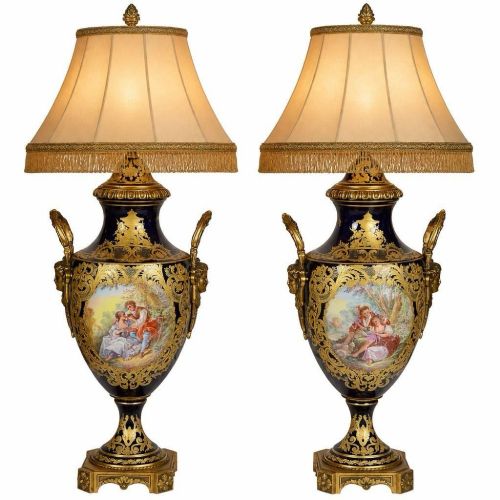
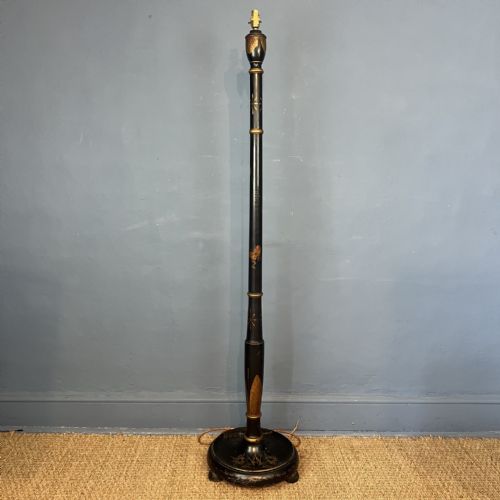
Hand Painted Lamps
Hand painted lamps bring colour and decorated surfaces to interiors, taking forms from converted oil vessels to standard lamps across several centuries.
Hand Painted Lamps
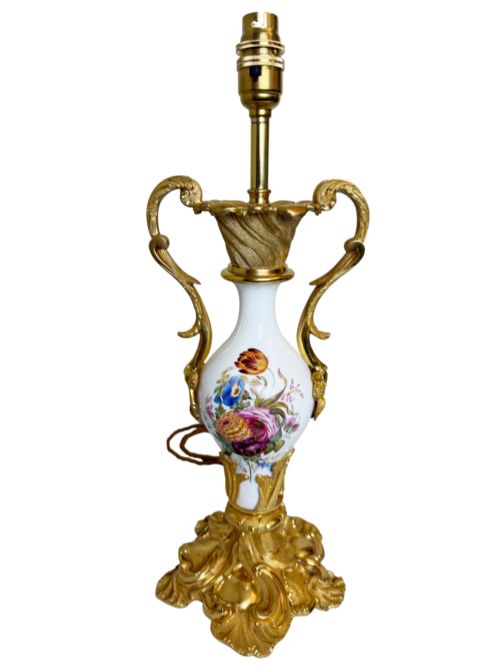
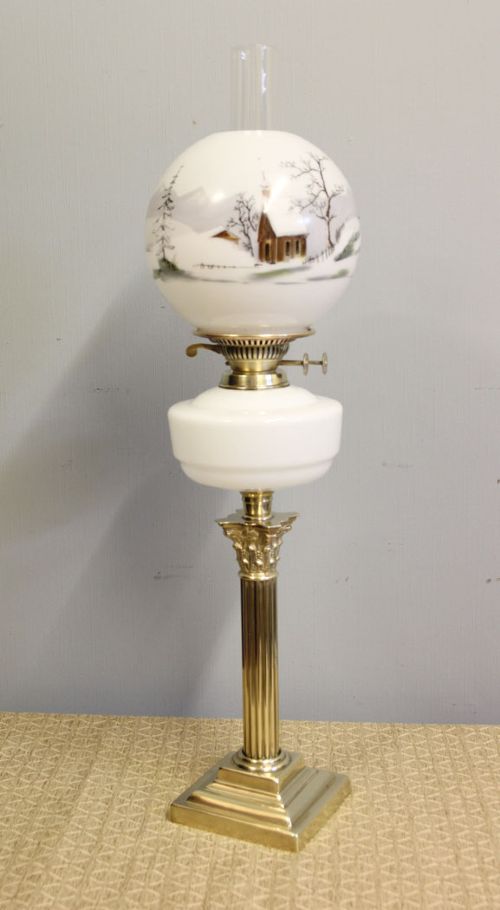
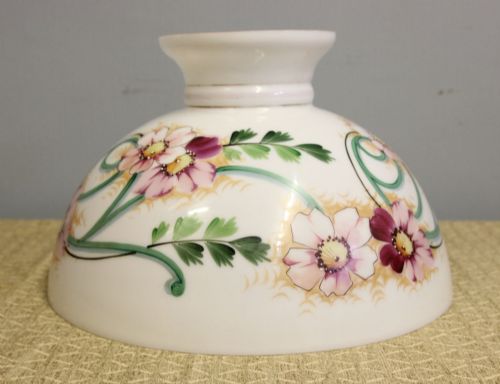
When you search for hand painted lamps, you encounter lighting fixtures whose surfaces bear pigment, lacquer or enamel decoration applied by hand. The selection spans table lamps, standard lamps, hanging oil lamp shades, and converted vessels.
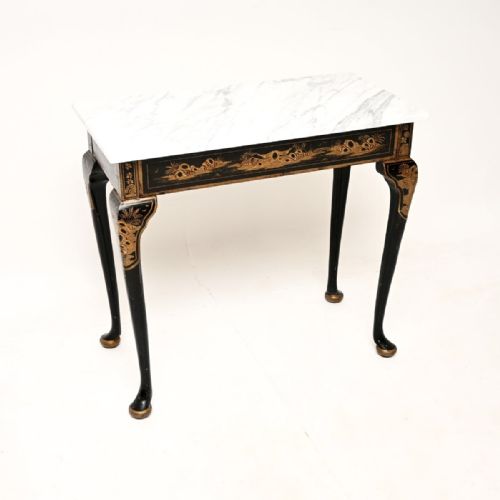
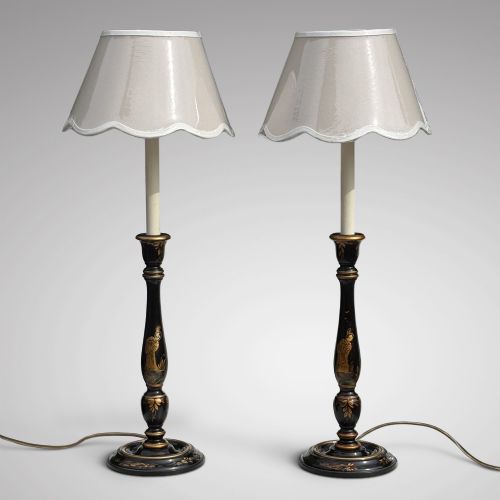
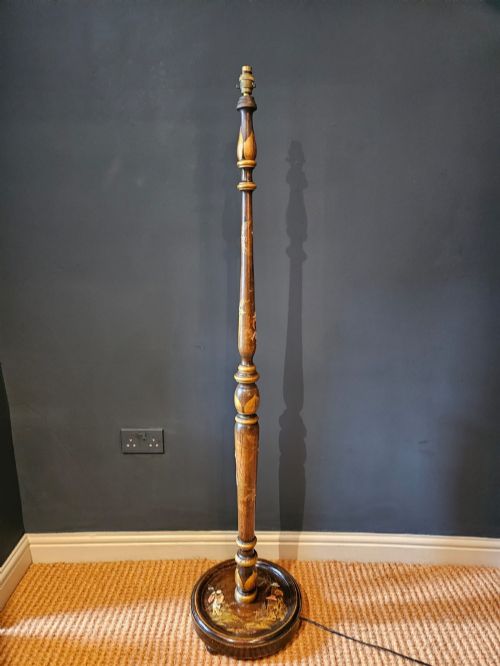
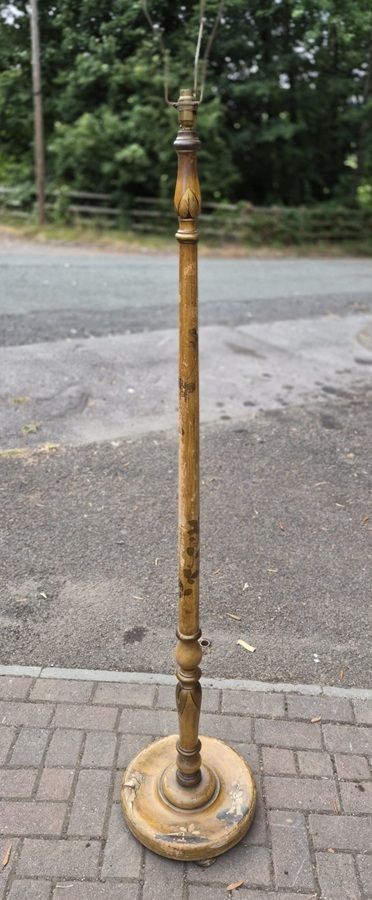
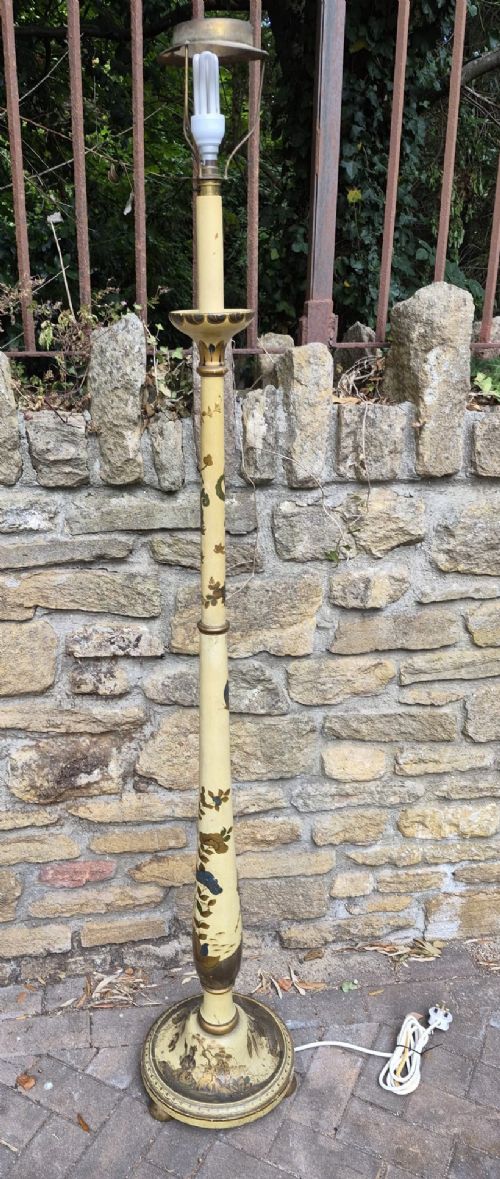
The objects derive from multiple periods, stretching from the late seventeenth century through the Victorian and Edwardian eras into the nineteen-twenties and nineteen-thirty. Many examples reflect specific decorative movements, notably Chinoiserie styles utilising lacquer or painted motifs.
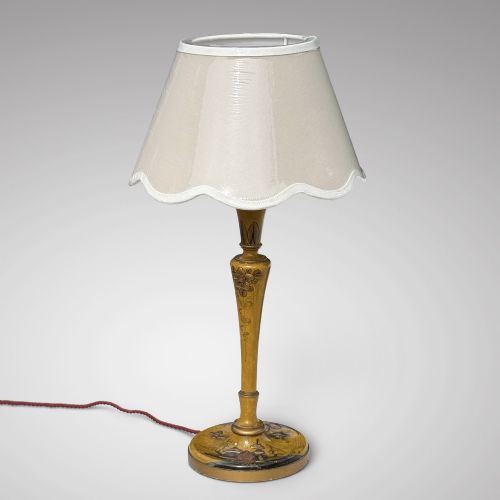
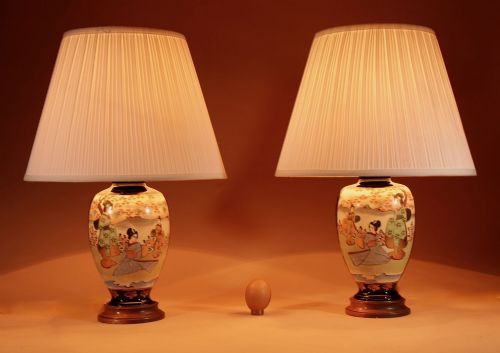
Makers and origins vary widely, encompassing English brass and ceramic pieces, French porcelain designs, Japanese Satsuma wares, Dutch ceramic night lights, and Kashmiri papier-mache or wooden twist lamps. Buyers frequently meet Chinoiserie standard lamps and Kashmiri table lamps on this page.
Materials and Techniques
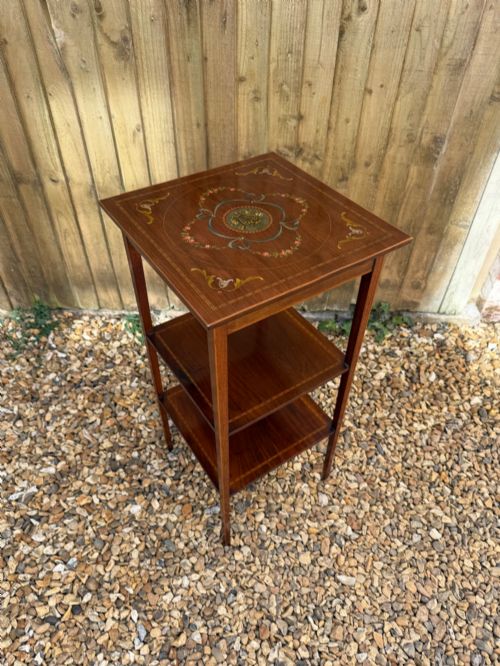
Construction relies on a combination of structural materials such as brass, wood, satinwood, mahogany, gilt bronze, and papier-mache. Artisans shaped columns, urns, and standards from these rigid bases before applying surface treatments.
Decoration involves hand painting, gilding, and lacquering applied directly to porcelain, glass, lacquer, or fabric. Glass components include opaline, cranberry glass, and hand-painted shades or fonts paired with ceramic or metal bodies.
Listings feature hand painted lamps spanning the nineteenth and twentieth centuries, incorporating brass, porcelain, lacquer, and papier-mache.
Distinctions in Execution
Quality separates by the precision of the hand-painted detail and the harmony of the conversion. Pieces featuring intricate, crisp brushwork on lacquer or porcelain stand apart from simpler decorative applications.
The integrity of the original material and the preservation of the surface finish dictate the standing of a lamp. Finer examples retain their original painted schemes and structural mounts without heavy overpainting or structural compromise.
Royal Worcester·Sevres·Hinks·Taylor Tunnicliff
The Hand Painted Lamps Glossary
- Chinoiserie
- European decorative style reflecting Chinese artistic traditions. It frequently appears on lacquer furniture and standard lamps with painted motifs.
- Opaline glass
- Opaque or translucent pale glass used for Victorian and Edwardian lamp shades and bodies. It diffuses light softly through the painted surface.
- Standard lamp
- A tall floor-standing lighting fixture designed to illuminate a room from a corner or beside seating. Examples often incorporate hand-painted wooden shafts.
- Papier-mache
- A composite material made from paper pulp and binding adhesive, moulded and painted. Kashmiri pieces utilise this technique for lightweight table lamps.
Hand Painted Lamps: Frequently Asked Questions
How do I date a hand painted lamp?
Dating relies on identifying the underlying material, manufacturing marks, and decorative style. Victorian and Edwardian pieces often display distinct brass mountings or specific ceramic bodies.
Changes in painting techniques and wiring methods also help narrow the decade of production. Examining the base and hardware provides further chronological clues.
Are these lamps converted from older vessels?
Many lighting fixtures originate as oil lamps, vases, or decorative objects later adapted for electricity. Conversions allow historic porcelain and metalwork to function safely in modern interiors.
Original oil lamp fonts and converted vases retain their distinct historical proportions while serving a new purpose.
What is a Chinoiserie standard lamp?
A Chinoiserie standard lamp is a tall floor-standing light decorated with European interpretations of East Asian motifs. These pieces typically feature lacquered finishes in ochre, black, or mandarin orange.
They serve as prominent focal points in period rooms, combining height with elaborate hand-painted decoration.
How should I care for a painted lamp surface?
Preserving the painted finish requires gentle dusting with a dry, soft cloth without chemical cleaning agents. Moisture and harsh solvents can damage historic lacquer and delicate pigments.
Keeping the piece away from direct sunlight protects the original colours from fading over time.