
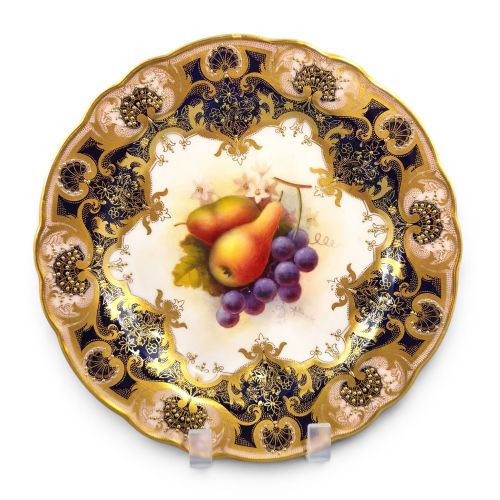
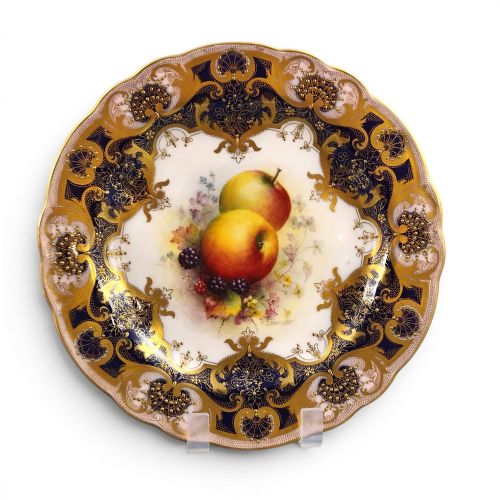
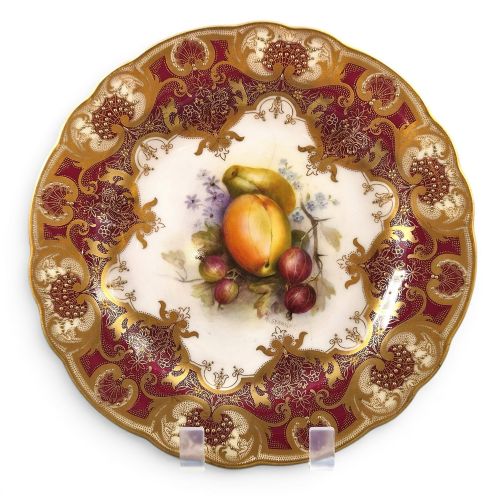
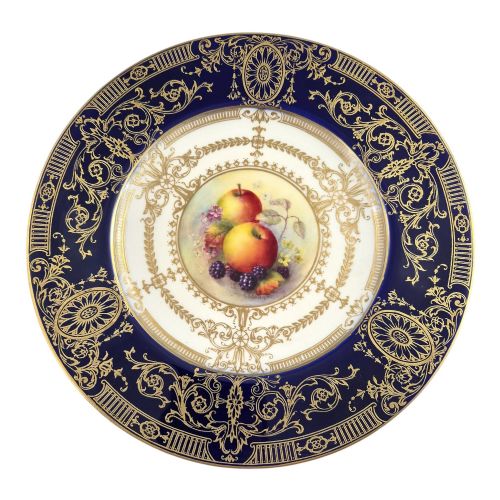
Hand Painted Fruit Plate
A hand painted fruit plate brings intricate botanical artistry and rich gilding directly to the table from centuries of ceramic tradition.
Hand Painted Fruit Plate
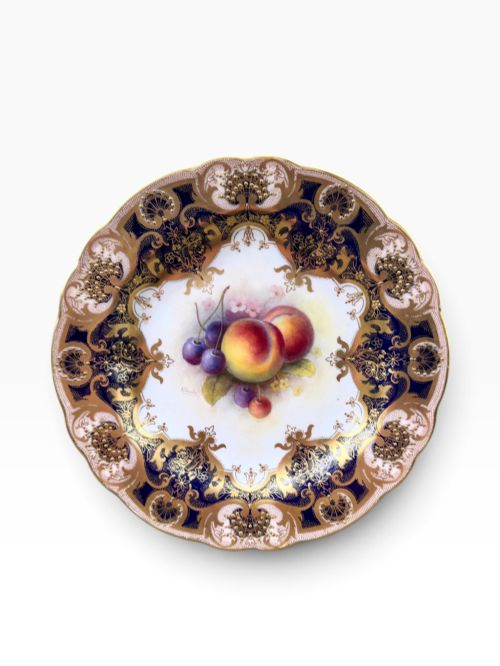
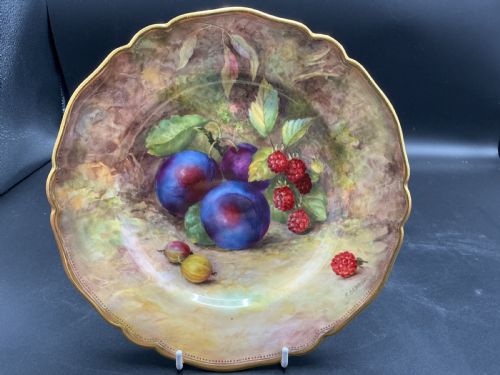
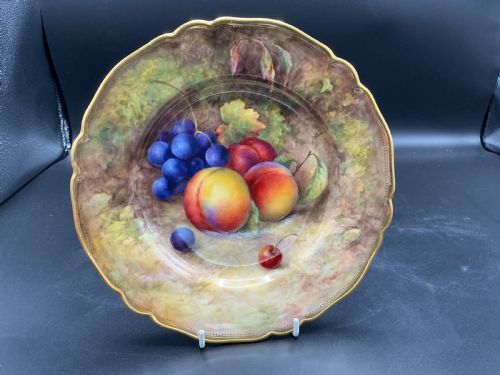
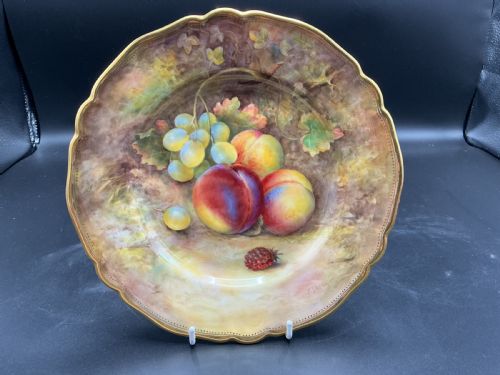
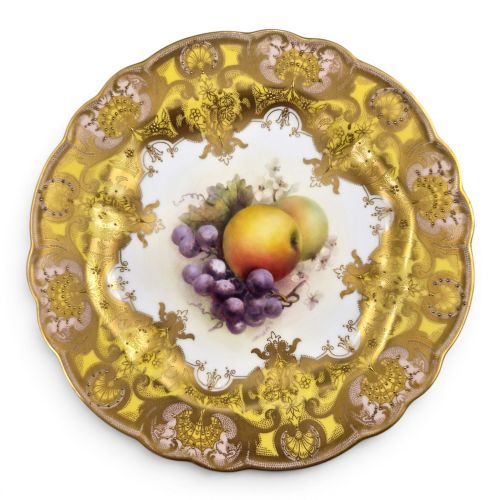
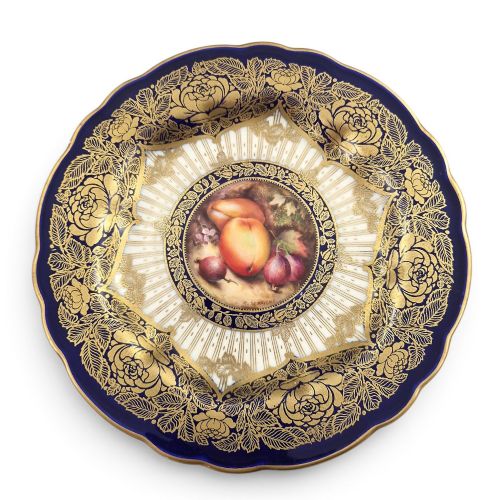
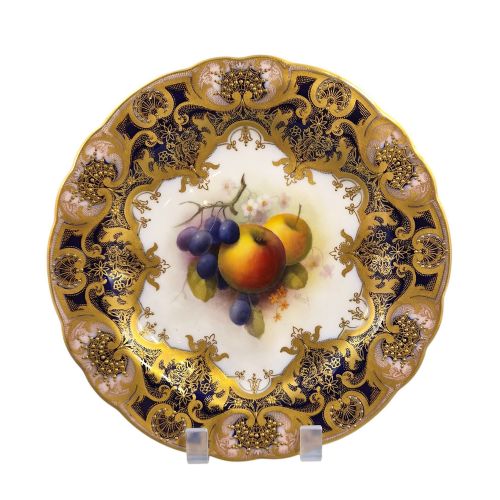
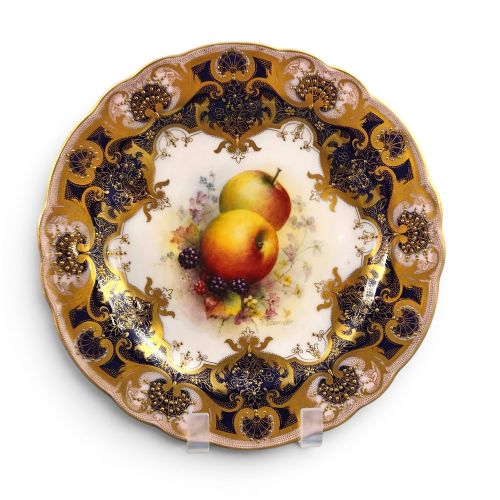
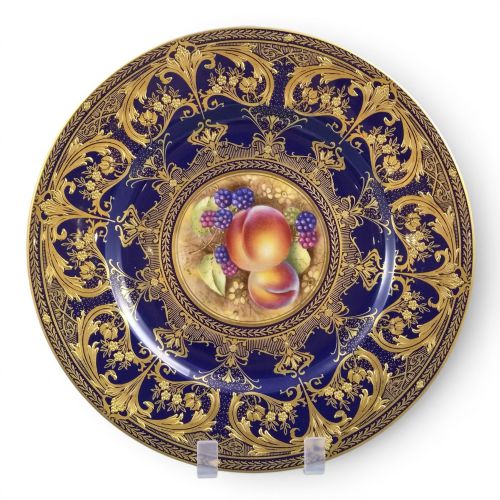
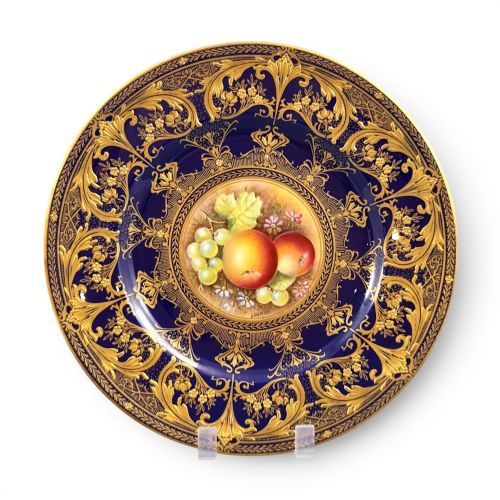
A hand painted fruit plate serves primarily as a decorative cabinet piece or dessert dish, designed to showcase detailed depictions of apples, pears, and berries. These items appear across periods spanning the eighteenth, nineteenth, and twentieth centuries, originating from English and European factories.
The most common examples on this page are cabinet plates and dessert dishes bearing botanical compositions. Works from nineteenth-century manufacturers and twentieth-century makers such as Royal Worcester dominate the selection, often featuring elaborate painted subjects framed by gilded borders.
Materials and manufacture
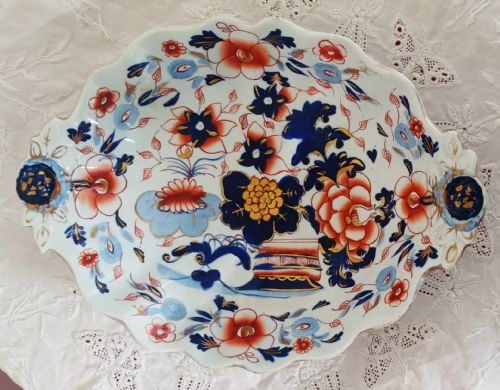
Makers utilised fine porcelain, bone china, ironstone, and soft-paste porcelain as the foundation for these ceramic items. Artisans applied hand-mixed mineral pigments directly onto the glazed surface before firing the pieces in kilns to fix the vibrant fruit motifs.
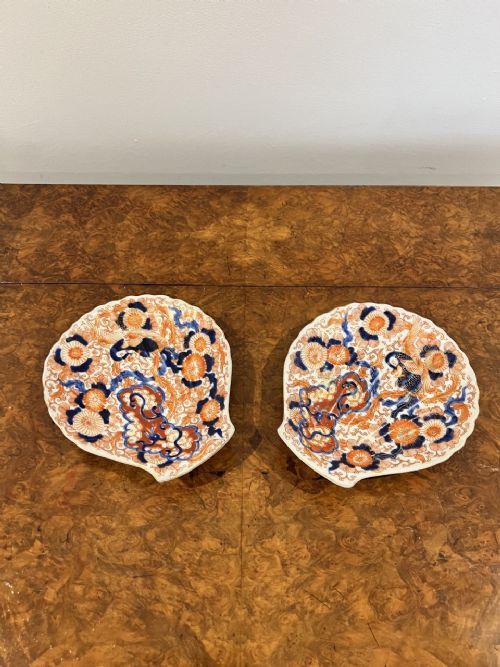
Craftsmen enriched the edges and borders using gold leaf, gilt, and raised gilding techniques. Specialised painters executed the botanical subjects by hand, occasionally incorporating moulded rope edges or shell shapes into the ceramic body.
Hand Painted Fruit Plate Retail Price Guide 2026
Typical asking prices for hand painted fruit plate among the pieces listed under this phrase on Sellingantiques today, from the lower quarter to the upper quarter. They describe what is for sale here now, not the wider market.
Several plates feature realistic peaches and plums resting permanently in the dining room, defying all seasonal availability.
Assessing quality
The distinction between tiers rests upon the skill of the painter and the complexity of the factory decoration. Pieces bearing signatures from known artists demonstrate higher artistic execution than standard factory-decorated wares.
The density and preservation of the gilding, alongside the fineness of the porcelain body, dictate the overall standing of an item. Elaborate borders, deep glazes, and detailed hand-rendered fruit studies separate standard service dishes from exhibition-grade cabinet pieces.
Royal Worcester·Meissen·Derby Porcelain·Kornilov Brothers
The Hand Painted Fruit Plate Glossary
- Cabinet plate
- A decorative ceramic plate intended for display in a cabinet rather than for everyday dining. These items typically feature elaborate hand-painted scenes and rich gilding.
- Soft-paste porcelain
- An early ceramic composition fired at lower temperatures than hard-paste porcelain, common in eighteenth-century English factories. It produces a warm, slightly translucent body.
- Ironstone
- A durable heavy earthenware pottery patented in the nineteenth century. It provides a robust alternative to porcelain while accepting intricate hand-painted patterns.
- Comport
- A raised dish or bowl used historically for serving fruit or dessert at the table. These pieces stand on a pedestal or footed base.
- Gilding
- The application of gold leaf or gold powder to ceramic surfaces for decoration. It often frames the central painted fruit motif on these plates.
Hand Painted Fruit Plate: Frequently Asked Questions
What is a hand painted fruit plate?
A hand painted fruit plate is a ceramic dish decorated with detailed botanical artwork depicting various fruits. These items were produced across several centuries by major European and English potteries.
Many examples function as decorative cabinet pieces rather than functional tableware. They often feature gilded borders and artist signatures.
How do I date an antique plate?
Dating relies upon factory backstamps, paste composition, and stylistic markers specific to periods such as the Georgian or Edwardian eras. Maker marks stamped or painted on the underside provide the most reliable chronological evidence.
Design characteristics like rope edges or specific floral framing also help narrow down the decade of production. Comparative analysis of known artist signatures further clarifies the timeline.
Were these plates used for dining?
Many fine porcelain cabinet plates served primarily as display items in formal drawing rooms. Other examples formed part of larger dessert services used during wealthy nineteenth-century banquets.
Plates with delicate gilding and intricate painted fruit were generally reserved for special occasions or visual admiration. Robust ironstone versions saw more active service on the dining table.
How should I display my plates?
Cabinet plates look best mounted securely in wall display brackets or supported upright on sturdy plate stands. Placing them away from direct sunlight preserves the vibrancy of the hand-painted fruit pigments.
Pairing individual plates with matching comports or dessert dishes creates a cohesive traditional arrangement. Adequate spacing allows the detailed borders and gilding to remain visible.