



Hand Painted Folk Trunk
These hand painted folk trunk examples bring regional character and historical pigment directly into modern rooms.
Hand Painted Folk Trunk
A hand painted folk trunk serves as a storage chest or coffer, often created for significant domestic milestones such as marriages or estate housekeeping. Buyers searching this phrase encounter regional European pieces, with Swedish and Hungarian examples appearing frequently alongside items from the Alpine region and Italy. These objects function as blanket boxes, strong boxes, and dome top coffers designed to hold textiles or valuables.
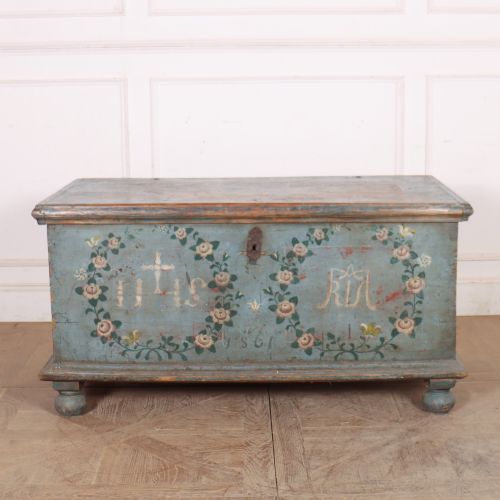
The aesthetic is grounded in utilitarian furniture decorated with tempera paint and pigment by local makers rather than urban workshops. Pieces range from large marriage chests to small oval strong boxes, demonstrating the domestic scale of regional folk art traditions. Pine and oak form the structural base of these storage items, carrying surface decoration that reflects specific geographic origins.
Materials and construction
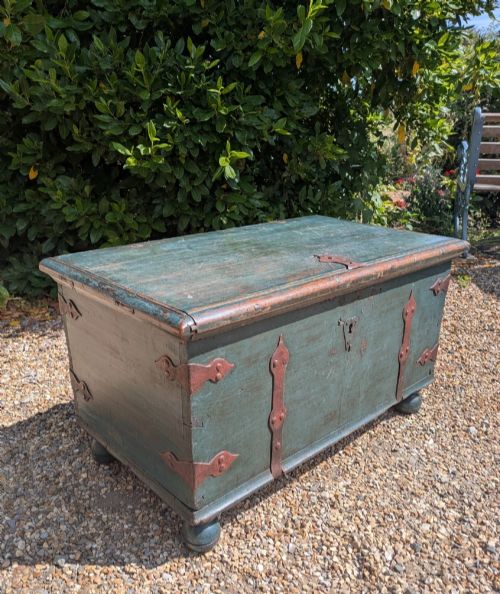
Makers constructed these storage vessels primarily from solid pine or oak planks, joined simply to form robust chests and boxes. Surfaces received coats of pigment or tempera paint, often applied directly over the bare timber to create colourful visual motifs. Iron and wrought iron hardware, including hand-forged strapwork and hinges, reinforced the corners and lids of strong boxes and dome top coffers.
Joinery methods relied on traditional domestic carpentry techniques appropriate for provincial workshops. Pigments were sourced locally, resulting in distinctive colour palettes that varied from dark grounds to lighter painted finishes. Metalwork elements like brass details occasionally supplemented the heavier iron strapping.
Hand Painted Folk Trunk Retail Price Guide 2026
Typical asking prices for hand painted folk trunk among the pieces listed under this phrase on Sellingantiques today, from the lower quarter to the upper quarter. They describe what is for sale here now, not the wider market.
Swedish strong boxes and marriage chests dominate the regional folk art furniture available.
Distinctions in quality
Quality in a hand painted folk trunk rests upon the preservation of the original surface pigment and the dexterity of the regional brushwork. Finer examples display deliberate compositional balance in their folk art motifs, whereas simpler items show more utilitarian application. The survival of untouched early paint surfaces elevates an object above pieces with later overpainting.
Structural integrity also separates the range, with intact hand-forged iron strapwork and original hinges contributing to an authentic survival. The harmony between the carpentry of the pine or oak body and the folk decoration determines the visual coherence of the piece.
The Hand Painted Folk Trunk Glossary
- Cassone
- A traditional Italian large chest or marriage chest used to hold bridal trousseau items. These storage pieces often featured elaborate painted or carved decoration.
- Coffer
- A heavy wooden box used for storing valuables, typically featuring a hinged lid. They frequently appear with dome top shapes in Scandinavian folk traditions.
- Tempera paint
- A permanent, fast-drying painting medium consisting of coloured pigment mixed with a water-soluble binder. It served as a primary decorative medium for provincial furniture surfaces.
- Strapwork
- Ornamental work composed of flat, interlaced bands of metal, commonly used in iron to reinforce box corners and lids. This hardware provides both structural strength and visual contrast.
- Mule chest
- A traditional storage chest fitted with one or more drawers beneath the main compartment. They bridge the design gap between simple blanket boxes and full chests of drawers.
Hand Painted Folk Trunk: Frequently Asked Questions
What is a marriage chest?
A marriage chest is a large storage box commissioned or decorated to celebrate a wedding, often intended to hold household linens and a bride's trousseau.
These pieces frequently display specific dates, initials, or symbolic folk art motifs painted onto pine or oak surfaces.
How do I date a painted trunk?
Dating relies on examining the construction methods of the pine or oak body, the style of the iron strapwork, and the chemistry of the pigments used.
Secondary indicators include regional painting conventions and any inscribed dates integrated into the original folk art decoration.
Where were these trunks made?
These storage pieces originated across rural Europe, with strong representation from Sweden, Hungary, the Alpine region, and Italy.
Local provincial workshops produced them using regionally available timbers like pine and oak, applying distinct folk art traditions.
How should I clean a painted surface?
Maintenance requires gentle dusting with a dry, soft cloth to protect fragile tempera paint and historic pigment layers from moisture damage.
Harsh chemical cleaners and modern polishes must be avoided entirely to preserve the original surface integrity.