







Hand Painted Enamel Bowl
A hand painted enamel bowl brings vibrant colour and intricate detail to a room, spanning delicate Georgian porcelain to robust 19th-century Chinese export wares.
Hand Painted Enamel Bowl
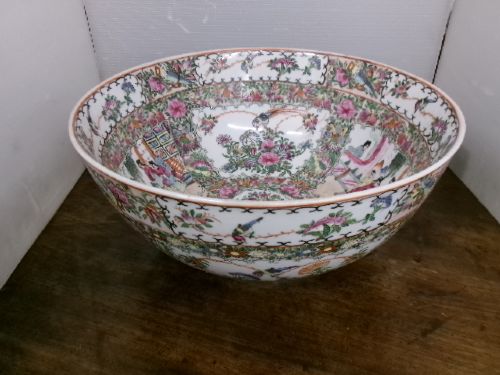
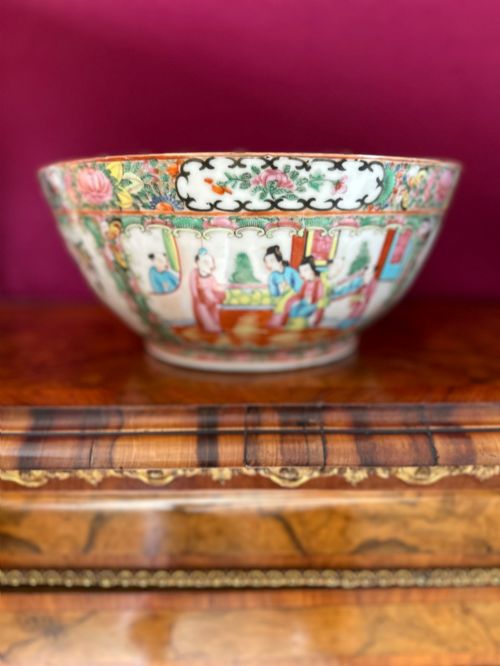
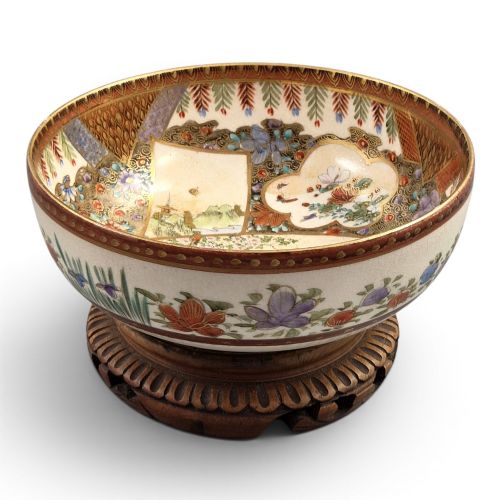
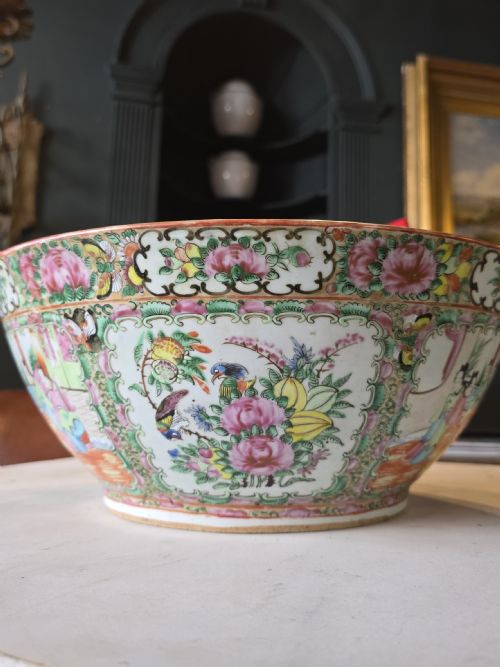
A hand painted enamel bowl encompasses a diverse array of decorative vessels, ranging from large Chinese Canton punch bowls to diminutive Japanese Satsuma and Kutani examples. You will frequently encounter 19th-century pieces, alongside 18th-century porcelain tea bowls and European glass works.
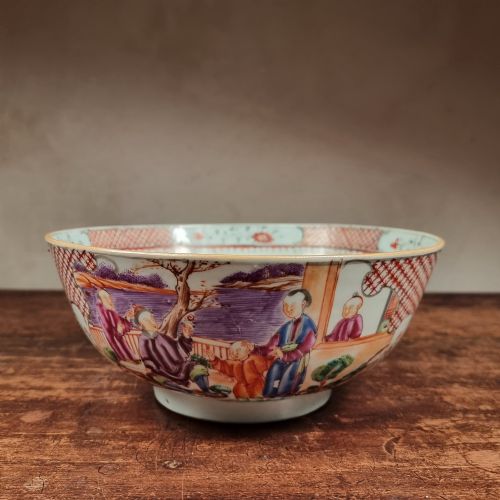
Forms vary significantly according to their origin and intended function, moving from grand jardinieres and centrepieces down to intimate cabinet pieces and dressing table jars. Chinese export porcelain forms dominate the selection, often displaying rich overglaze enamel palettes.
The aesthetic bridges several distinct cultural traditions, capturing the botanical motifs of the Qing Dynasty alongside the meticulous patterns of Japanese Meiji period workshops. European interpretations from French and English makers further expand the range of styles available.
Materials and Construction
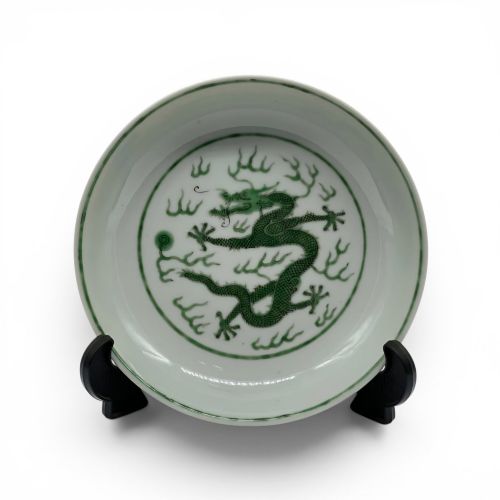
Makers utilised high-fired porcelain and ceramic bodies as the primary canvas, applying intricate overglaze enamels by hand before a secondary firing fixed the pigments. Gold leaf and gilding frequently highlight the painted surfaces, adding a reflective quality to the detailed motifs.
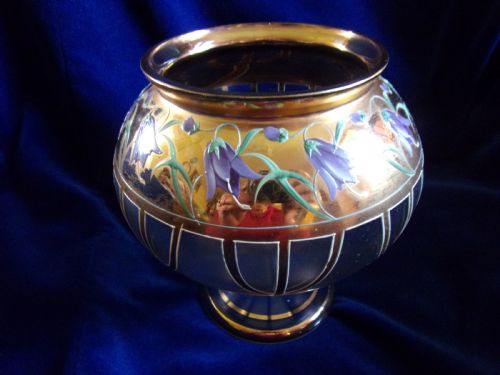
Alternative substrates include glass, bronze mounts, and solid silver, demonstrated by pieces utilising champlevé enamel techniques or overlaid portraits. Artisans fused powdered glass pigments to metal or glass bases under intense heat to achieve durable, glossy finishes.
Materials span hard-paste porcelain, Bristol blue glass, gilt bronze mounts, and solid silver.
Judging Quality and Execution
Quality rests primarily in the precision and confidence of the brushwork, where finer pieces display crisp outlines and controlled application within the enamel fields. The complexity of the palette and the restraint shown in the gilding differentiate standard production wares from superior examples.
The integrity of the physical body and the stability of the glaze layers determine the overall preservation of the piece. Superior items maintain sharp definition in their moulded details and crisp adherence between the metal or porcelain substrate and the vitreous enamel.
James Giles·Hannah Walton·Samson Of Paris·Kozan
The Hand Painted Enamel Bowl Glossary
- Famille Rose
- A prominent palette of opaque pink and rose enamels introduced in Chinese ceramics during the Qing Dynasty. This colour scheme allowed for subtle tonal gradations in floral and figural scenes.
- Imari
- A style of Japanese porcelain decorated in underglaze blue, iron red, and gilt. Originating in Arita, these wares gained immense popularity across Europe during the export period.
- Champlevé
- An enamelling technique where troughs or cells are hollowed out of a metal surface and filled with vitreous enamel paste. The object is then fired and polished smooth.
- Overglaze Enamel
- Mineral colours painted over a previously fired and glazed ceramic surface. The piece undergoes a subsequent low-temperature firing to fuse the decoration.
- Guilloche
- An intricate decorative pattern engraved into a metal surface using a mechanical lathe, often visible beneath a translucent enamel layer.
Hand Painted Enamel Bowl: Frequently Asked Questions
How do I date an antique enamel bowl?
Dating relies heavily on stylistic markers, baseline materials, and any reign marks or signatures present on the base. Comparing the complexity of the overglaze palette to established historical periods helps narrow the timeframe.
Examinations of the foot rim and the wear patterns on the ceramic or glass body also provide reliable indicators of age. Regional manufacturing traits further assist in placing the piece within a specific century.
What is the difference between Canton and Imari bowls?
Canton bowls typically originate from southern China and feature the vibrant pinks and greens of the Famille Rose palette, often depicting figures and court scenes. Imari bowls stem from Japan and utilise a strict combination of cobalt blue, iron red, and gold.
Canton pieces emphasise narrative and botanical illustrations on white porcelain backgrounds. Imari designs lean towards dense geometric and floral panel layouts characteristic of Japanese export wares.
Can I use these antique bowls for food?
Most antique hand painted bowls function best as decorative display items rather than utilitarian tableware. The overglaze enamels on 18th and 19th-century pieces can wear down with frequent washing or acidic foods.
Displaying them away from direct heat and moisture preserves the delicate gold leaf and enamel pigments. Gentle dusting with a dry cloth is generally sufficient for maintenance.
What does Chinese export porcelain mean?
Chinese export porcelain refers to ceramics manufactured in China specifically for overseas markets in Europe and the Americas. These wares often adapted traditional Chinese manufacturing methods to suit Western aesthetic preferences.
Such pieces range from utilitarian tea bowls to massive punch bowls ordered by foreign trading companies. The designs frequently combined Eastern motifs with shapes requested by Western buyers.