


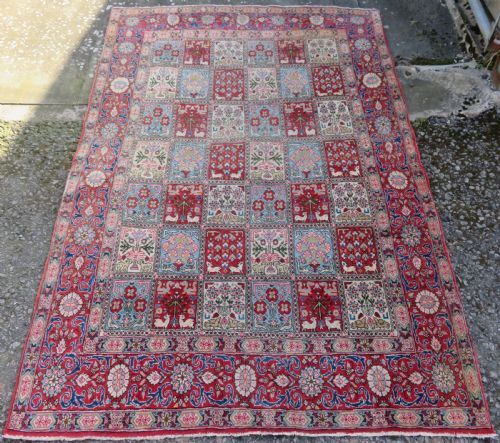
Hand Knotted Silk Carpet
A hand knotted silk carpet brings remarkable detail and shimmering texture to a room, offering centuries of weaving tradition for the floor.

Hand Knotted Silk Carpet
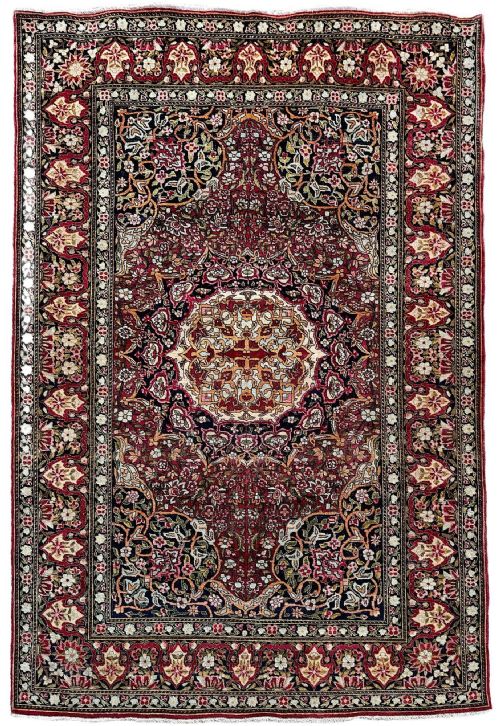
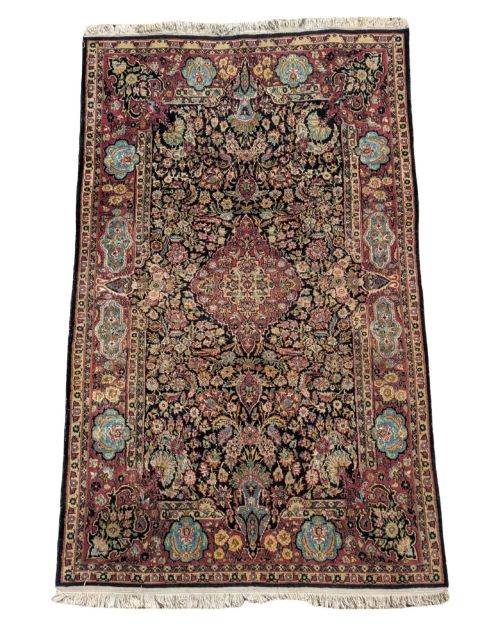
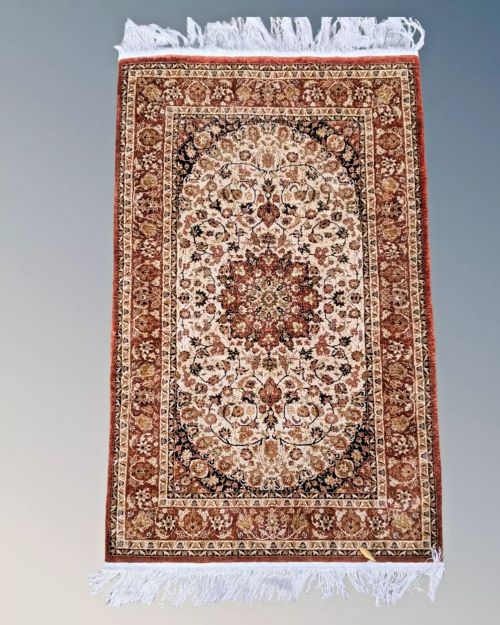
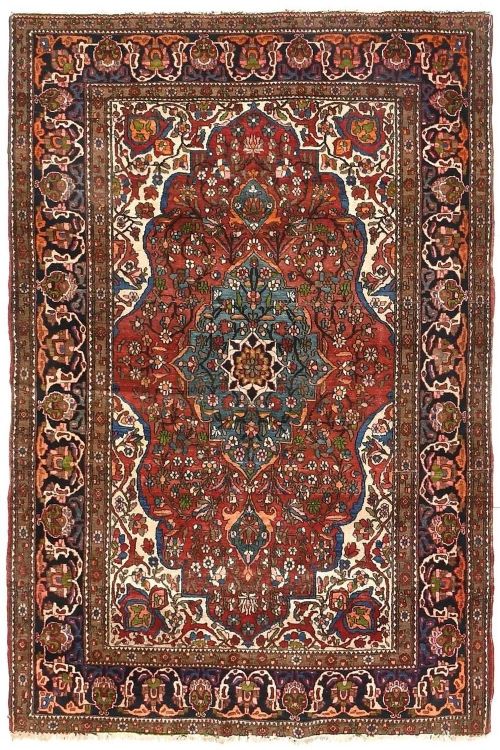
A hand knotted silk carpet is a textile floor covering or wall hanging created through meticulous manual knotting, often featuring intricate floral, medallion or pictorial designs. When searching for a hand knotted silk carpet, buyers encounter pieces originating from traditional weaving centres across Persia, Turkey, China and Central Asia. The most common examples on this page date from the nineteenth and early twentieth centuries, spanning periods such as 1900, 1910, 1920 and 1930.
These textiles range in format from smaller scatter rugs and prayer rugs to large room-sized carpets and framed wall art. Regional styles such as Isfahan, Qum, Kashan and Kayseri dominate the selection, reflecting distinct local palettes and knotting techniques. Buyers will find full silk pile examples alongside pieces incorporating wool, cotton, art silk, mercerised cotton, lambswool or floss silk highlights.
How they were made
The construction of a hand knotted silk carpet relies on wrapping fine silk threads around warp and weft foundations made of silk, cotton or wool. Weavers tie countless individual knots by hand to build the dense pile, allowing for exceptionally crisp pattern definition and complex curves. Some examples utilise alternative materials like mercerised cotton, art silk or floss silk to achieve similar lustrous effects.
Foundations vary between pieces, with certain rugs pairing a durable silk foundation with lambswool or standard wool pile to balance structure and softness. Natural dyes and meticulous hand-weaving techniques ensure the longevity of the intricate motifs, from tile patterns to central medallions.
Even the last Tsar of Russia owned a notable Kashan rug.
What varies in quality
Knot density and structural tightness dictate the crispness of the design and the durability of the pile under foot. Finer weaves allow for elaborate curvilinear details and pictorial clarity, distinguishing exceptional workshop pieces from standard regional rugs.
The quality of the materials, from pure silk to blended foundations with lambswool or cotton, influences the handle and light-reflecting properties of the surface. Furthermore, the finesse of the dye work and the precision of the symmetry separate master-weaver outputs from simpler village productions.
The Hand Knotted Silk Carpet Glossary
- Warp
- The vertical threads stretched tightly on the loom before knotting begins. These form the structural skeleton of the carpet.
- Weft
- The horizontal threads passed through the warps after each row of knots to secure them in place. They cross under and over the warp threads.
- Pile
- The vertical or slanted ends of the knotted threads that form the usable surface of the carpet. Silk pile provides a distinctive sheen.
- Foundation
- The underlying mesh of warp and weft threads that supports the pile knots. It can consist of silk, cotton or wool.
- Medallion
- A symmetrical ornamental motif centred in the middle of the carpet field. It serves as the primary focal point of the design.
Hand Knotted Silk Carpet: Frequently Asked Questions
How do I clean a silk carpet?
Professional specialist cleaning is essential for silk textiles to prevent dye bleeding and fibre damage. Avoid domestic machine washing or harsh chemical scrubbing.
Regular gentle vacuuming without a beater bar helps remove loose dust from the pile without straining the foundation threads.
Can I place these rugs in high traffic areas?
Silk carpets are traditionally delicate and suited to low-traffic rooms, bedrooms or formal spaces where heavy wear is minimal. Using a quality underlay prevents slipping and cushions the fibres.
Alternatively, smaller pictorial or miniature carpets work exceptionally well when mounted and displayed as framed wall art.
How do I identify a Qum silk rug?
Qum rugs typically originate from central Persia and are known for their exceptionally fine knotting and refined floral or tile patterns. They frequently utilise pure silk foundations and piles with crisp, detailed outlines.
Examining the back of the rug reveals the tight knot count characteristic of this specific weaving tradition.
What is the difference between art silk and real silk?
Real silk is a natural protein fibre produced by silkworms, offering a natural lustre and soft hand. Art silk, or artificial silk, is typically made from processed plant cellulose like mercerised cotton or rayon.
While art silk mimics the reflective sheen of genuine silk, it behaves differently when exposed to moisture and wear.