

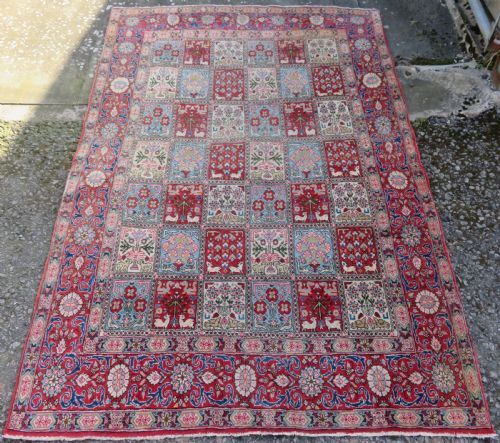


Blue Silk Carpet
A blue silk carpet brings extraordinary depth and luminosity to a room, offering a tactile richness that commands attention.
Blue Silk Carpet
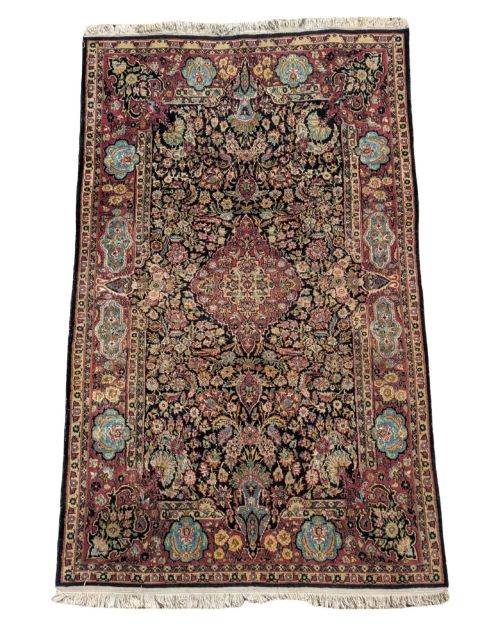
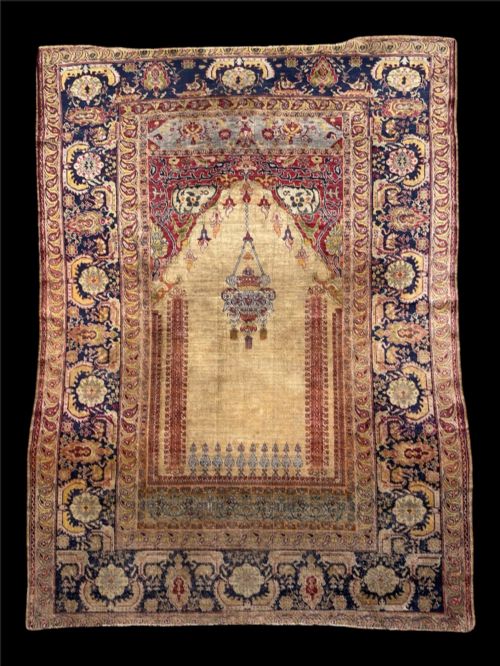
When you search for a blue silk carpet, you encounter sophisticated woven pieces originating from traditions such as Persian, Ottoman, and East Turkestan centres. These textiles range from room-size floor coverings to intimate prayer rugs and framed wall art.
The selections available here feature works from the 1800s, 1890, 1920, 1930, and broader nineteenth-century periods. You are most likely to meet detailed city carpets and rugs utilising silk, wool, cotton, and lambswool foundations.
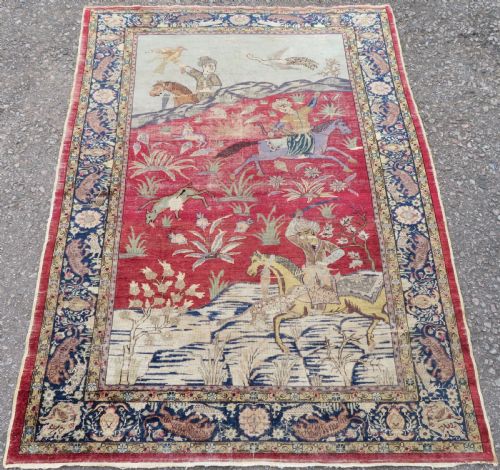
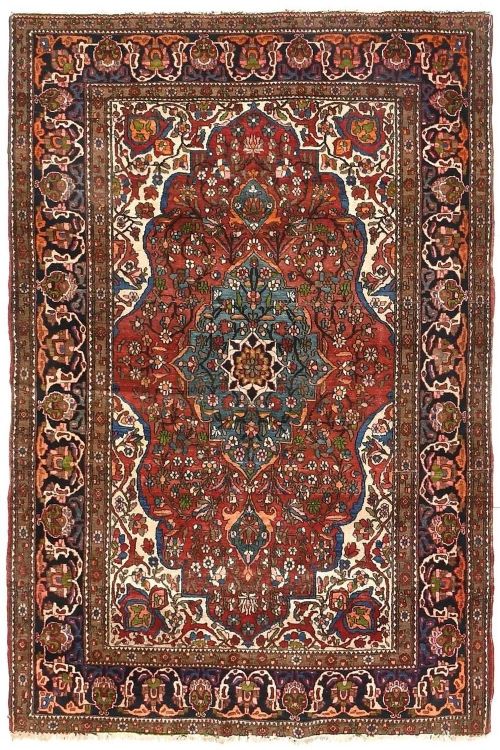
Regional designs vary widely, spanning from the small medallion compositions of Nain and the tile patterns of Qum to pictorial hunting scenes and Isfahan motifs. Each piece reflects the distinct aesthetic vocabulary of its weaving origin.
Materials and construction methods
Weavers constructed these textiles using foundational warps and wefts of silk, cotton, or wool, upon which intricate piles were knotted or woven. Specific examples employ lambswool on a silk foundation or integrate silk highlights to create contrasting textures against wool fields.
The making of these pieces involved sophisticated looms and meticulous hand-knotting techniques, evident in items described as having a very fine weave. Artisans utilised natural and dyed materials to achieve the distinct blue colourways and pictorial details seen across Persian and Turkish workshops.
One miniature rug is presented ready-framed behind glass, turning a floor covering into a portrait.
Distinctions in quality
The fineness of the weave dictates the intricacy and clarity of the design, where denser knotting permits sharper pictorial representation and more delicate curves. Pieces featuring pure silk or fine lambswool on silk foundations demonstrate superior material handling compared to simpler wool-dominant structures.
The complexity of the composition also separates standard examples from exceptional ones, particularly in multi-coloured tile patterns, detailed hunting scenes, and finely drawn medallion layouts. Condition plays a role, distinguishing complete carpets from fragments such as early nineteenth-century Khotan remnants.
The Blue Silk Carpet Glossary
- Foundation
- The underlying structure of warps and wefts that supports the pile of a carpet. Silk foundations often provide exceptional tensile strength and flexibility.
- Medallion
- A central ornamental motif positioned in the middle of the field. This design element frequently anchors traditional Persian and Turkish compositions.
- Prayer rug
- A small rug featuring a mihrab or arch design intended for devotional use. These pieces often display specific architectural motifs derived from Islamic traditions.
- Pile
- The upright yarn or nap that forms the tactile surface of the carpet. Materials used in these pieces include silk, wool, and lambswool.
- Fragment
- A surviving portion of a larger historical textile. Fragments allow collectors to examine early weaving techniques and material structures up close.
Blue Silk Carpet: Frequently Asked Questions
How do I care for a silk carpet?
Silk requires gentle handling and protection from excessive moisture and direct sunlight. Professional cleaning suited for fine textiles is essential.
Vacuuming should be done with care, avoiding rotary brushes that might pull the delicate pile or foundation threads.
Where were these carpets made?
The pieces originate from prominent weaving regions including Persia, Turkey, and East Turkestan. Specific cities and areas like Isfahan, Qum, Nain, and Hereke developed distinct regional styles.
Workshop traditions in these locations shaped the choice of motifs, from architectural tile patterns to narrative pictorial scenes.
Can these carpets be hung on walls?
Certain lighter pieces and framed wall art are well-suited for display vertical surfaces. Hanging distributes weight evenly if mounted properly without damaging the textile.
Heavier room-size carpets remain best positioned on floors with appropriate underlays to prevent slipping and wear.