



Fine Silk Oriental Rug
A fine silk oriental rug brings extraordinary detail and lustrous texture into a room, offering centuries of weaving heritage.

Fine Silk Oriental Rug
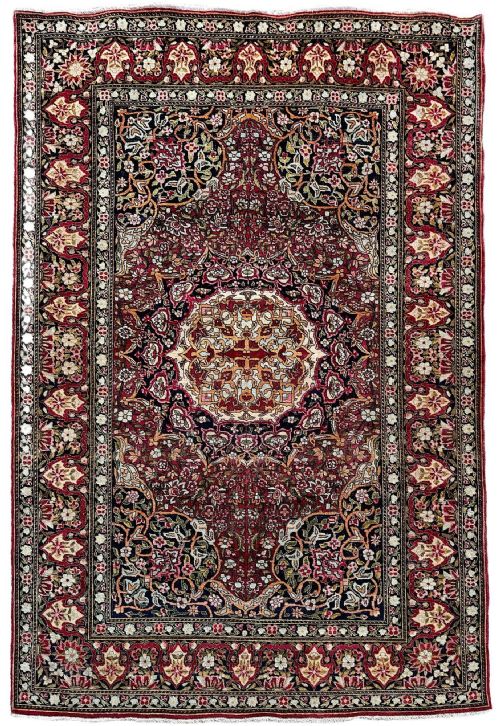
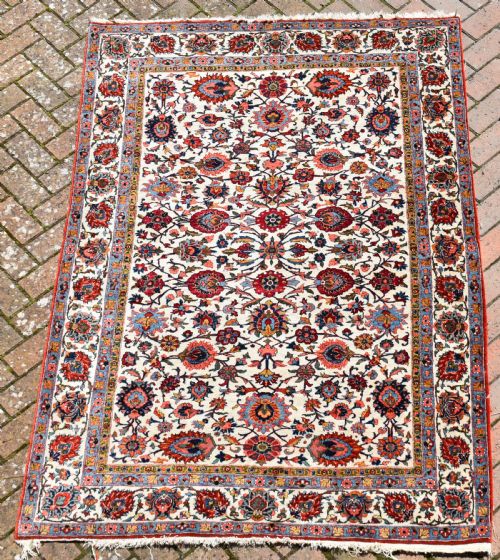
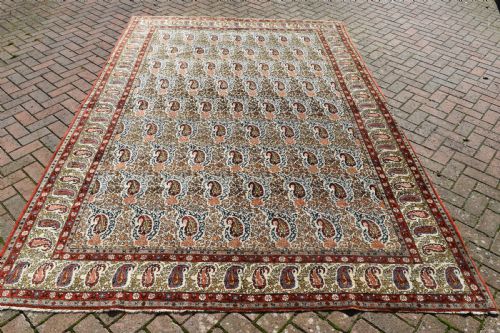
When you search for a fine silk oriental rug, you are looking at intricate pile carpets and flatweaves originating from historic weaving centres across Persia and Turkey. These pieces range from small area rugs to large carpets, representing traditional regional designs such as Isfahan, Qum, Tabriz, and Kayseri.
The examples available here stretch from the mid-nineteenth century through the mid-twentieth century, capturing periods like the Qajar dynasty and the Ottoman revival. Most pieces you will encounter skew towards early twentieth-century Persian and Turkish workshops, displaying classical medallions and pictorial scenes.
How they were made
Makers utilised pure silk, floss silk, and wool with silk highlights, often knotted onto sturdy cotton or silk foundations to support dense pile structures. Certain traditional pieces also incorporate felt applique work and lambswool, combining multiple textiles for textural contrast.
Weavers tied intricate knots by hand to achieve high densities and precise pictorial clarity, allowing complex curvilinear patterns to emerge. Natural dyes produced the characteristic pastel colours and deep tones seen across these Persian and Turkish carpets.
Some nineteenth-century embroideries combine silk and felt applique work, proving that historical makers enjoyed mixing soft textures just as much as we do.
What varies in quality
Knot density and structural fineness separate the exceptional rugs from standard production, determining how sharply the motifs render. A finer weave allows for greater intricacy in medallions and pictorial details, particularly visible in Isfahan and Qum pieces.
Foundation materials and pile preservation dictate the durability and drape of the textile. Pure silk foundations combined with fine silk pile represent the higher end of the range, offering a luminous sheen and supple handling.
The Fine Silk Oriental Rug Glossary
- Pile
- The upright yarn loops or cut ends that form the soft surface of a carpet. It provides the tactile depth and colour richness in woven textiles.
- Foundation
- The underlying structure of warp and weft threads that supports the knots of a rug. Silk foundations provide exceptional strength and flexibility.
- Medallion
- A symmetrical ornamental design centred in the middle of a rug field. This central motif anchors the geometric or floral composition.
- Applique
- A decorative technique where pieces of fabric, such as silk and felt, are stitched onto a background textile. This method creates layered textural designs.
- Senneh
- A historical weaving style and town known for fine Persian rugs. Pieces from this tradition often feature intricate repeating boteh or Herati patterns.
Fine Silk Oriental Rug: Frequently Asked Questions
How do I clean a silk rug?
Professional specialist cleaning is essential for silk textiles, as water and domestic detergents can damage delicate fibres and cause dye bleeding.
Vacuuming should be done gently without a beater bar, moving strictly in the direction of the pile to prevent fibre distortion.
Can I place these rugs in high traffic areas?
Fine silk rugs are best placed in low-traffic spaces, such as bedrooms or formal studies, where they experience minimal friction and crushing.
Protecting the textile from heavy foot traffic preserves the delicate silk pile and maintains the structural integrity of the foundation.
How do I identify a Qum rug?
Qum rugs typically originate from central Persia and are distinguished by fine knotting, intricate floral or pictorial designs, and high-purity silk.
They frequently employ balanced pastel or ivory palettes with crisp outlines that reflect the advanced urban workshop traditions of the region.
What is the difference between Turkish and Persian silk rugs?
Turkish rugs from centres like Kayseri and Sivas often feature distinctive regional colourways, Ottoman revival motifs, and specific knotting structures.
Persian rugs from Isfahan, Tabriz, and Nain tend to focus on classical medallion layouts, refined curvilinear florals, and elaborate pictorial narratives.
How do I prevent fading?
Direct sunlight causes natural dyes in silk and wool textiles to fade over time, altering the original pastel or deep tones.
Positioning the rug away from unshaded windows or using UV-filtering window treatments protects the colours from degradation.