
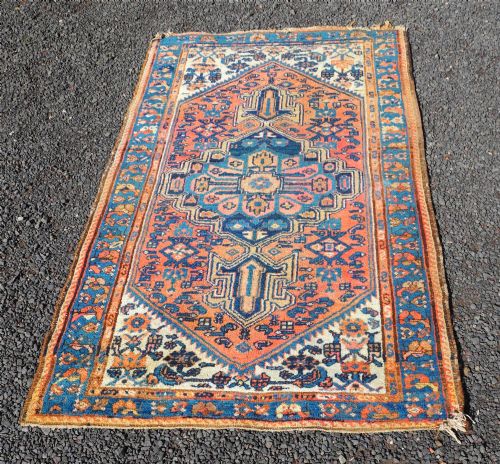
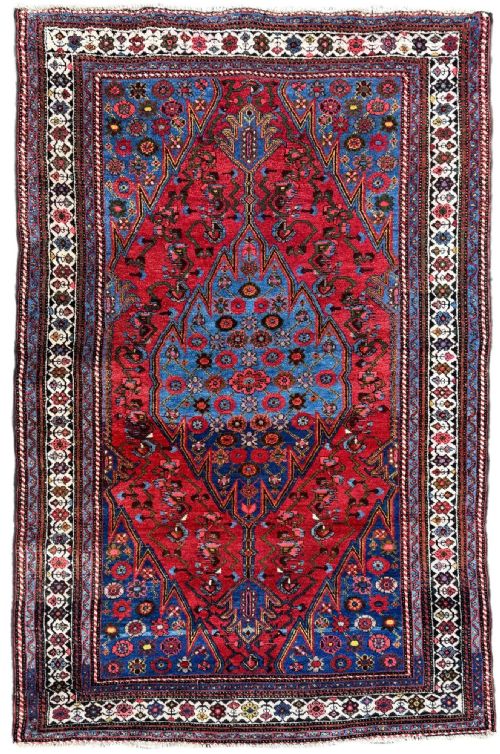
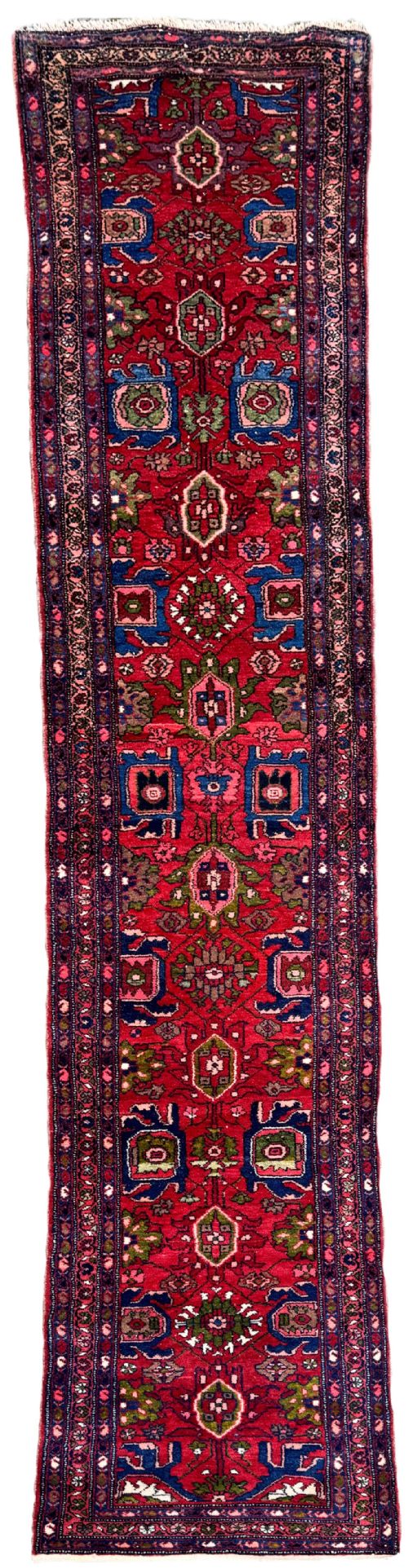
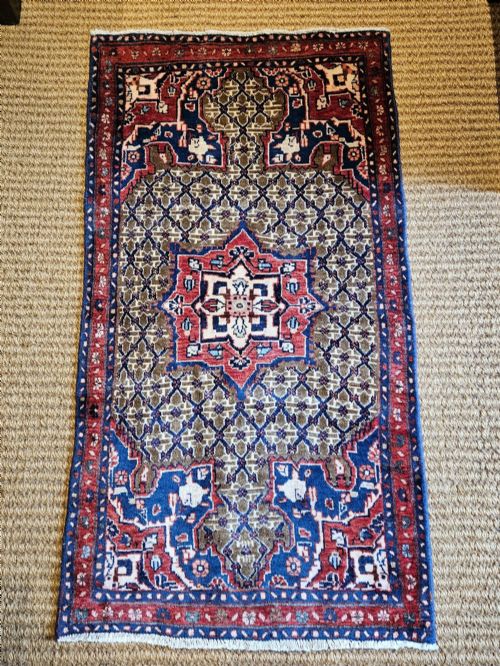
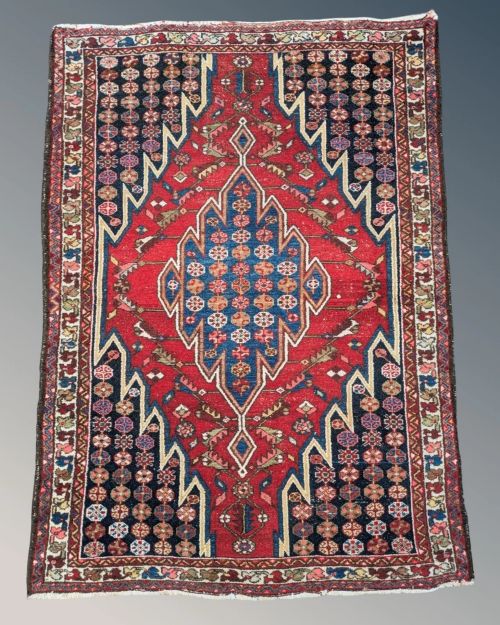
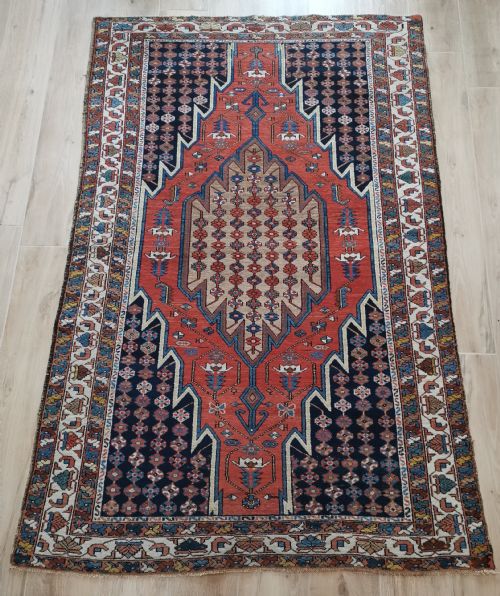
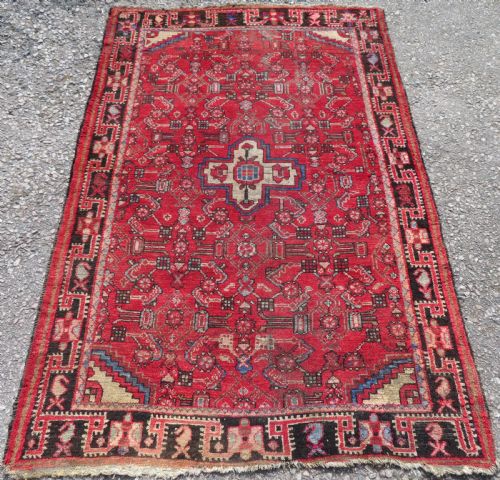
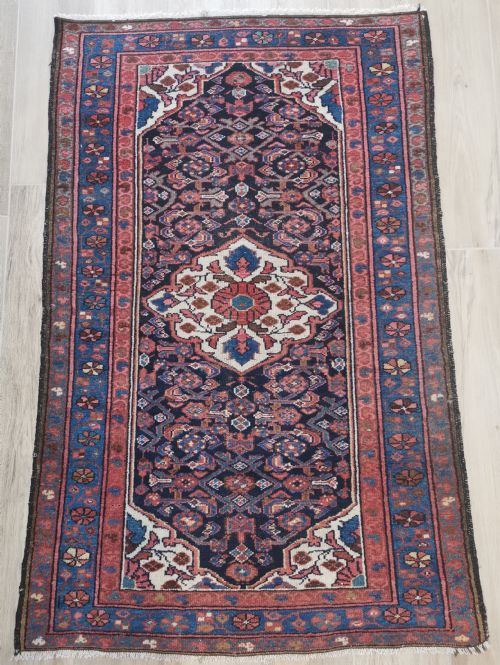
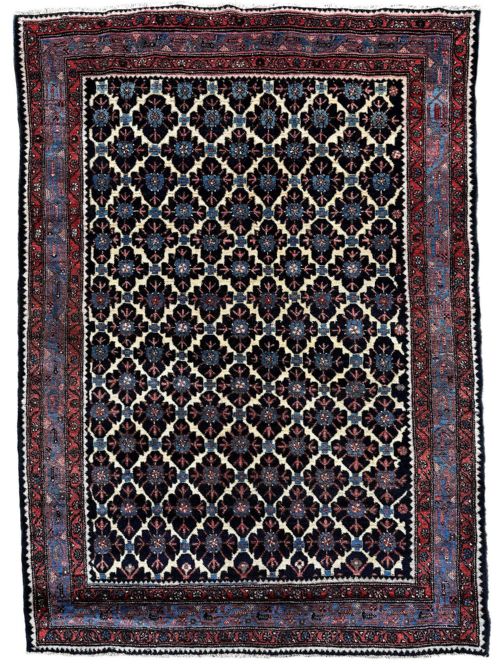
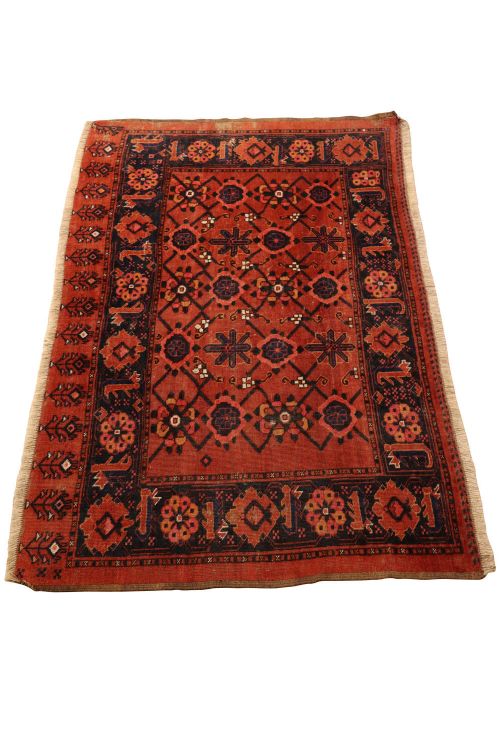


Hand Knotted Hamadan Rug
A hand knotted hamadan rug brings durable village wool and geometric Persian tradition directly to your floor.
Hand Knotted Hamadan Rug
A hand knotted hamadan rug originates from the vast weaving hub of western Persia, where hundreds of surrounding villages produce distinctive floor coverings. When you explore this selection, you encounter traditional formats ranging from compact hearth sizes to elongated hallway runners and large carpets.
The most common pieces you meet here date from the late nineteenth century through to the mid-twentieth century. These items manifest distinct regional sub-types such as Mazlaghan, Malayer, and Kurdish variants alongside classic Hamadan styles.
How they were made
Weavers construct each hand knotted hamadan rug using sturdy wool pile anchored onto firm cotton foundations. This pairing provides the structural resilience required for heavy domestic use in hallways and living spaces.
Traditional hand-knotting techniques secure the dense pile, creating robust floor coverings designed to withstand generations of foot traffic. Artisans utilise locally sourced materials characteristic of Persian tribal and village workshops.
Listings span periods from 1870 to 1940, showcasing wool and cotton construction across West Persian village styles.
What varies in quality
The finer examples demonstrate greater precision in knot density and tighter structural integrity across the cotton foundation. Superior execution results in crisper geometric motifs and harmonious colour distribution throughout the field.
Age and provenance further differentiate the pieces, with examples from the nineteenth century offering greater historical depth. Pile preservation and structural wear dictate the long-term utility of individual runners and carpets.
The Hand Knotted Hamadan Rug Glossary
- Hamadan
- A major trading and weaving centre in west Persia encompassing numerous surrounding villages that produce traditional rugs and runners.
- Runner
- A long, narrow carpet format specifically designed for hallways, corridors, and narrow spaces.
- Kelleh
- A large rectangular carpet format traditionally used in central areas of Persian rooms.
- Mazlaghan
- A specific village style associated with the broader western Persian weaving region, known for distinct geometric layouts.
Hand Knotted Hamadan Rug: Frequently Asked Questions
Where were hand knotted hamadan rug examples made?
These pieces originate from Hamadan and its surrounding villages in west Persia. Local artisans produced them across various tribal and traditional workshops.
Production spans multiple decades, capturing distinct regional styles from village weavers.
How do I use a narrow runner in my home?
Narrow runners suit hallways, landings, and corridors where floor space is restricted. Their elongated dimensions guide movement through domestic spaces.
Placing them on firm underlay protects the cotton foundation from excessive friction against hard floors.
What materials make up these rugs?
Authentic pieces combine wool pile with cotton warps and wefts. This traditional material pairing yields a thick, durable surface designed for daily wear.
Village workshops relied on locally harvested wool for resilience and longevity.
How can I identify the age of a piece?
Dating relies on stylistic markers, structural wear, and material characteristics observed across late nineteenth and early twentieth century examples. Variations in knot structure and dye palettes provide further clues to their period of origin.
Consulting specific production decades helps distinguish older nineteenth century carpets from later twentieth century village output.