
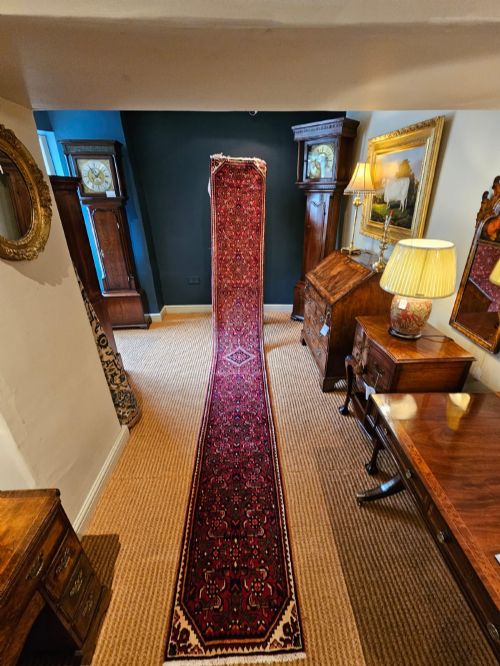
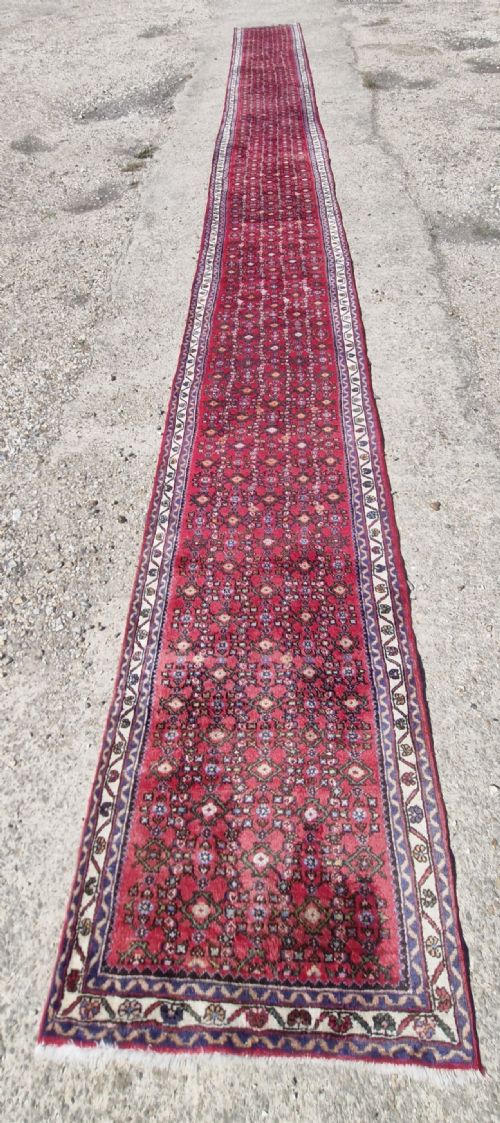
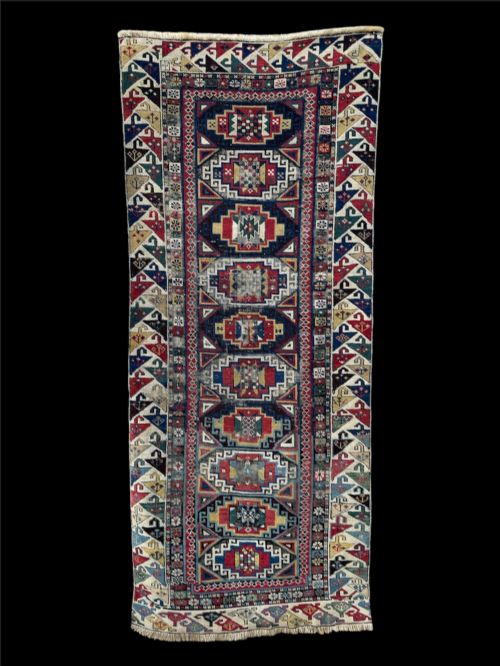
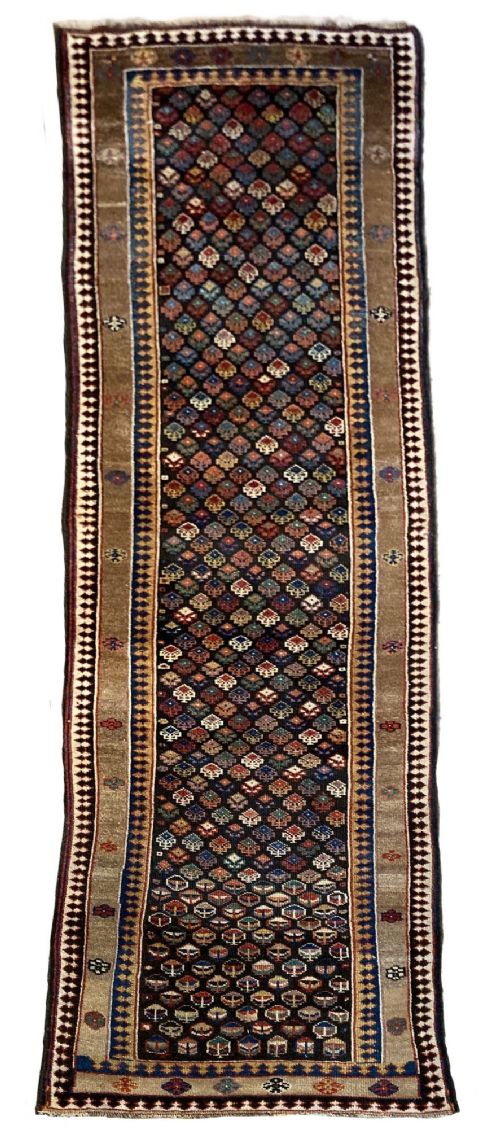
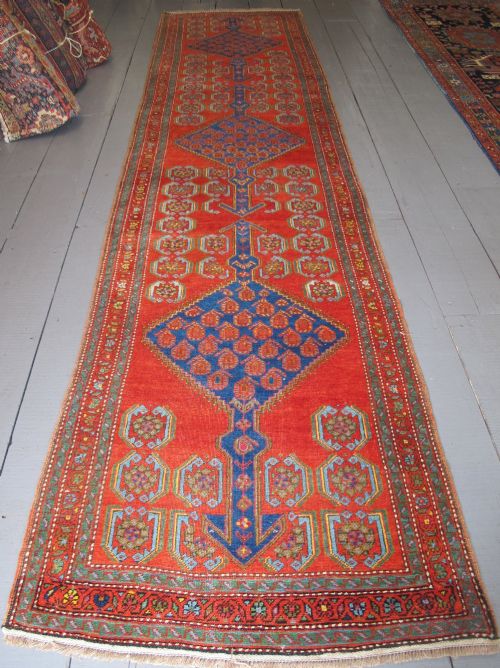


Persian Wool Hall Carpet
A persian wool hall carpet brings warmth and structure to a long corridor, offering heavy-wearing traditional craftsmanship from the nineteenth and early twentieth centuries.
Persian Wool Hall Carpet
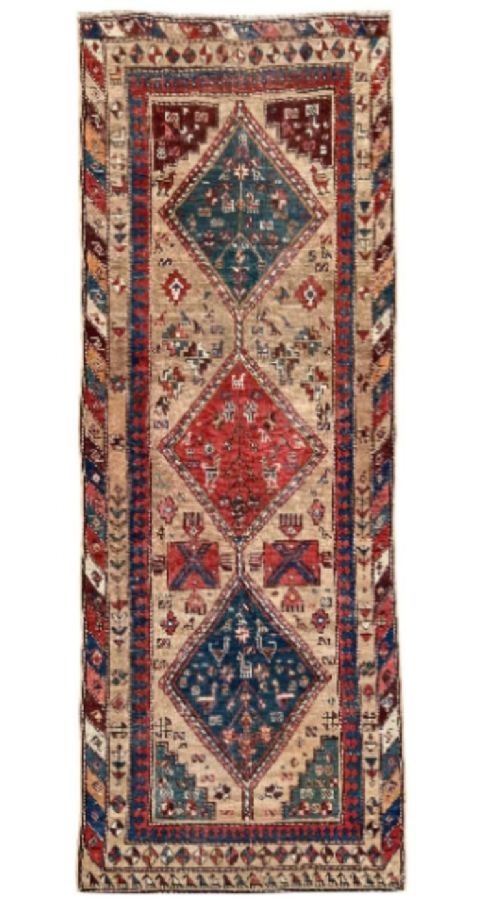
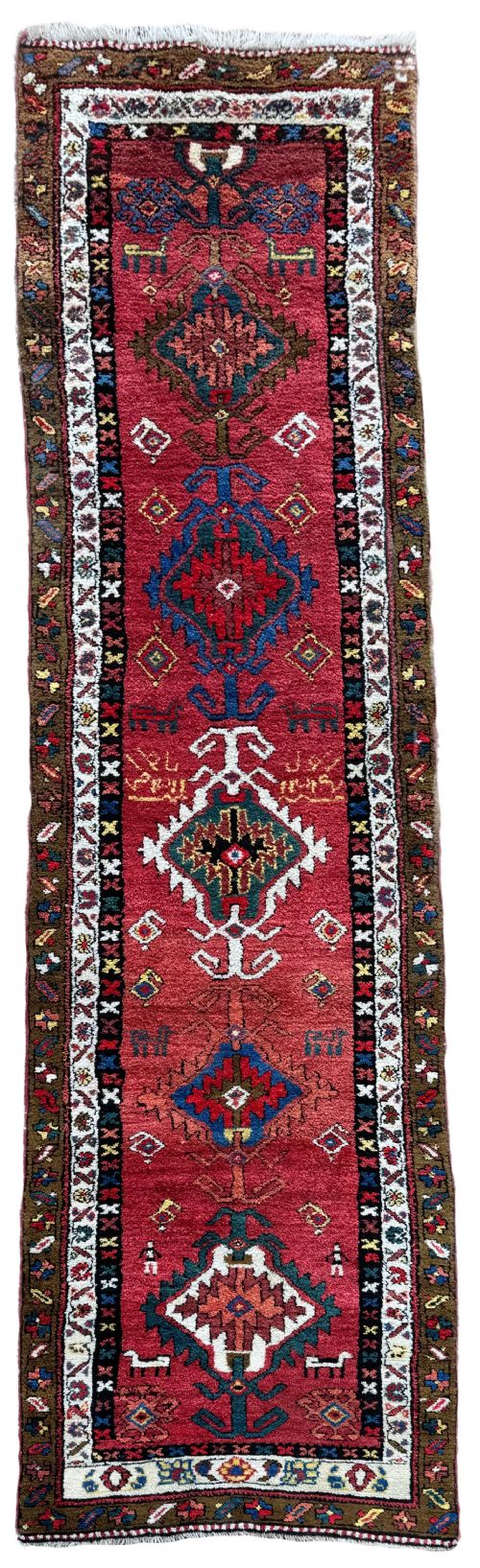
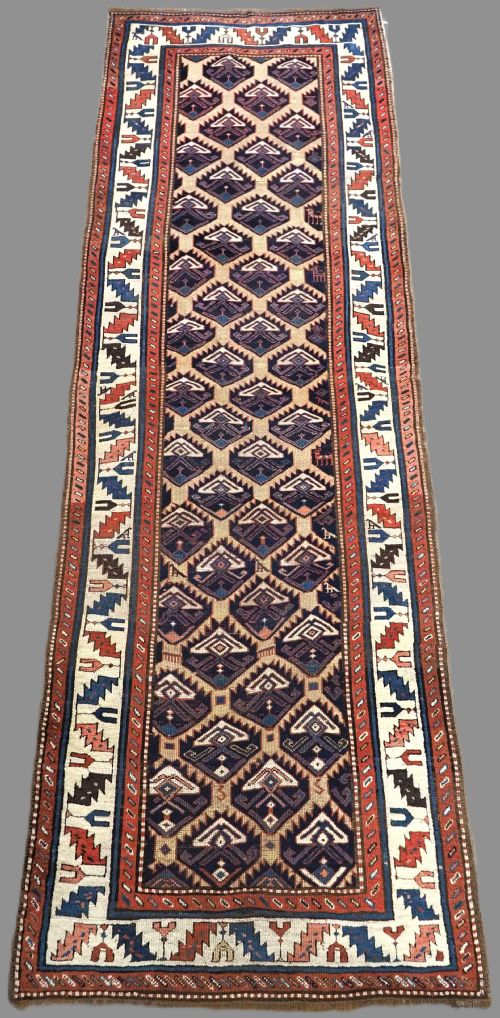
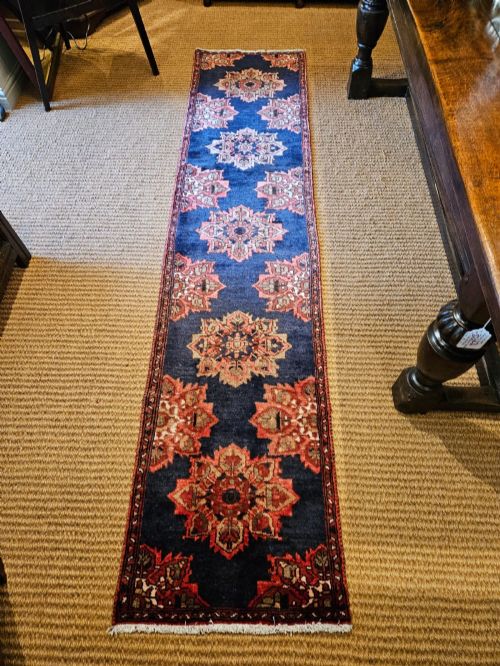
When searching for a persian wool hall carpet, buyers encounter long, narrow formats designed specifically for corridors, landings, and hallways. These furnishings appear in styles such as Persian Tribal, Kurdish, Heriz, and Sarouk, dating from the nineteenth century up to the mid-twentieth century.
The inventory on this page consists predominantly of runner rugs and hallway runners featuring geometric patterns, lattice designs, and traditional tribal motifs. Origins span various weaving traditions across Persia and the Caucasus, including specific regional types like Hamadan, Bidjar, and Bakshaish.
Dimensions vary widely to suit different corridor lengths, ranging from compact formats under three metres to exceptionally long gallery runners measuring over ten metres. Materials primarily feature heavy pile woven on sturdy foundations for demanding domestic traffic.
How they were made
Weavers constructed these long carpets using durable wool pile hand-knotted onto sturdy cotton or wool warps andwefts. This traditional technique creates a dense, resilient surface capable of withstanding centuries of foot traffic in busy hallways.
Many examples incorporate natural dyes derived from plants and minerals, yielding deep navy blues, rich reds, and earthy tones that age gracefully over time. Certain pieces also utilise camel hair for undyed brown and golden accents within the field or border.
Origin regions span Kurdish, Heriz, Hamadan, and Caucasian weaving traditions dating from the mid-nineteenth century onward.
What varies in quality
Knot density and structural tightness set finer examples apart from coarser tribal weaving. Higher knot counts allow for sharper rendering of intricate geometric medallions, lattice designs, and floral motifs along narrow proportions.
The depth and vibrancy of the palette depend heavily on the quality of natural dyes used in the wool. Superior pieces display complex tonal variations within the abrash, adding depth across the length of the runner.
The Persian Wool Hall Carpet Glossary
- Runner
- A long, narrow rug format specifically proportioned for hallways, corridors, and staircases. These pieces typically maintain a width under one meter while stretching several metres in length.
- Abrash
- Subtle tonal variations and colour shifts within the wool pile caused by changes in dye batches. This characteristic is a normal feature of hand-dyed traditional textiles.
- Warp
- The vertical structural threads stretched tightly on the loom before knotting begins. Cotton and wool are the predominant foundation materials seen in these listings.
- Natural Dyes
- Colourants extracted from plants, insects, and minerals prior to the widespread adoption of synthetic aniline dyes. They produce harmonious hues that mature richly with age.
- Pile
- The upright cut or looped wool surface of the carpet that forms the tactile design. Wool pile provides both insulation and durability for high-traffic areas.
Persian Wool Hall Carpet: Frequently Asked Questions
How do I choose the right length for my hallway?
Measure your corridor carefully while leaving an equal border of bare floor exposed around the perimeter. Long runners can be selected in various proportions to span short landings or exceptionally extended gallery spaces.
Keep doors and architectural obstacles in mind when determining the maximum length and width. Narrow formats ensure that doors swing freely without catching on thick wool pile.
Are these carpets suitable for heavy foot traffic?
Traditional construction methods using dense wool pile on sturdy foundations make these runners exceptionally durable. They perform well in high-traffic hallways and entrance passages when paired with a quality underlay.
Regular rotation distributes wear evenly along the length of the runner. Vacuuming with a brush roll disengaged protects the hand-knotted structure.
How do I identify different regional Persian styles?
Regional types often reveal themselves through distinct geometric motifs, border arrangements, and colour palettes. For instance, Heriz runners typically feature bold, angular medallions, whereas Kurdish or Hamadan pieces lean towards repeating lattice patterns and tribal symbols.
Examining the weave structure and materials provides further clues to origin. Comparing pieces side by side helps clarify the subtle distinctions between Caucasian and Persian workshops.
What is the best way to care for a vintage wool runner?
Protect the carpet from direct, prolonged sunlight to prevent natural dyes from fading unevenly over the decades. Professional cleaning tailored for antique textiles ensures that wool and cotton foundations remain stable.
Using a slip-resistant underlay prevents the runner from shifting underfoot on hardwood or stone floors. This simple addition also reduces friction between the foundation threads and the ground.