



Hand Forged Fire Irons
Hand forged fire irons are the heavy, hammer-shaped hearth tools and companion sets you need to tend an open fire properly.
Hand Forged Fire Irons
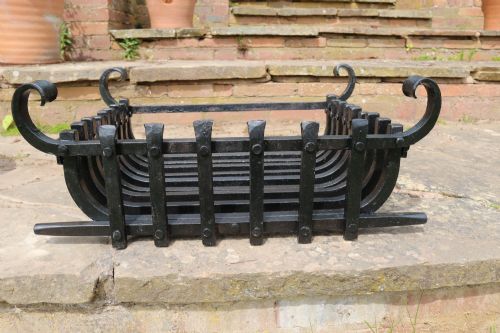
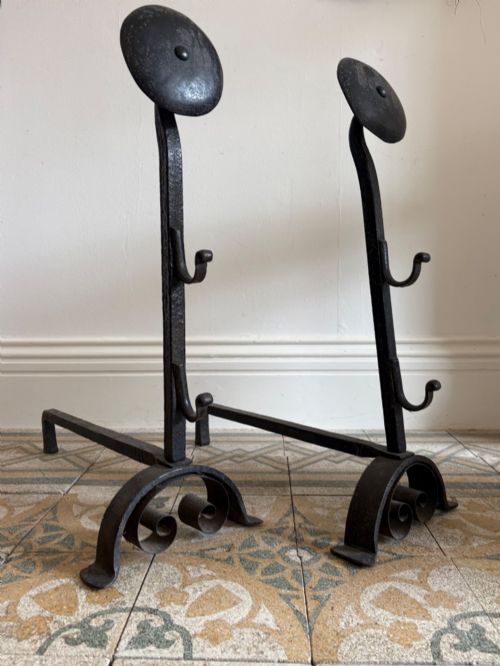
When you search for hand forged fire irons, you encounter robust hearth equipment shaped by blacksmiths from periods spanning the nineteenth century through to the nineteen-thirties. The selection includes companion sets, fire baskets, log grabbers, and companion tool rests originating from English and French country houses and manors.
You are most likely to meet wrought iron companion sets and fire tools exhibiting Arts and Crafts, Gothic Revival, and rustic country styles. These pieces range from simple, utilitarian pokers and tongs to large, decorative sets complete with matching fire dogs and andirons.
The objects serve both practical duties around the open hearth and decorative roles within the inglenook. Many listings pair the irons directly with fire grates, baskets, and heavy fire dogs to form a complete fireside arrangement.
How they were made
Blacksmiths shaped these utilitarian items primarily from wrought iron and forged iron, working the metal hot over an anvil to achieve sturdy, enduring forms. Burnished steel also appears in early nineteenth-century examples, offering a smoother, more polished finish for formal drawing-room hearths.
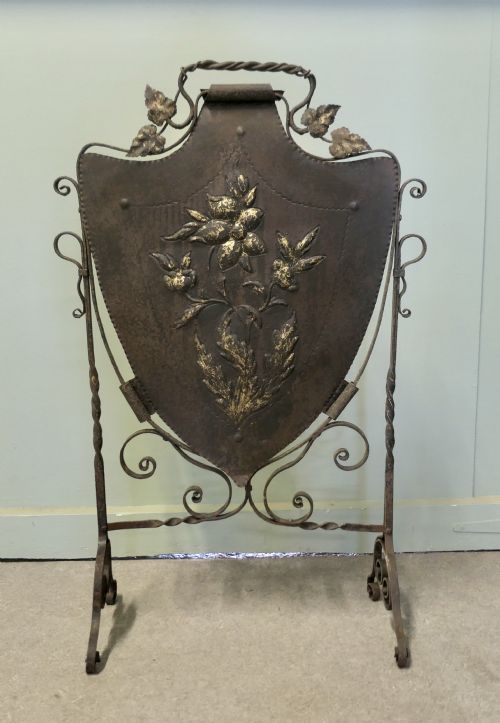
Makers integrated mixed media such as brass, copper, and gilt highlights into specific decorative styles like Arts and Crafts and Art Nouveau. Wood occasionally appears on handles or companion pieces, adding tactile contrast to the heavy metal construction.
Listings feature wrought iron, burnished steel, brass, and copper across the nineteenth century and the nineteen-thirties.
What varies in quality
The standard of craftsmanship shows in the crispness of the blacksmith's hammer marks and the balanced weight of the individual tools. Superior examples display deliberate, clean shaping at the joints and terminals rather than hurried industrial casting.
Completeness alters the character of a set, as matching companion pieces that retain their original tool rests or fire dogs demonstrate greater integrity. The distinction also lies in stylistic cohesion, where dragon motifs, gothic shields, or medieval influences are executed with purposeful design.
The Hand Forged Fire Irons Glossary
- Andiron
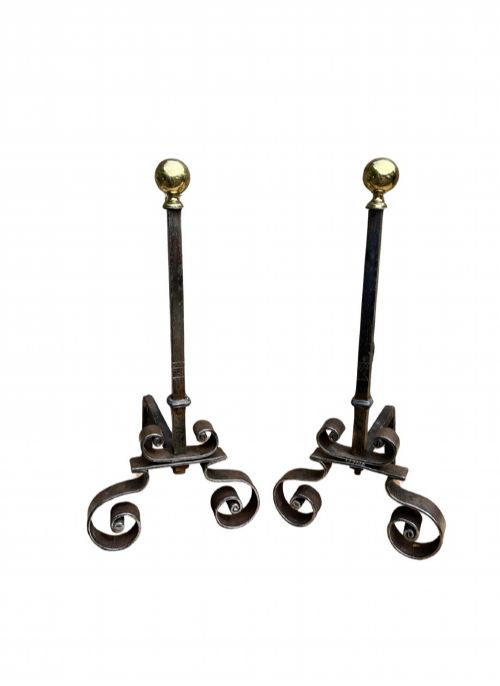
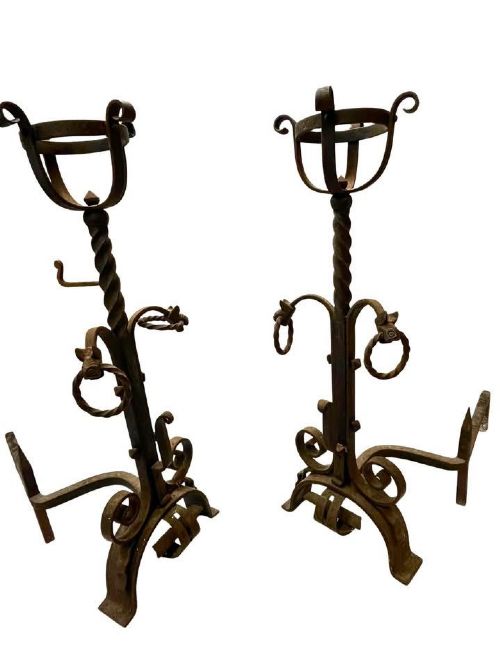
- A metal support used to hold logs in an open fireplace. Also known as a fire dog, they frequently appear in pairs flanking a fire basket.
- Fire basket
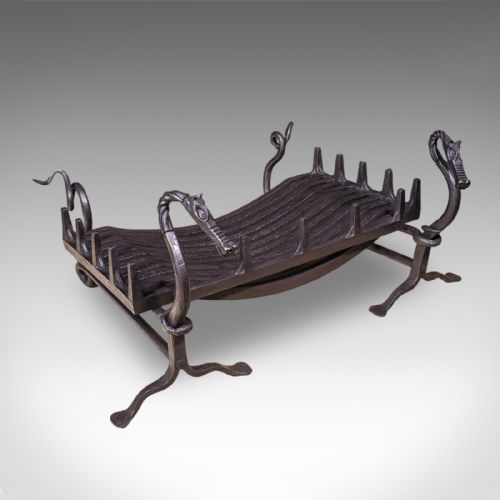
- An iron grate designed to hold coal or wood off the hearth floor. These often incorporate decorative backplates and matching tool rests.
- Companion set
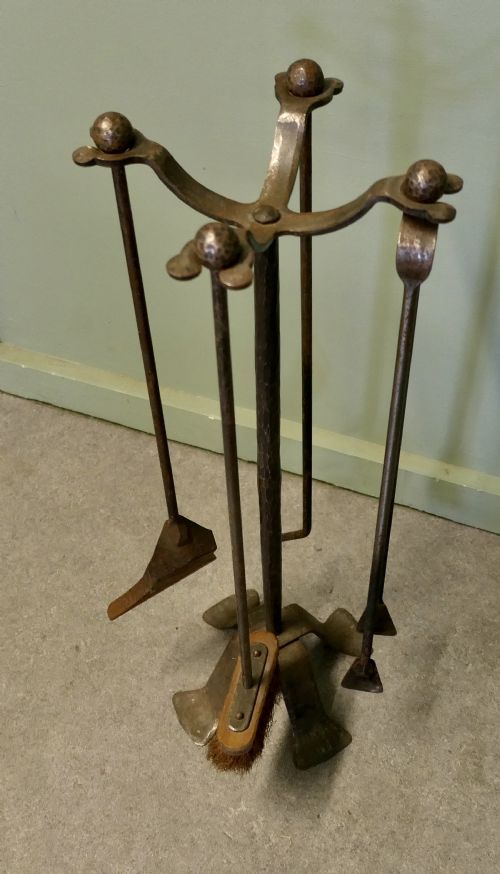
- A collection of fireplace tools, typically including pokers, tongs, and shovels, housed together near the hearth. Sets range from simple country house groupings to large manor house arrangements.
- Log grabber
- A specialised tool used for lifting and repositioning heavy logs within an open fire. Nineteenth-century examples utilise heavy wrought iron construction for leverage.
- Wrought iron
- Iron that has been heated and worked with tools like hammers. This material forms the backbone of traditional hand-forged fireside accessories.
Hand Forged Fire Irons: Frequently Asked Questions
What is included in a companion set?
A companion set typically groups essential hearth tools such as pokers, shovels, and tongs together for daily tending of an open fire.
Many sets include dedicated tool rests or stand alongside matching fire dogs and baskets to keep the hearth organised.
How do I date a set of fire irons?
Dating relies on observing material choices, tool construction methods, and stylistic cues like Arts and Crafts or Gothic Revival details.
Earlier nineteenth-century pieces often utilise burnished steel, while later Victorian and nineteen-thirties examples favor heavier wrought iron forms.
Are andirons used with fire baskets?
Andirons often flank fire baskets or support logs directly on the hearth floor within large inglenook fireplaces.
They serve both a structural role in holding fuel and a decorative function matching the companion tools.
What is the difference between cast and forged iron?
Forged iron is heated and hammered into shape by a blacksmith, leaving distinct tool marks and robust structural lines.
Cast iron is poured into a mould while liquid, resulting in smoother, repeatable ornamentation often seen on nineteenth-century fire dogs.