




Heavy Iron Fireplace Set
A heavy iron fireplace set anchors a hearth with substantial metalwork built for daily winter service.
Heavy Iron Fireplace Set
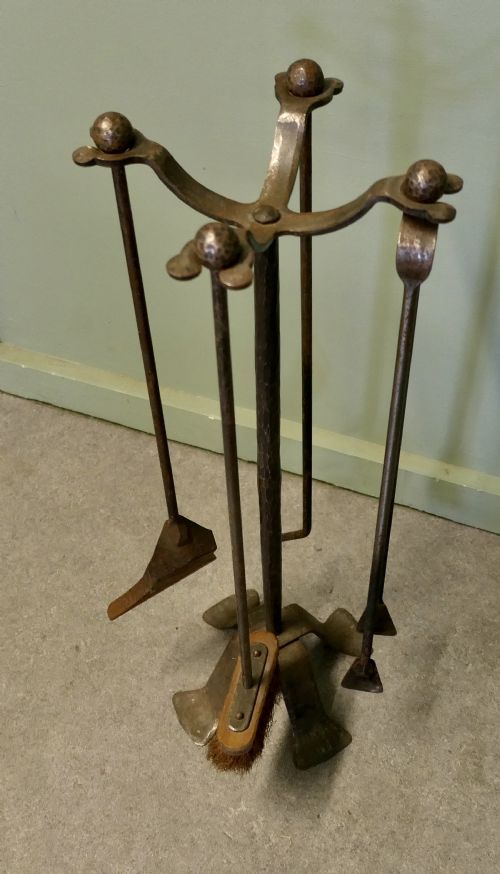
A heavy iron fireplace set gathers utilitarian hearth furniture designed to manage solid fuel fires in period rooms. These groupings combine companion sets, fire baskets, and andirons intended to handle coal or wood combustion safely. The pieces met most often on this page date from the nineteenth century, including Victorian Gothic Revival and Arts and Crafts examples.
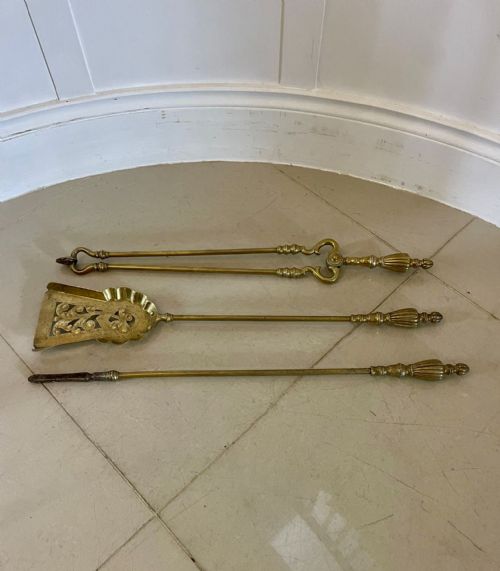
Compositions range from single companion sets of three tools to complete hearth layouts featuring fire grates, backs, and companion pieces. French country and English country house manifestations appear alongside formal Victorian designs. Each configuration reflects the practical demands of nineteenth-century heating alongside the decorative preferences of the period.
Materials and construction
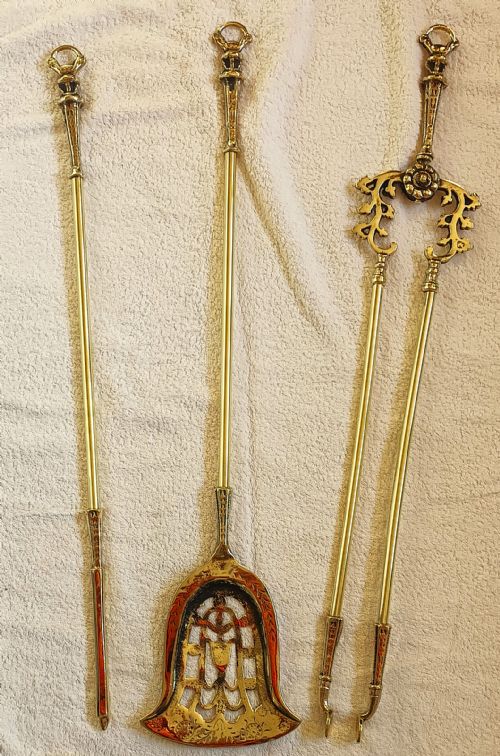
Blacksmiths and foundries utilised cast iron, wrought iron, and steel to withstand intense hearth temperatures. Cast iron provided rigid forms for fire backs and grates, whilst wrought iron allowed for hand-forged companion tools and structural andirons. Brass components and wire mesh additions frequently appeared on companion sets and fire screens to introduce contrasting metallic tones.
Workshops shaped these metals through traditional casting, forging, and riveting methods suited to heavy service. Tool handles and mounting stands often incorporated turned brass or structural wood to balance the weight of the iron shafts.
Listings feature nineteenth-century items incorporating cast iron, wrought iron, brass, and wood across Victorian and Arts and Crafts styles.
Judging quality in hearth metalwork
Substance and proportion dictate the distinction between ordinary utility items and superior companion sets. Heavier gauge iron and substantial brass mountings indicate robust construction designed for heavy country house use rather than light domestic service. Finely cast details on fire baskets and balanced tool weights reveal the care taken by the maker.
Integrity of assembly separates well-preserved sets from compromised examples. Solid joins where iron shafts meet brass handles or structural feet remain tight through decades of handling. Surface texture tells its own story, with clean forge marks on wrought iron holding more distinction than crude modern repairs.
The Heavy Iron Fireplace Set Glossary
- Companion set
- A matched group of fireplace tools, typically including a poker, tongs, and shovel, usually housed on a dedicated stand. These sets kept essential tending equipment tidy beside the hearth.
- Andirons
- A pair of horizontal metal supports raised on legs, placed in a hearth to hold logs above the floor for better airflow. They often coordinate stylistically with the fire basket or companion set.
- Fire basket
- An open metal grate designed to hold coal or wood within the fireplace opening. They frequently incorporate decorative cast iron plates and decorative side panels.
- Fire back
- A heavy cast iron plate placed at the rear of a fireplace opening to protect the masonry and reflect heat back into the room. These plates often feature raised heraldic or floral designs.
- Gothic Revival
- An architectural and decorative style popular during the nineteenth century that reinterpreted medieval pointed arches and structural motifs. Hearth sets in this taste display robust ironwork with ecclesiastical detailing.
Heavy Iron Fireplace Set: Frequently Asked Questions
What is included in a heavy iron fireplace set?
These groupings typically combine companion tools like pokers and tongs with structural items such as andirons and fire baskets. Some configurations also incorporate fire backs or mesh screens.
Items vary from simple three-piece tool sets to comprehensive hearth layouts designed for large open fireplaces.
How do I date a Victorian fireplace set?
Dating relies on stylistic markers such as Gothic Revival detailing, Arts and Crafts restraint, or heavy brass and cast iron combinations typical of the nineteenth century. Material thickness and construction techniques further confirm the era.
Consulting the specific period stamps or design patents associated with the workshop helps narrow the decade of production.
Can these sets be used in a working fireplace?
Most pieces are forged from durable cast iron, wrought iron, and steel built precisely for regular fire tending and heat exposure. They functioned as heavy-duty equipment in nineteenth-century country houses.
Checking the structural integrity of tool shafts and fire basket legs ensures safe operation in modern hearths.
How do I maintain cast iron hearth pieces?
Routine maintenance involves brushing away ash and soot using dry cloths to prevent corrosive build-up on the metal surface. Applying appropriate stove black or protective wax helps preserve the finish.
Avoiding harsh liquid cleaners protects both the iron and any incorporated brass elements from tarnishing or pitting.