
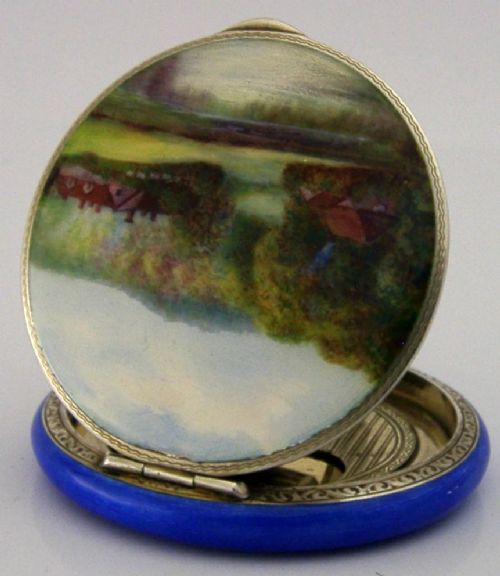
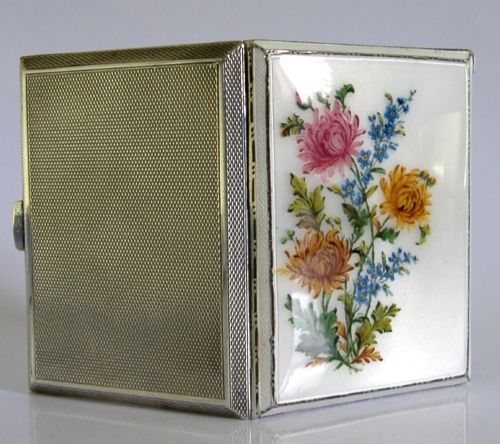
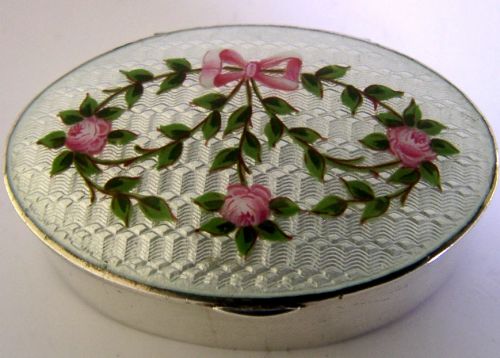


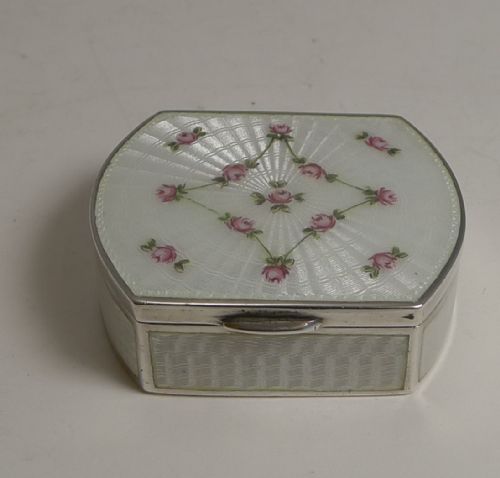
Hand Enamelled Silver Box
A hand enamelled silver box brings together precious metalwork and colourful fused glass, offering a miniature canvas you can hold in your hand.
Hand Enamelled Silver Box
The objects listed here span compacts, cigarette cases, pill boxes, and decorative caskets fashioned from sterling silver, 800 silver, and silver gilt. Alongside these silver examples, related metalwork appears in steel, pewter, copper, and mahogany.
Originating across Britain, continental Europe, and Russia, these items demonstrate a rich range of decorative techniques applied to everyday functional objects. Buyers are most likely to encounter sterling silver specimens featuring hand-painted floral motifs or geometric enamel panels.
How they were made
The construction of these pieces relies on the combination of worked metals and powdered glass fused under high heat. Silversmiths formed the bodies through casting, beating, or riveting, utilising sterling silver, 800 silver, steel, pewter, and copper.
Enamel decoration was applied using techniques such as cloisonné, where wire compartments hold the coloured glass paste, or guilloche, which lays translucent enamel over engine-turned metal grounds. Artisans also hand-painted direct motifs onto the fired surfaces before a final polish.
What varies in quality
Quality in these pieces is dictated by the crispness of the metal forming and the precision of the enamel work. Superior examples show careful hand-painting or intricate wirework without bubbling or misalignment in the glass layers.
The weight of the silver container and the smoothness of its hinges and catches distinguish finer productions from standard workshop pieces. Maker attribution, particularly to known firms like Liberty & Co or named silversmiths, elevates the standing of an item.
LIBERTY & CO·Giuliano Spinelli Florence·TISSOT
The Hand Enamelled Silver Box Glossary
- Sterling silver
- A silver alloy containing 92.5 percent pure silver by mass, with the remainder usually copper. This standard composition provides the durability required for functional boxes and compacts.
- Cloisonné
- An ancient technique for decorating metalwork objects with colourful material held in place by metal wire strips. Artisans solder flat wires onto the metal base to create compartments before filling them with enamel.
- Guilloche
- A decorative engraving technique producing a precise, intricate repeating pattern or design on metal surfaces. Translucent enamel is frequently layered over this engine-turned ground to catch the light.
- Silver-gilt
- Silver that has been coated with a thin layer of gold on its surface. This finish provides the warm appearance of solid gold while utilising a silver base.
- Pewter
- A malleable metal alloy traditionally consisting of tin with copper and antimony. Arts and Crafts makers utilised this material for its dull lustre and suitability for hand-beating.
Hand Enamelled Silver Box: Frequently Asked Questions
What were hand enamelled silver boxes used for?
These containers served practical daily functions for fashionable individuals in the late nineteenth and early twentieth centuries. They were designed to hold loose face powder, cigarettes, small medicinal pills, or precious keepsakes.
Because they were meant for daily pocket or handbag use, their construction combined durable metal frames with decorative artistry. Today they function as desk accessories or collectible display items.
How do I identify Art Deco pieces?
Art Deco items rely on symmetrical geometric shapes, clean lines, and stylised motifs rather than the flowing natural forms of earlier periods. You will see sunburst patterns, chevrons, and sharp angles executed in enamel.
These pieces often date from the nineteen-twenties and nineteen-thirties, reflecting the modern industrial aesthetics of that era.
What is the difference between sterling and 800 silver?
Sterling silver contains ninety-two and a half percent pure silver, representing the British and American standard for quality metalwork. Pieces marked as 800 silver contain eighty percent pure silver, a standard more commonly found in continental European manufacturing.
Both metals provide a sturdy base for enamel work, though sterling generally commands a higher regard among British collectors.
How should I care for an antique enamel box?
Enamel is essentially glass fused to metal, meaning it requires gentle handling to prevent scratching or chipping. Clean the piece with a soft, dry cloth and avoid harsh silver dips that can seep under the enamel panels and cause lifting.
Store them away from direct sunlight and extreme temperature fluctuations to protect both the metal and the glasswork over time.