
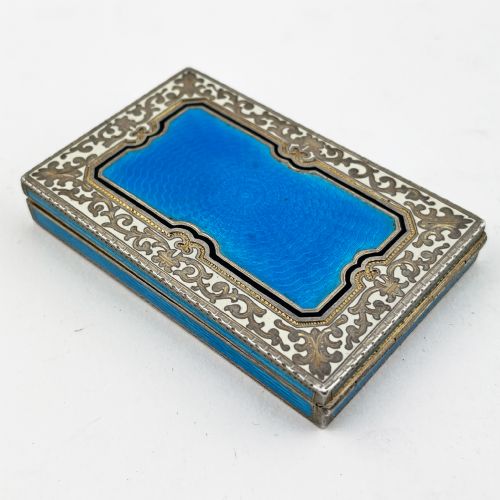


Silver Gilt Enamel Box
A silver gilt enamel box brings together precious metals and glass work in small, portable forms that collectors prize for their rich colour.
Silver Gilt Enamel Box
A silver gilt enamel box encompasses a range of small containers designed to hold items such as pills, cards, snuff, or cosmetics. These objects span from the Victorian period through the Edwardian era into the Art Deco epoch, reflecting changing tastes in decorative arts.
Continental European workshops produced many of the examples seen here, alongside British items bearing assay marks from London and Birmingham. Forms include simple pill boxes, card cases, compacts, and singing bird automata.
The objects combine precious metal foundations with vitreous enamel surfaces, often finished in a layer of gilt. This combination yields pieces that served both functional and ornamental roles in daily life.
How they were made
Silversmiths constructed the base structures from sterling silver, gilt metal, or gold, applying a wash of gold over silver to create the characteristic gilt finish. Craftsmen then incorporated vitreous enamel, fusing powdered glass to the metal surface under high heat.
Techniques such as guilloche involved engraving geometric patterns into the metal beneath translucent enamel, creating a shimmering wave effect. Cloisonne work utilised fine metal wires to outline individual cells filled with coloured enamel pastes.
Listings feature items from the Victorian period, 1900, 1910, 1920, and 1930, utilising sterling silver, gold, and shell cameo.
What varies in quality
The precision of the enamel work dictates much of the distinction between standard and exceptional pieces, particularly where shading and guilloche engraving intersect. Clean application without firing flaws or pitting separates finer examples from ordinary production.
The complexity of the form and the integrity of the silver gilt ground influence overall standing. Maker attributions, such as those from recognised firms in Russia, Norway, and Austria, add documentary weight to surviving pieces.
David Andersen·Khlebnikov·Georg Adam Scheid·Houbigant
The Silver Gilt Enamel Box Glossary
- Silver-gilt
- Sterling silver or another silver alloy that has been coated with a thin layer of gold. This treatment provides the warm tone associated with many antique boxes.
- Vitreous enamel
- A material made by fusing powdered glass to a substrate by firing, usually between seven hundred and nine hundred degrees Celsius. The powder melts, flows, and hardens to a smooth, durable coating.
- Guilloche
- A decorative engraving technique in which a mechanical instrument etches a precise, intricate pattern into a metal surface. Enamellists then apply translucent coloured glass over the engraving.
- Cloisonne
- An ancient technique for decorating metalwork objects, in which wires are soldered to the metal base to form compartments that are filled with enamel paste.
- Assay mark
- A stamp or series of stamps applied to precious metals to indicate the standard of purity, the maker, and the office of origin.
Silver Gilt Enamel Box: Frequently Asked Questions
What were silver gilt enamel boxes used for?
These containers held personal items such as snuff, pills, rouge, and visiting cards. Their small size allowed owners to carry them in pockets or handbags.
Wealthy patrons also used them as decorative tabletop pieces or vanity items. The inclusion of mirrors and compartments in compacts and vanity jars served specific grooming needs.
How do I date a silver gilt enamel box?
Hallmarks stamped on the silver components provide the most reliable dating evidence, linking the piece to specific assay offices and years. Maker marks further narrow down the production period.
Stylistic indicators such as Art Deco geometric lines or Victorian revival motifs help place pieces within broader eras when hallmarks are absent or worn.
How should I care for enamel and silver gilt?
Keep these items away from direct sunlight and moisture to protect the glass enamel and prevent tarnishing of the underlying metal. Gentle dusting with a soft cloth suffices for routine maintenance.
Avoid chemical dips or abrasive polishes, as these substances can damage the delicate gilt layer and scratch the vitreous enamel surface.
What is the difference between guilloche and cloisonne?
Guilloche relies on machine-engraved patterns cut directly into the metal base before a translucent enamel layer goes on top. The underlying texture creates a reflective, patterned depth.
Cloisonne builds the design using fine metal wires soldered upright onto the metal plate to create walled cells. Artisans fill these individual compartments with opaque or transparent coloured enamels.