
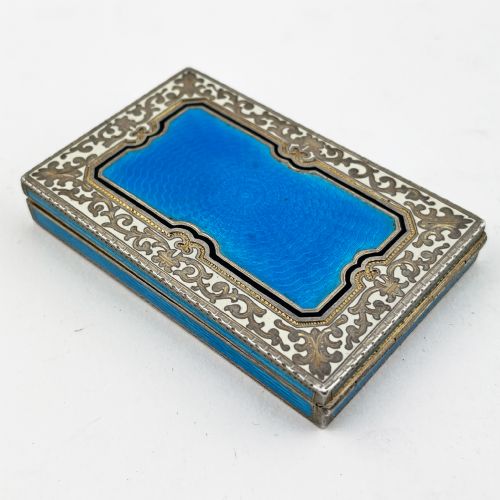


Enamel Cigarette Case
When you search for an enamel cigarette case, you encounter miniature canvases of precious metal and vitreous colour made for the pocket.
Enamel Cigarette Case
An enamel cigarette case is a pocket container designed to hold tobacco, drawing on periods spanning the nineteenth century through the 1940s. The selection includes items shaped as rectangular boxes, compacts, and card cases.
Art Deco and Edwardian examples dominate the offerings, alongside pieces reflecting Russian Revival and Arts and Crafts aesthetics. Workshops from Britain, continental Europe, and Russia contributed to this tradition of pocket-sized luxury.
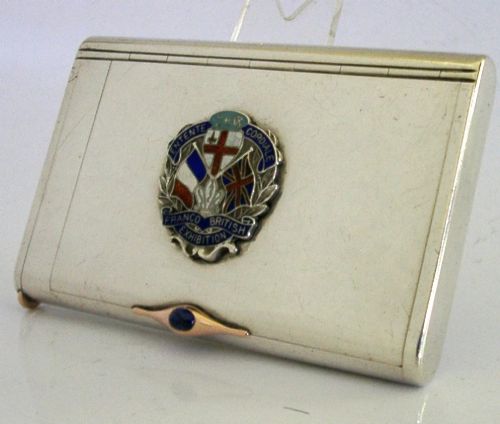
Makers fashioned these portable objects in sterling silver, silver-gilt, and chrome plate, often pairing structural metal with delicate glass pastes. Survivors range from plain utility pieces to highly decorative items featuring hand-painted botanical or figurative subjects.
Materials and Techniques
Smiths constructed the core bodies of these objects using sterling silver or silver-gilt, hammering and rolling the metal into rigid frames with hinged lids. Gilding added a rich interior warmth, while chrome plate appeared in later utilitarian iterations.
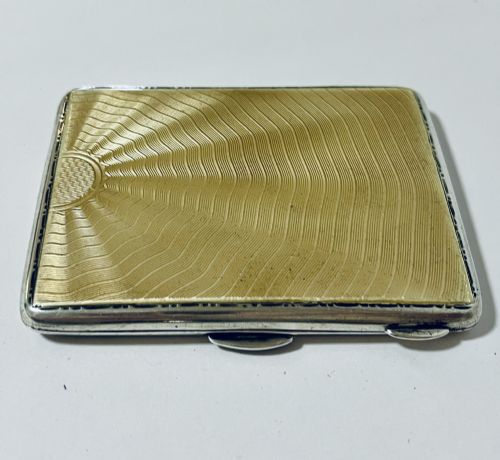
Vitreous enamel was fused to the metal base through high-temperature firing, bonding powdered glass to the silver surface. Guilloche techniques introduced machine-turned geometric patterns beneath translucent enamel layers to catch the light.
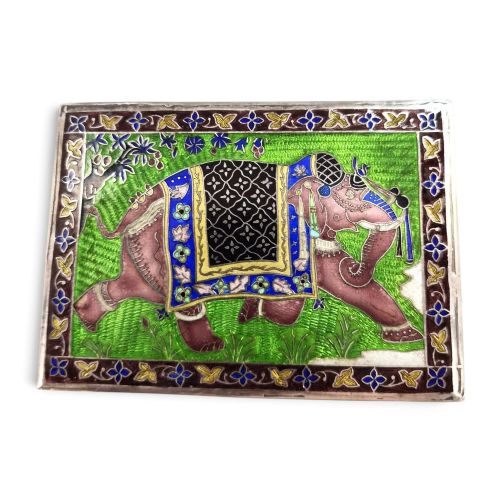
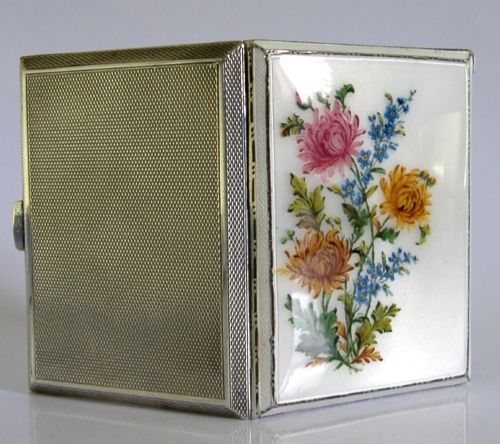
Artisans applied hand-painted details directly onto the enamel ground, depicting flowers, animals, and figural scenes. Certain pieces incorporated cloisonné wires to partition different coloured enamels into distinct cellular compartments.
The listings demonstrate a strong representation of Art Deco geometric sunburst designs alongside traditional floral hand-painted miniatures.
Markers of Quality and Craft
Quality rests heavily on the complexity of the enamel work and the precision of the underlying metal chassis. Intricate guilloche engraving and multi-coloured shading demonstrate a higher level of artisan skill than flat, opaque monochrome surfaces.
The integrity of the hinge mechanism and the snugness of the closure distinguish superior examples. A well-made case shuts with a crisp click, indicating careful adjustment by the silversmith.
Hand-painted artistry elevates certain specimens far above standard production. The clarity of miniature floral studies or animal portraits reveals the hand of a specialist painter rather than a factory stencil.
Liberty and Co·Deakin and Francis·William Neale and Son Ltd·Joseph Gloster·Walker and Hall·Asprey·Khlebnikov·Louis Kuppenheim
The Enamel Cigarette Case Glossary
- Guilloche
- A decorative technique where a mechanical lathe engraves precise geometric patterns into a metal substrate. Translucent enamel applied over this pattern creates shifting reflections.
- Vitreous enamel
- A material made by fusing powdered glass to a metal surface at high temperatures. This produces a hard, glossy, and durable coloured coating.
- Cloisonne
- An enamelwork method where thin metal wires are soldered to a metal base to create compartments for different coloured pastes. The piece is then fired and polished flat.
- Silver-gilt
- Sterling silver that has been coated with a thin layer of gold. This treatment protects the silver from tarnish and provides a warm interior glow.
- Minauderie
- A small decorative metal case designed for evening wear, often combining a cigarette holder with cosmetic compartments and mirrors.
Enamel Cigarette Case: Frequently Asked Questions
What fits inside an enamel cigarette case?
These cases were originally proportioned for short, straight-walled cigarettes or cheroots of the early twentieth century. Modern manufactured cigarettes often exceed these historical lengths and thicknesses.
Today, buyers frequently utilise them to hold business cards, credit cards, or folded currency. The rigid metal walls protect delicate paper items from bending inside a pocket or handbag.
How do I date an enamel cigarette case?
Dating relies upon hallmarks stamped into the metal frame, which indicate assay offices, standard marks, and specific date letters. British pieces carry distinct stamps that pinpoint the exact year of manufacture.
Stylistic markers also offer clear chronological clues. Geometric sunbursts and stark lines point toward the Art Deco era, while softer floral motifs often align with Edwardian or Arts and Crafts production.
How should I clean my enamel case?
Vitreous enamel is essentially glass and requires gentle handling to avoid scratching or chipping. Warm water and mild soap applied with a soft cloth will remove surface grime.
Silver components can be polished with a specialised cloth, taking care to avoid abrasive pastes touching the enamel edges. Store the case in a soft pouch away from direct sunlight to preserve the pigments.
Were these cases made for men or women?
Manufacturers produced cases for both gentlemen and ladies, adapting sizes and decorations accordingly. Smaller, highly ornate designs often accompanied evening wear for women.
Sleeker, pocket-sized variations served men for daily use, though elaborately decorated examples crossed gender lines. Combination compacts frequently integrated mirrors and powder wells alongside tobacco storage.