



Antique Enamel Vesta Case
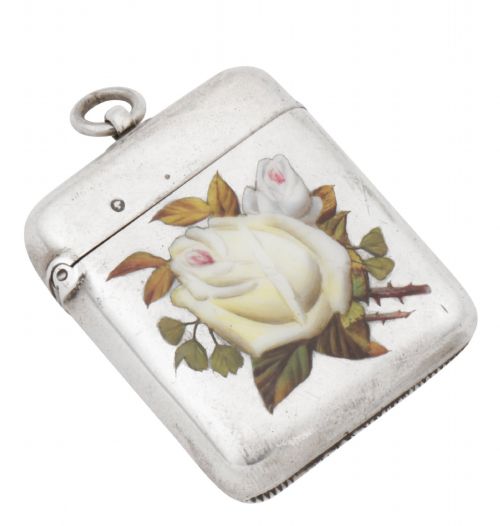
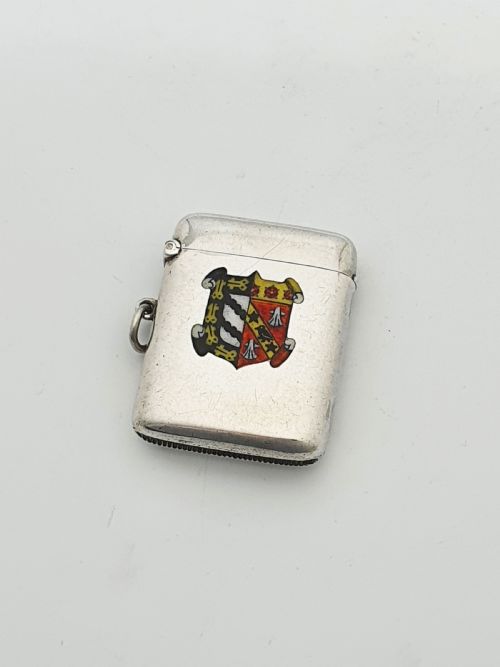
An antique enamel vesta case is a pocket match-safe decorated with coloured glass paste, combining utility with miniature artistry.
Antique Enamel Vesta Case
An antique enamel vesta case is a small pocket container designed to hold matches safely before the widespread availability of safety matches. These pieces surface frequently from the Victorian and Edwardian periods, alongside items from the nineteen-twenties.
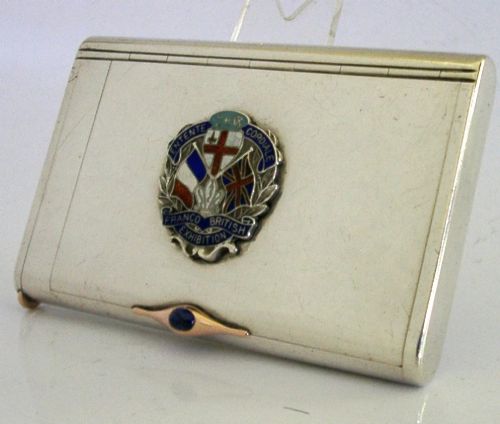
The forms span standard rectangular match-safes, cigarette combinations, and novelty shapes including sentry boxes, dogs, and jockeys. Most examples pair sterling silver with vitreous enamel, though brass, bronze, and gold also appear.
Materials and construction
Silversmiths formed the bodies of sterling silver, brass, or bronze, often incorporating gold accents or silver-gilt finishes. Vesta cases utilise vitreous enamel fused to the metal base through high-temperature firing, creating durable glossy surfaces.
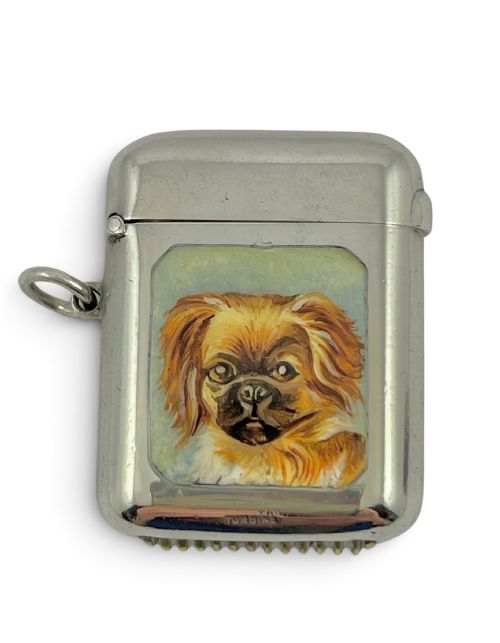
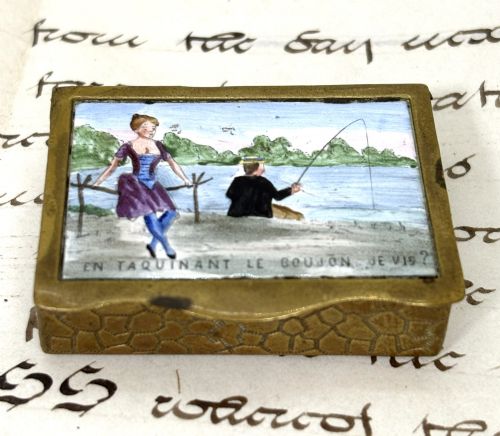
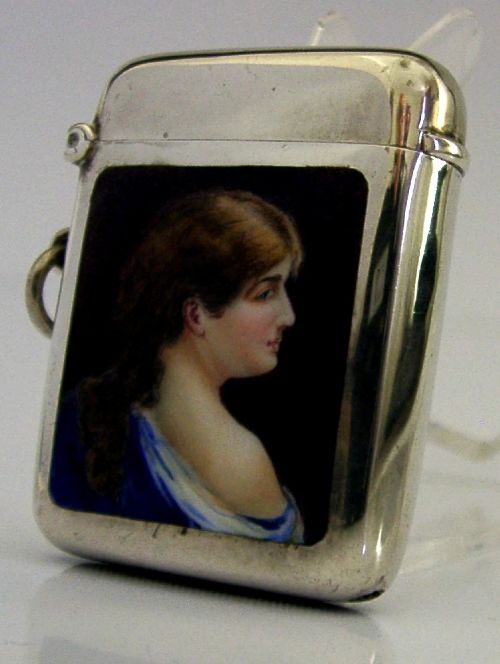
Makers applied hand-painted miniature scenes, crests, and portraits directly onto the enamel or used cloisonné techniques to contain coloured glass pastes within metal wires. Hinged lids and striker bases were integrated into the metal frames to ensure everyday functionality.
Listings feature items from the Victorian and Edwardian eras, alongside pieces from the nineteen-twenties and nineteen-thirties.
Markers of quality
Quality rests in the precision of the hand-painted detail and the complexity of the subject matter, such as animal portraits or figurative jockey depictions. Intricate cloisonné work and sculptural novelty forms require greater artisan skill than flat geometric designs.
The condition of the vitreous enamel dictates the standard of a piece, with unbroken surfaces and crisp hallmarks adding desirability. Maker marks from established silversmiths further distinguish superior examples from standard production.
William Neale·Sampson Mordan
The Antique Enamel Vesta Case Glossary
- Vesta case
- A small pocket container designed to hold and protect wax matches, fitted with a strike surface on the base. These portable boxes were essential accessories in the nineteenth and early twentieth centuries.
- Vitreous enamel
- Glass powder fused to a metal substrate at high temperatures to form a hard, glossy coloured coating. This material provides vibrant decoration that resists tarnishing.
- Silver-gilt
- Silver that has been coated with a thin layer of gold, often used on the interior or exterior of cases to prevent tarnishing and provide a rich finish.
- Cloisonné
- An enamel technique where thin metal wires are soldered to a metal base to create compartments for coloured pastes. These compartments are then fired and polished flat.
- Hallmark
- Official stamps struck into precious metals to guarantee purity, origin city, and date of manufacture. British pieces typically carry town marks and date letters.
Antique Enamel Vesta Case: Frequently Asked Questions
What is an antique enamel vesta case?
An antique enamel vesta case is a pocket-sized container designed to hold matches, decorated with coloured glass paste fused to metal. They were carried in pockets or attached to watch chains during the Victorian and Edwardian eras.
These pieces protected matches from moisture and friction in the pocket. The enamel decoration often featured portraits, crests, or hand-painted scenes.
How do I date an antique vesta case?
Dating relies heavily on British hallmarks stamped onto the metal body, which indicate the assay office and year of manufacture. Style elements and retailer records also help narrow down the production period.
Victorian pieces often display floral or figural motifs, while Edwardian and later items might show sporting scenes or commemorative designs.
How were these cases used originally?
Users stored short wax matches, known as vestas, inside the container to keep them dry and prevent accidental ignition. The serrated base provided a convenient striking surface for lighting matches on the go.
They served as everyday pocket items for gentlemen and ladies alike, particularly after the popularisation of smoking and outdoor activities.
What are novelty vesta cases?
Novelty vesta cases are match-safes shaped into pictorial or sculptural forms rather than standard rectangular boxes. Examples include animals, figures, and miniature architectural structures.
These whimsical shapes required advanced metalwork and enamelling skills from the maker, making them sought-after by collectors today.