




Imperial Russian Enamel
Imperial Russian enamel pieces combine rich silver-gilt work and vibrant cloisonné details, offering collectors a striking glimpse into historic craftsmanship.
Imperial Russian Enamel
When buyers search for imperial russian enamel, they encounter a range of refined metalwork items originating from the nineteenth and early twentieth centuries. These objects span various functional and decorative forms, including spoons, decorative boxes, and pendant eggs.
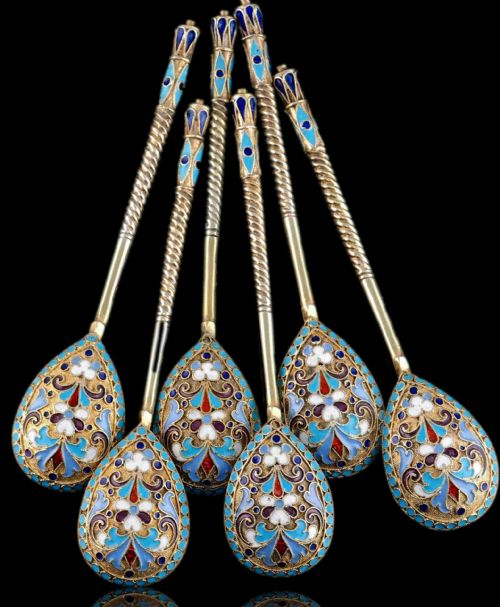
The most common items on this page are silver and silver-gilt spoons featuring detailed cloisonné decoration. Alongside flatware, boxes, cases, and religious icons appear frequently, showcasing the distinct aesthetic of the Russian Revival and Imperial periods.
Materials and construction
Artisans built these pieces using solid silver and silver-gilt, frequently combining them with coloured enamel work. Techniques like cloisonné, champlevé, and plique-à-jour required precise wirework and glass pastes fired to glossy finishes.
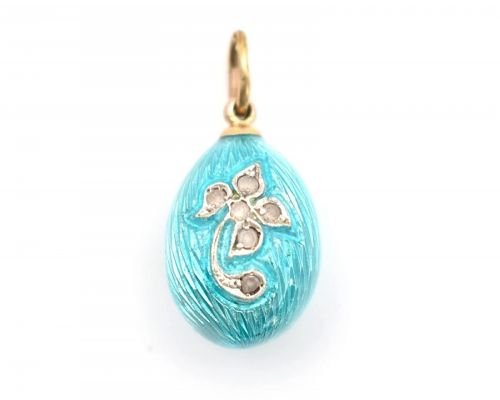
Selected works incorporate additional materials such as Karelian birch, turquoise enamel, gold, and diamonds. Bronze also appears in religious objects, while makers often marked their silver with standard purity numbers like eighty-four.
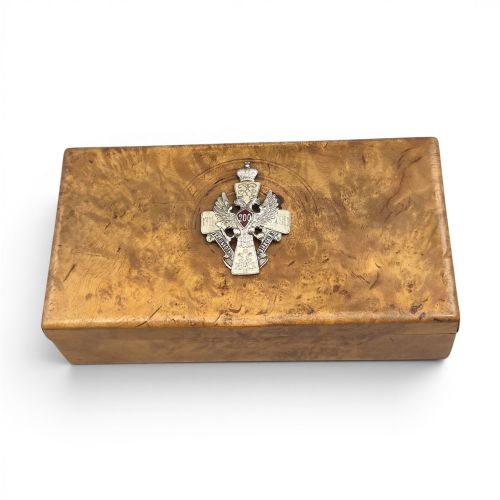
An officer's box from nineteen-fourteen combines rugged Karelian birch with a neat silver regimental badge for a touch of military pride.
Assessing quality and execution
Quality in these items rests on the precision of the enamel work and the crispness of the metal chasing. Pieces with shaded enamel or complex multi-coloured motifs display a higher level of artisan skill than simpler designs.
The integrity of the gilding and the clarity of maker marks or silver hallmarks further distinguish finer examples. Superior items maintain intact enamel surfaces without heavy wear, preserving the original balance of colour and metal.
Dmitrii Nikolaevich Nikolaev·Vasily Agafonov·Gustav Klingert·Zverev Nikolay Nikolayevich·Ivan Khlebnikov
The Imperial Russian Enamel Glossary
- Cloisonne Enamel
- A technique where thin metal wires form compartments on a metal base to hold powdered glass before firing. This method creates detailed, patterned designs across spoons and boxes.
- Silver-Gilt
- Silver that has a thin layer of gold applied to its surface, providing a warm golden tone over the solid metal base. This finish is common on Russian spoons and vessels.
- Karelian Birch
- A distinctive figured wood native to Northern Europe, prized for its mottled grain patterns. It forms the body of specific officer boxes.
- Plique a Jour
- An enamelling technique similar to cloisonne, but without a backing metal, allowing light to shine through the translucent glass. It appears on select spoons.
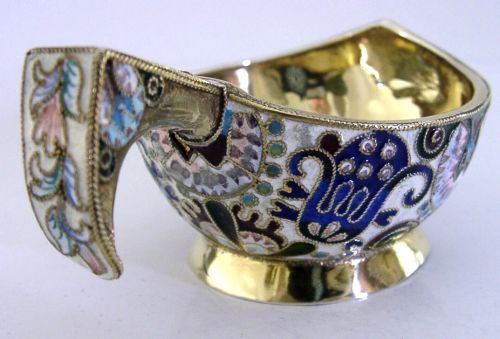
- Kovsh
- A traditional Russian drinking vessel shaped like a boat with a single flat handle. Examples in silver and enamel serve decorative functions.
Imperial Russian Enamel: Frequently Asked Questions
What items feature imperial russian enamel?
These listings include small domestic items such as spoons, caddy spoons, napkin rings, and cutlery sets. Larger decorative vessels, purses, and officer boxes also appear.
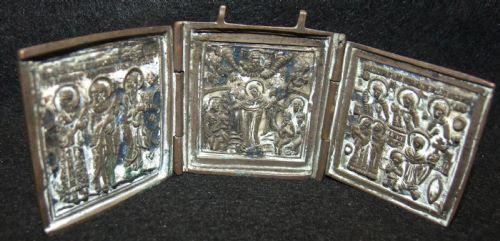
Religious objects like folding triptychs and travel icons represent another category of surviving metalwork from this era.
How were these silver objects marked?
Many pieces carry Russian silver hallmarks, often indicating the standard eighty-four Zolotnik purity. Maker marks and city stamps frequently accompany these numbers.
Finding clear stamps helps identify the workshop and confirms the period of production for silver-gilt and enamelled works.
What is the difference between cloisonne and champleve?
Cloisonné uses applied wires soldered to a metal base to create cells for enamel powders. Champlevé involves carving or casting depressions directly into the metal to hold the enamel.
Both techniques produce colourful decorative surfaces on spoons, boxes, and religious items.
How do I care for antique enamel pieces?
Enamel and silver-gilt objects require gentle handling and dry storage to protect the delicate glass surfaces and metal finishes. Avoid harsh chemical dips or abrasive cleaning agents.
Soft dusting cloths and careful storage maintain the appearance of the enamel without risking the historic materials.