



Russian Silver Gilt
Russian silver gilt objects combine precious metal with vitreous colour, bringing Imperial craftsmanship and intricate enamel work straight to the table.
Russian Silver Gilt
When you search for russian silver gilt, you encounter an array of solid silver items finished with a layer of gold, alongside pieces enriched with detailed enamelwork. The selection spans 18th-century icons on wood with silver and gilt, 19th-century spoons, and decorative boxes.
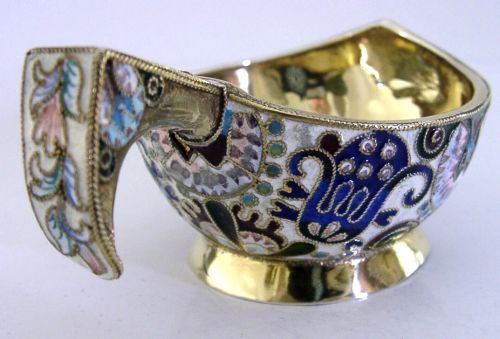
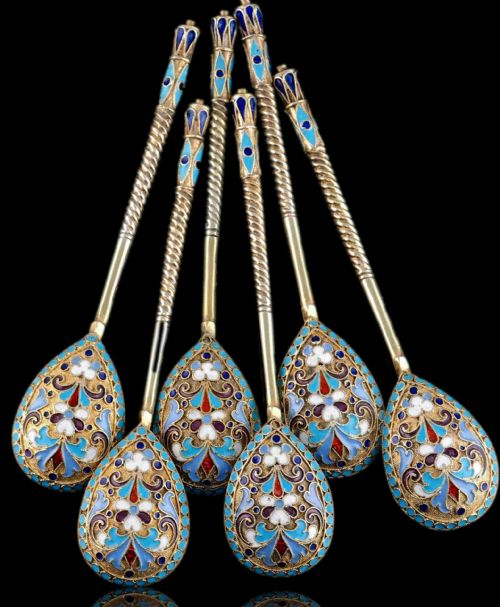
You are most likely to meet spoons, small vessels, and kovsh cups, often bearing the characteristic 84 zolotnik silver standard. These domestic and decorative items reflect both Imperial Russian styles and the later Russian Revival movement.
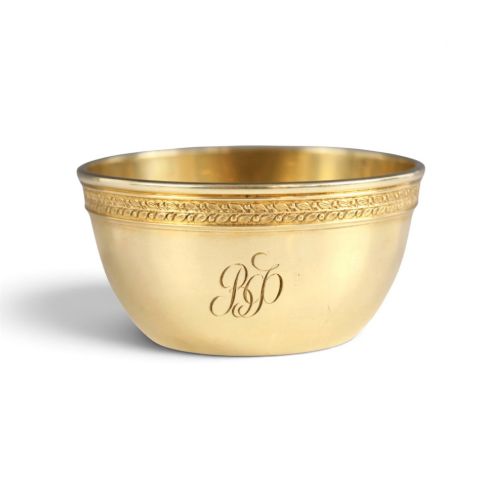
The form stretches from small vodka beakers and salt tubs to walking cane handles and presentation bowls. Each piece demonstrates the integration of precious metals with traditional ornamentation.
Materials and Techniques
Silversmiths utilised solid silver as the base for these objects, applying a layer of gold wash, known as vermeil or parcel gilt, to create the characteristic two-tone finish. This technique highlights engraved details and protects the underlying silver from tarnishing.
Cloisonné and shaded enamel work frequently define the surface decoration, where thin metal wires form compartments filled with powdered glass and fired. Artisans also combined silver and gilt with organic materials like jade, agate, and tempera on wood.
Moscow workshops employed specialist techniques including niello, where a black metallic alloy fills incised patterns on the silver surface. Samorodok texturing and fine engraving add further tactile dimension to cigarette cases and snuff boxes.
Walking sticks disguised solid silver and jade beneath gentlemanly facades, ensuring a discreet flash of gilt reached the promenade.
Assessing Quality
The precision of the enamelwork distinguishes finer examples from simpler production, particularly in the regularity of cloisonné wire and the smoothness of the fired glass. Shaded enamel requires exceptional skill to achieve subtle colour transitions across small surfaces.
Maker marks and Moscow assay stamps provide crucial evidence of origin and standard, with pieces bearing attribution to renowned workshops commanding greater attention. The weight and solidity of the silver foundation also influence the character of the object.
Artistic execution in engraved details, such as the figures on icons or the patterning on spoons, separates standard utilitarian wares from presentation pieces created by master craftsmen.
Fabergé·Stephan Wekeva·Dmitrii Nikolaevich Nikolaev·Vasily Agafonov·Khlebnikov·P. Barabanon·Aleksandr Karpov
The Russian Silver Gilt Glossary
- Kovsch
- A traditional Russian drinking vessel shaped like a boat, featuring a flat handle and a rounded bow.
- Cloisonné
- An enamel technique where thin metal wires are soldered to a metal base to create cells filled with vitreous paste.
- Niello
- A black metallic mixture of sulphur, silver, copper, and lead used to fill engraved designs on silver.
- Zolotnik
- A traditional Russian unit of weight used in assay marks to indicate silver purity before the adoption of the metric system.
- Samorodok
- A textured metal finish resembling natural raw gold or silver, created by heating the surface until it blisters.
Russian Silver Gilt: Frequently Asked Questions
What is russian silver gilt?
Russian silver gilt refers to items fashioned from solid silver and coated with a thin layer of gold, often enhanced with polychrome enamel.
These pieces range from liturgical art to domestic tableware and personal accessories produced primarily during the 19th and early 20th centuries.
How do I identify a kovsch?
A kovsch is a traditional scoop-shaped vessel with a single flat handle at one end, resembling a Viking longboat.
Historically used for serving mead or vodka, these vessels often feature rich enamel decoration or solid silver construction.
Were these items used daily?
Many smaller items, such as spoons, salt tubs, and vodka cups, were made for active dining and entertaining in affluent households.
Larger presentation bowls and religious icons served ceremonial or decorative roles rather than everyday domestic functions.
How do I spot silver marks?
Russian silver typically bears the 84 zolotnik standard mark, alongside city marks like the St George slaying the dragon symbol for Moscow.
Maker initials and assay master stamps often accompany these marks to verify the purity and origin of the piece.