





Antique Russian Silver
These pieces of antique russian silver encompass elaborate cloisonne enamel work, traditional niello decoration, and imperial presentation items from workshops across Moscow and St Petersburg.
Antique Russian Silver
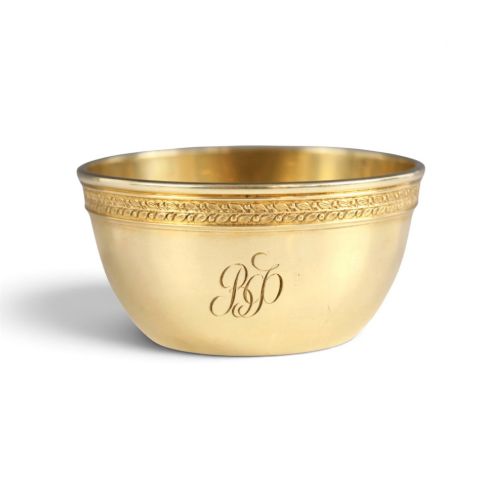
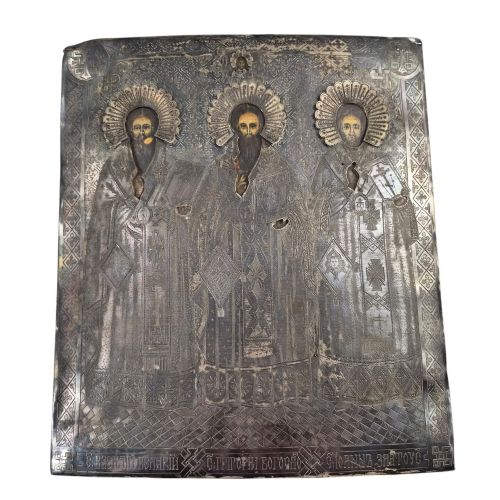
When browsing antique russian silver, collectors encounter a diverse array of objects spanning the eighteenth, nineteenth, and early twentieth centuries. The selection ranges from devotional icons housed in silver oklads to domestic tablewares such as Kiddush cups, vodka cups, and presentation bowls.
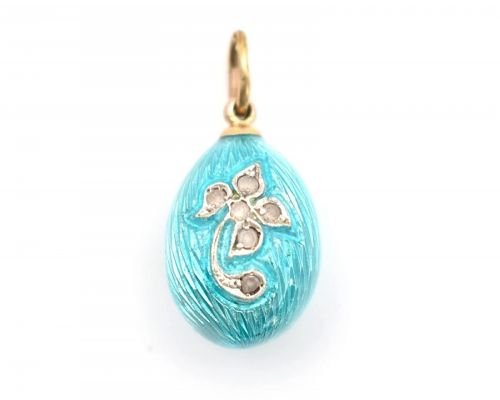
Smaller personal items frequently appear, including cigarette cases, snuff boxes, vesta cases, and egg pendants tied to seasonal traditions. Dining accessories like spoons, sugar tongs, and caddy spoons demonstrate the widespread use of precious metals in daily imperial life.
Materials and Techniques
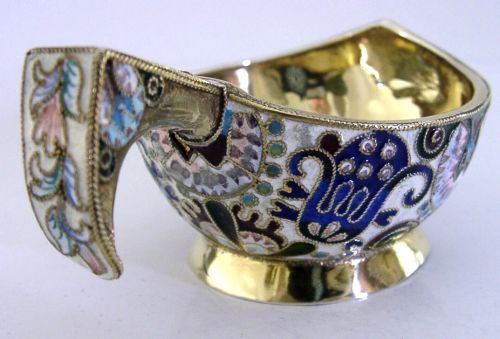
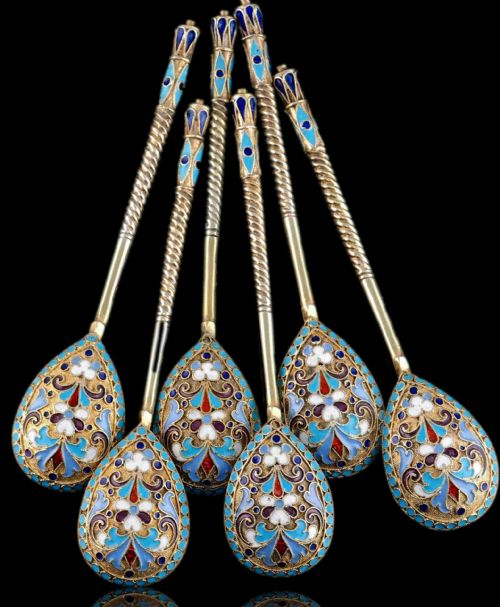
Makers relied primarily on solid silver, frequently graded to the traditional Russian standard of eighty-four zolotniks, often applying a silver-gilt or vermeil finish to the interior surfaces of vessels. Enamel work formed a cornerstone of decorative technique, utilising cloisonne, champleve, and shaded variations to create vibrant coloured patterns across spoons, boxes, andkovsh cups.
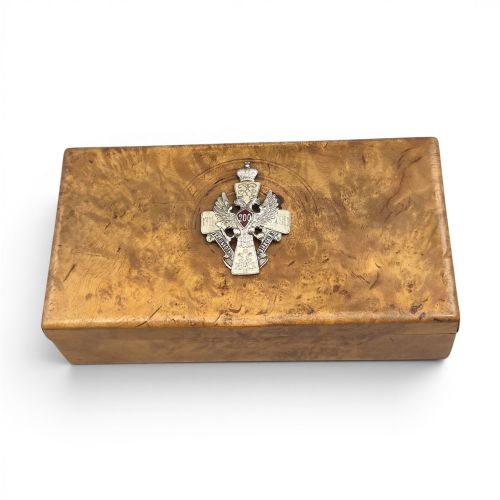
Niello technique played a major role in surface ornamentation, contrasting dark metallic inlay against engraved silver backgrounds to depict architectural scenes, naval battles, and foliate motifs. Wood such as Karelian birch and tempera on wood provided structural foundations for officers' boxes and religious icons respectively, while gemstones like turquoise, garnet, and tourmaline added focal points to pendants and bracelets.
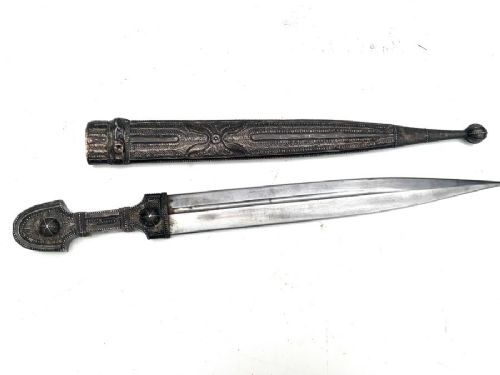
The inventory records functional items ranging from walking cane handles and letter openers to desk accessories and religious icons.
Distinctions in Execution
The distinction between standard domestic items and elite workshop production rests upon the precision of the silversmithing and the complexity of the ornamentation. Masterworks bearing recognised assay marks and workshop signatures demonstrate superior hand-chasing, balanced proportions, and rigorous attention to detail.
Stephan Wekeva·Heinrich Grünbaum·Dmitrii Nikolaevich Nikolaev·Aleksandr Timofeyevich Shevyakov·Vasily Agafonov·Khlebnikov·Maria Semenova·Gustav Klingert·Volkov Karp Nikit·Zverev Nikolay Nikolayevich·Rudolf Veyde·T.Botkov·Vasili Semenov·J.E. Sallman·Aleksandr Karpov·A. J Goldman
The Antique Russian Silver Glossary
- Zolotnik
- A traditional Russian unit of mass used for assay marks on precious metals, where eighty-four zolotniks corresponds to standard sterling fineness. This measurement appears stamped alongside city marks and maker initials.
- Niello
- A black metallic alloy of sulphur, silver, lead, and copper used as an inlay on engraved silver surfaces. It highlights architectural views and narrative scenes with high contrast.
- Kovsh
- A traditional Russian boat-shaped drinking vessel or ladle featuring a flat handle. These range from plain silver domestic examples to heavily enamelled presentation pieces.
- Oklad
- A protective metal cover placed over a religious icon, leaving the faces and hands of the painted figures visible. They are frequently fashioned from repoussé silver and gilt.
- Samorodok
- A specialised surface finish resembling melted precious metal, creating a textured, organic appearance. This technique was favoured for luxury cigarette cases and snuff boxes.
Antique Russian Silver: Frequently Asked Questions
What does the eighty-four mark mean?
The number eighty-four refers to the zolotnik scale, which was the standard measure of silver purity in imperial Russia. It indicates that the metal contains eighty-four parts of pure silver out of ninety-six.
This hallmark is typically accompanied by city marks, such as the St George and dragon for Moscow or the anchor and sceptre for St Petersburg, alongside the initials of the assay master.
How are different enamel techniques identified?
Cloisonne enamel involves soldering thin metal wires onto a silver base to create enclosed cells that are then filled with coloured glass paste and fired. Shaded enamel builds upon this by graduating the tones of the colours for a pictorial effect.
Champleve enamel uses troughs or cavities carved directly into the silver surface to hold the vitreous paste. Plique-a-jour resembles stained glass without a solid backing, allowing light to pass through the translucent enamel.
Where were these silver items produced?
The majority of items originated from major urban centres, with workshops concentrated heavily in Moscow and St Petersburg. These cities housed the primary assay offices and the most prominent commercial firms.
Smaller provincial workshops also contributed domestic spoons, niello snuff boxes, and religious icons, though pieces bearing master signatures from capital city firms commanded wider distribution.
How should antique silver be cleaned?
Enamelled and nielloed silver requires delicate handling to prevent damage to the glass pastes and dark metallic inlays. Gentle dusting with a soft cloth is usually sufficient for regular maintenance.
Harsh commercial dips or abrasive polishes must be avoided, as they strip away parcel-gilt highlights and damage delicate cloisonne wires. Professional advice should be sought for pieces showing stubborn tarnish.