


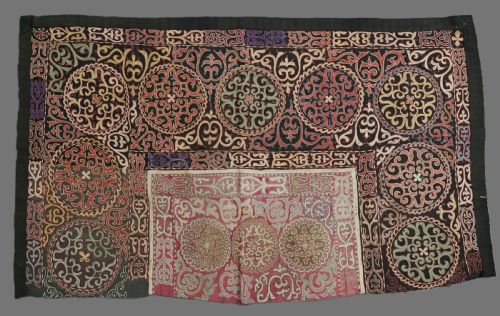


Hand Embroidered Tribal Panel
A hand embroidered tribal panel brings vivid Central Asian textile art into a room as a striking wall hanging.
Hand Embroidered Tribal Panel
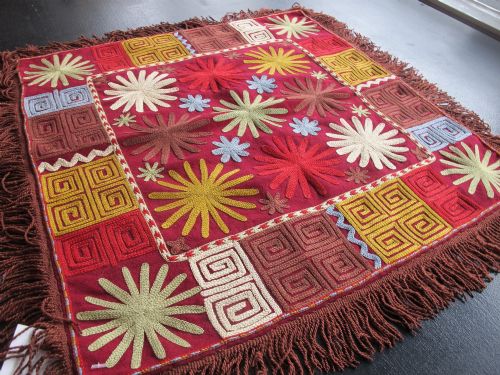
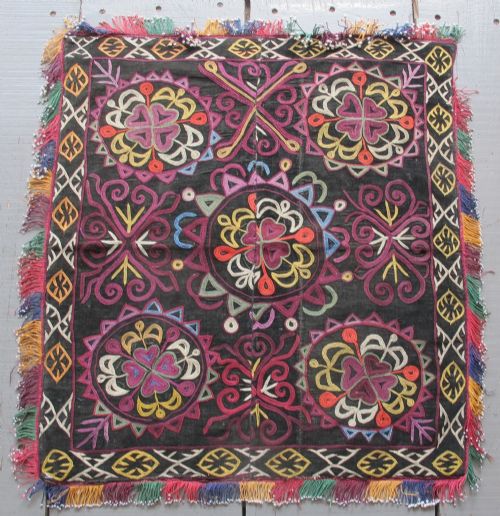
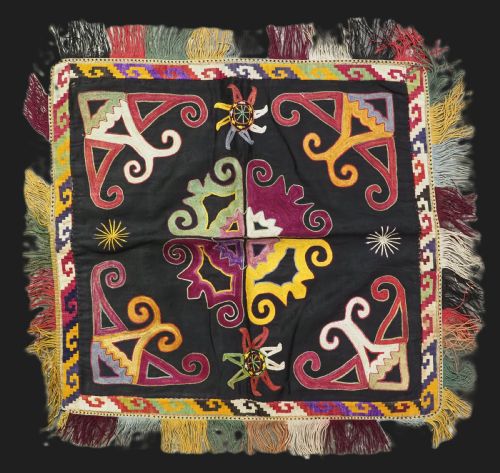
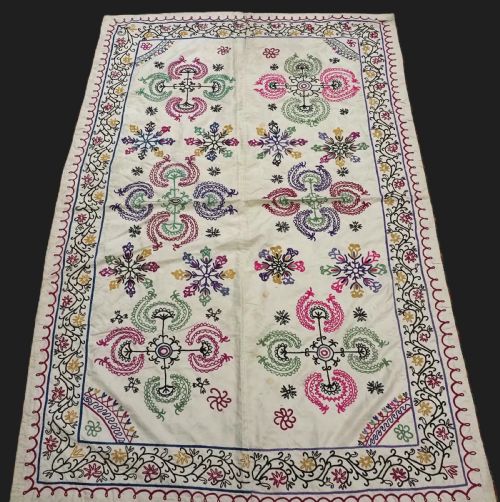
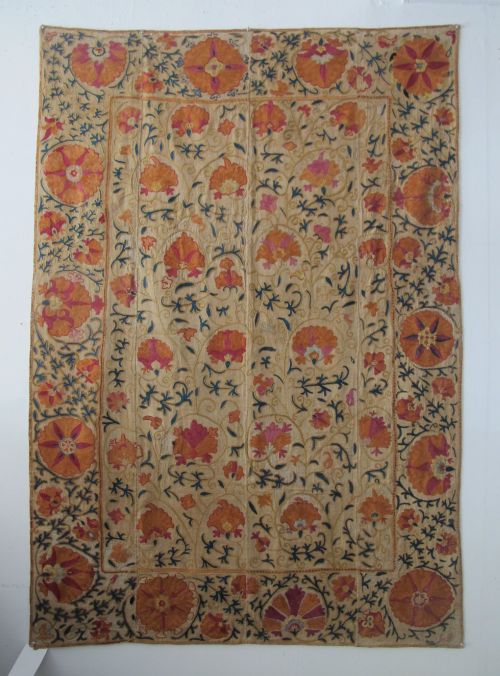
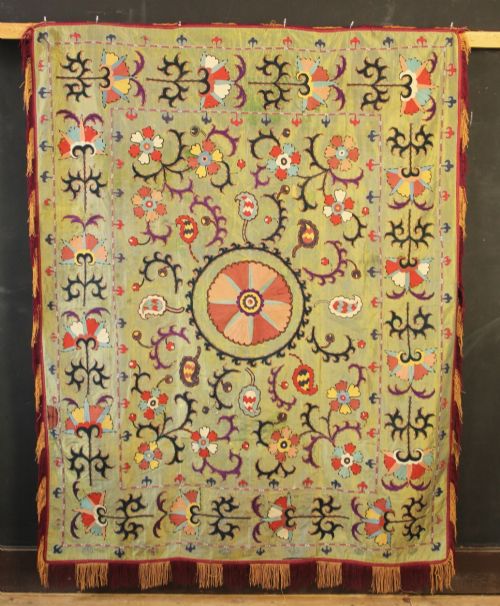
A hand embroidered tribal panel encompasses traditional Central Asian textiles made by nomadic and settled groups, including Uzbek, Lakai, Tajik, and Kirghiz communities. Buyers searching this phrase typically encounter Suzani wall hangings, small dowry embroideries, mirror covers, and felt panels created across the nineteenth and early twentieth centuries.
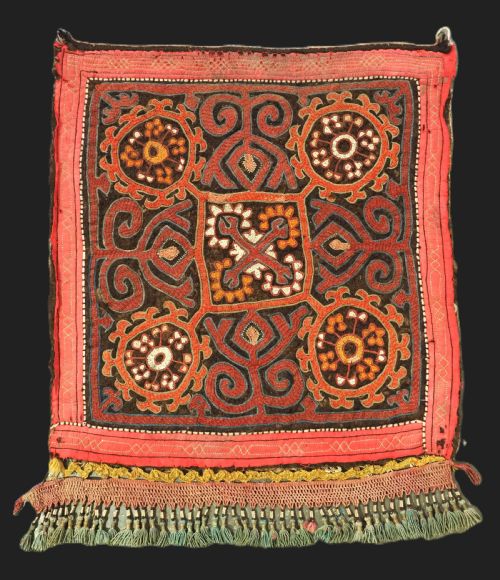
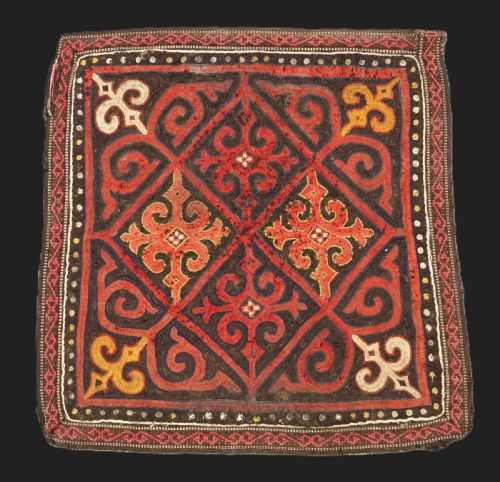
The selections span functional household objects and ceremonial pieces repurposed for display, such as saddle covers, horse covers, and yurt wall hangings known as tush kyiz. Pieces range from intimate square mirror covers to large wall panels exceeding two metres in width, reflecting diverse regional styles from centres like Bukhara, Tashkent, and Shakrisabz.
How they were made
Makers embroidered fine silk threads onto supportive foundations of cotton, wool, or felt, occasionally incorporating glass beads for added texture and visual depth. Grounds vary from plain woven cotton to dyed fabrics in black, red, and green hues.
Stitching techniques include intricate needlework deployed in regional patterns, creating dense surface designs on items like fully embroidered palak suzanis and applied fringe felt panels.
The inventory spans the mid-nineteenth century through the 1930s, featuring silk, cotton, wool, felt, and glass beads across Central Asian styles.
What varies in quality
Quality rests in the density of the needlework, the fineness of the silk thread, and the complexity of the traditional design. Fully embroidered surfaces demonstrate greater artisan commitment than sparse compositions.
Preservation of the original ground fabric and vibrancy of the silk yarn distinguish superior examples. Balanced proportions and clear regional motifs elevate the visual impact of a panel.
The Hand Embroidered Tribal Panel Glossary
- Suzani
- An embroidered textile panel originating from Central Asia, traditionally made as part of a bride's dowry. These pieces display intricate floral and geometric motifs stitched in silk on cotton or linen grounds.
- Lakai
- Referring to the Lakai tribe of Uzbekistan, known for distinctively bold, geometric tribal embroidery. Their work frequently utilises vibrant silk threads on dark grounds for horse covers and wall hangings.
- Palak
- A large Suzani variety featuring a fully embroidered background, often dominated by a central star motif. The dense stitching covers nearly the entire foundation fabric.
- Tush kyiz
- A large, elaborately embroidered yurt wall hanging made in Kyrgyzstan to celebrate the marriage of a son or daughter. These pieces incorporate symbolic flora, fauna, and traditional felt work.
- Torba Ilgich
- A specialised hanging or bag associated with Central Asian nomadic tribes, utilised within the yurt for storage or decoration.
Hand Embroidered Tribal Panel: Frequently Asked Questions
How were these panels used?
Nomadic and village communities utilised these textiles as dowry items, ceremonial horse covers, yurt wall decorations, and household furnishings.
Over time, many functional objects transitioned into decorative wall hangings valued for their intricate needlework and cultural heritage.
How do I hang a textile panel?
Mounting a textile safely requires distributing the weight evenly across the top edge without puncturing the historic fabric.
Professional framing behind UV-filtered glass or attaching a cotton sleeve for a concealed rod protects the silk and foundation material.
How do I date a tribal panel?
Dating relies on examining the types of dyes, the weave of the cotton or wool ground, and the consistency of the silk embroidery threads.
Earlier nineteenth-century examples often feature natural dyes and hand-spun foundations, while twentieth-century pieces introduce brighter synthetic colours.
Are these pieces fragile?
Historic silk embroidery and cotton grounds require careful handling to prevent fibre degradation and thread snags.
Keeping panels away from direct sunlight and high humidity preserves the natural integrity of the delicate materials.