
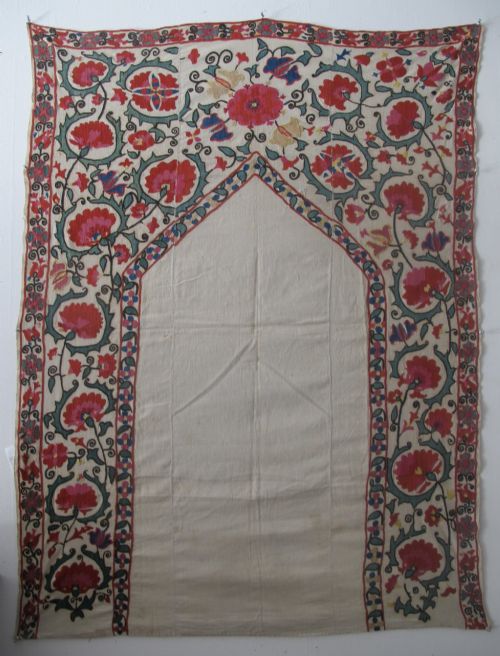
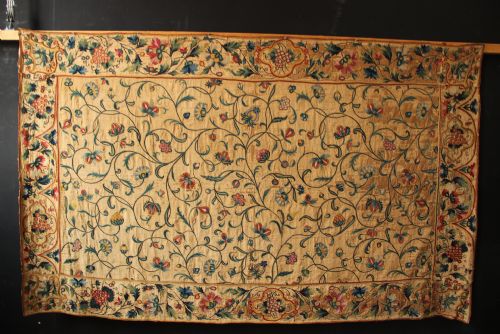
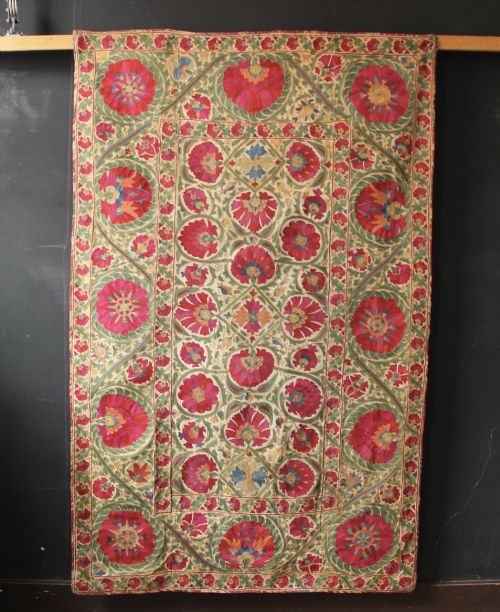
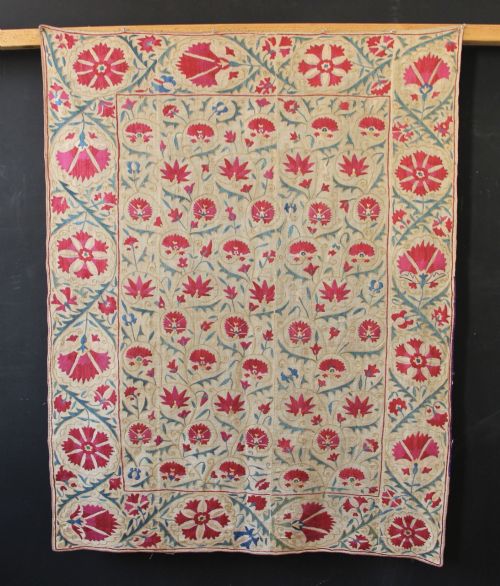


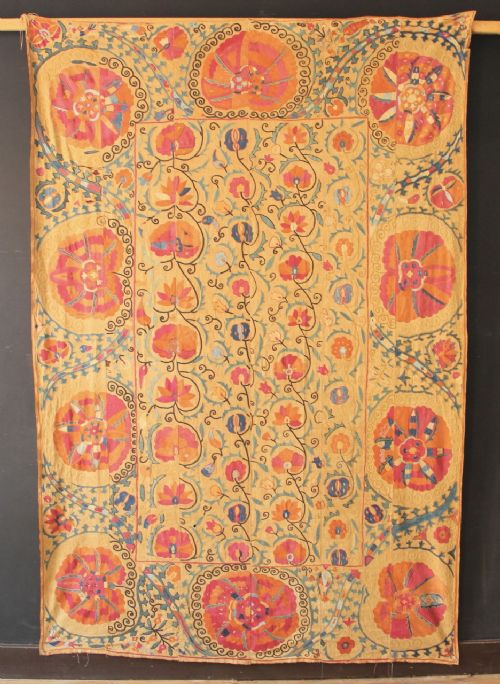


Hand Embroidered Floral Tapestry
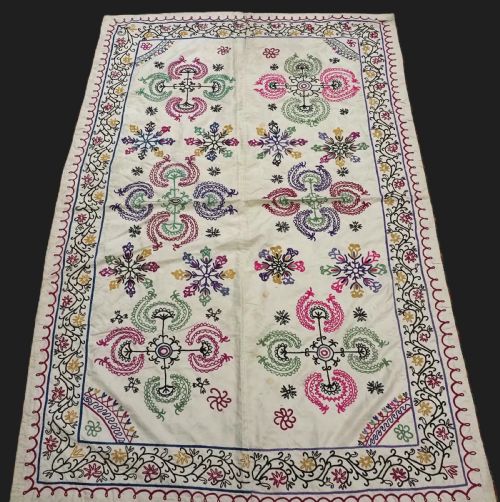
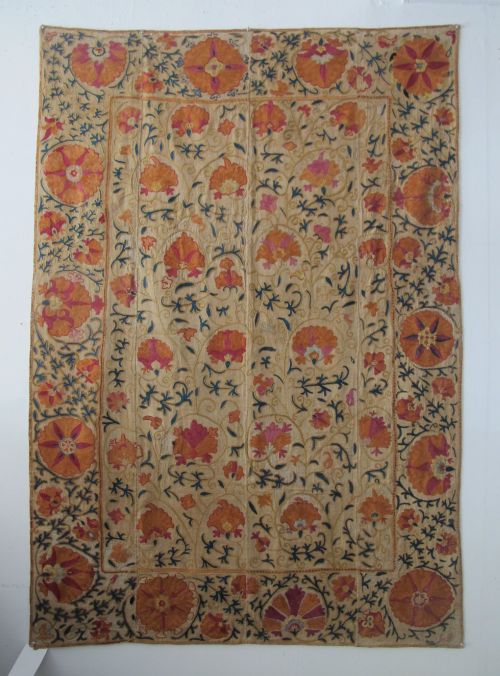
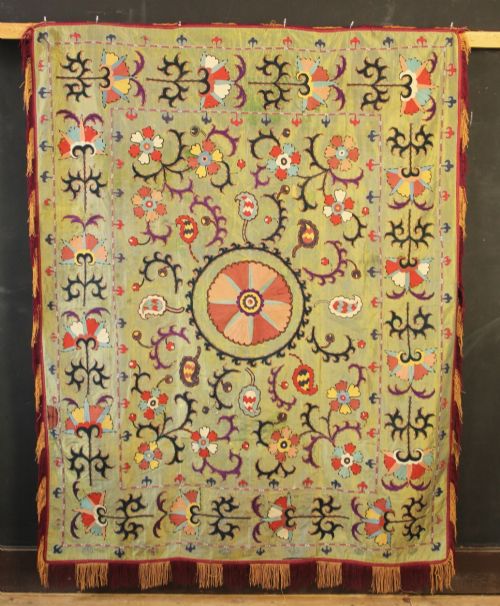
These hand embroidered floral tapestry pieces are textile panels and wall hangings worked in silk, wool, and cotton across central Asia and Europe.
Hand Embroidered Floral Tapestry
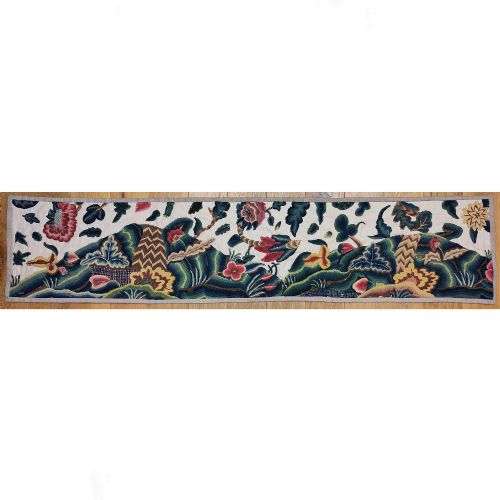
A hand embroidered floral tapestry encompasses traditional central Asian suzanis alongside English crewelwork and Portuguese needlepoint panels. Buyers seeking these items will find nineteenth-century examples featuring botanical motifs arranged on cotton or linen grounds.
The selection ranges from small nim suzanis originating in Bukhara and Samarkand to large wall hangings and early needlework panels. Many pieces display distinct regional styles, including Lakai work and architectural prayer formats.
Most examples date from the nineteenth and early twentieth centuries, though seventeenth-century crewelwork also appears. These textiles served traditionally as decorative covers and wall furnishings within domestic spaces.
How they were made
Artisans worked fine silk threads onto supportive foundations of cotton, linen, or wool canvas, often utilising grounds dyed in yellow, green, or red. Crewelwork employs wool yarns stitched directly onto sturdy linen wall hangings.
Needlework technique relies on dense hand stitching to build up intricate botanical and floral patterns, frequently covering the underlying fabric entirely. Materials such as wood and glass occasionally appear in framing or mounting contexts for these textiles.
Listings feature cotton, silk, wool, and linen materials used across nineteenth-century central Asian and European textile traditions.
What varies in quality
Quality rests upon the fineness of the needlework and the complexity of the botanical design. Dense, precise silk embroidery on a well-balanced ground commands greater regard than looser, simpler execution.
The integrity of the foundation fabric and the preservation of the original hand-dyed colours dictate the overall standard of the piece. Regional variations in Suzani work also influence how densely the floral motifs cover the textile surface.
The Hand Embroidered Floral Tapestry Glossary
- Suzani
- A traditional embroidered textile from central Asia, typically featuring large floral designs worked in silk on a cotton or linen ground. These panels were often created as part of a bride's dowry.
- Crewelwork
- A type of embroidery using wool thread on linen or cotton fabric, historically associated with English decorative wall hangings and furnishings. It employs various traditional stitches to render dense botanical patterns.
- Nim Suzani
- A smaller variant of the standard central Asian suzani panel, usually measuring around half the scale. These pieces share the same silk embroidery techniques and floral motifs.
- Arraiolos
- A style of Portuguese needlepoint embroidery traditionally worked in wool on a linen canvas. The technique produces dense, patterned rugs and wall panels.
- Ground
- The base fabric of linen, cotton, or wool upon which the embroidery threads are stitched. The colour and weight of this foundation define the visual backdrop of the textile.
Hand Embroidered Floral Tapestry: Frequently Asked Questions
How were suzanis used originally?
Suzanis served as decorative wall hangings, bed covers, and ceremonial items within central Asian homes. Families displayed them during important domestic occasions and celebrations.
They also formed a central part of traditional bridal dowries, showcasing the needlework skill of the maker and her household.
Where do most suzanis originate?
The majority of these embroidered textiles come from historical centres in Uzbekistan, including Bukhara, Samarkand, and Shakhrisabz. Each region developed distinct botanical layouts and colour palettes.
Other related needleworks originate in England, Portugal, and India, reflecting diverse regional textile traditions.
How should textile panels be displayed?
Wall hangings require careful mounting on padded supports to distribute the weight evenly across the fabric. Professional framing behind protective glass helps shield delicate silk and wool threads from dust and environmental damage.
Direct sunlight must be avoided to prevent the natural dyes from fading over time.
How do you date an antique suzani?
Dating relies on examining the type of foundation fabric, the composition of the dyes, and the style of the embroidery. Earlier nineteenth-century pieces often feature specific medallion variants and natural dye hues.
Comparing the motif density and regional characteristics against documented examples provides further chronological context.