


Hand Embroidered Floral Suzani
A hand embroidered floral suzani is a Central Asian textile panel that brings bold botanical colour and traditional needlework into a modern interior.
Hand Embroidered Floral Suzani
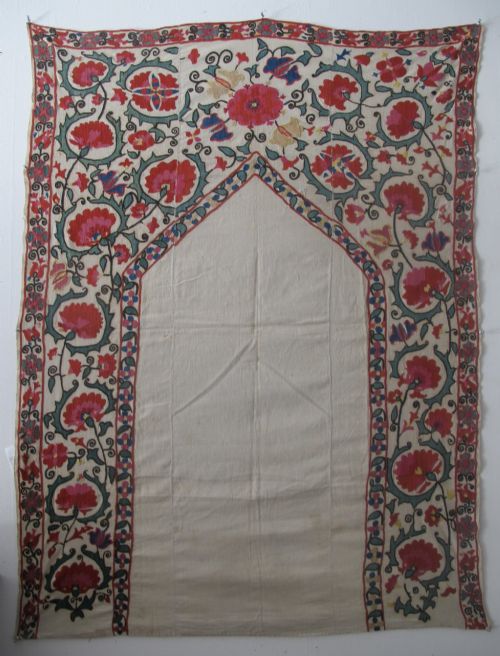
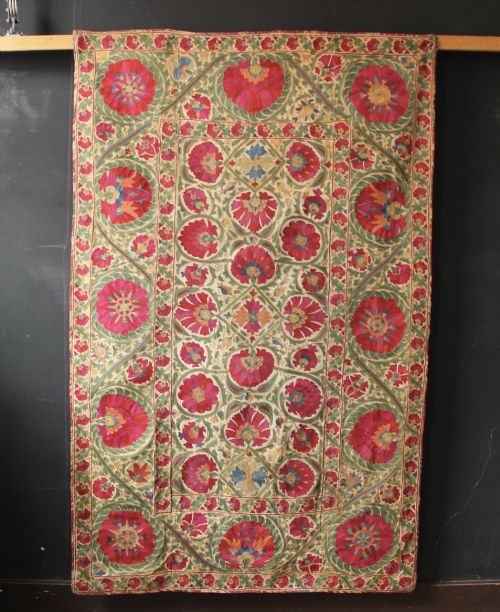
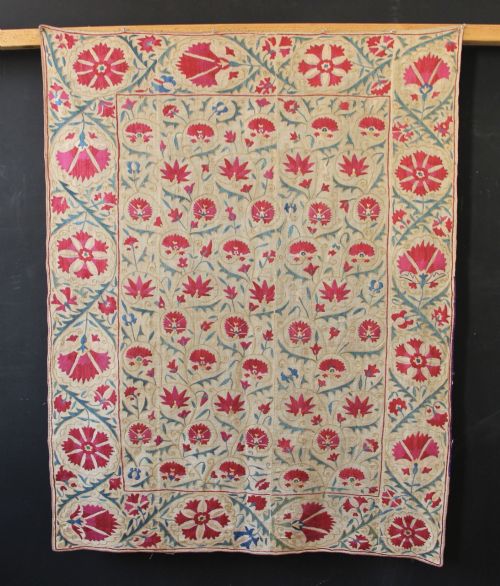
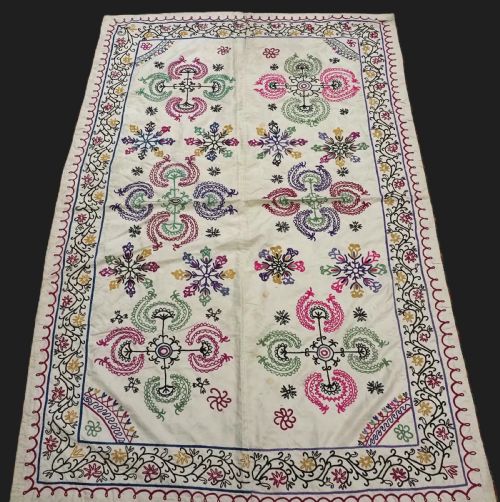
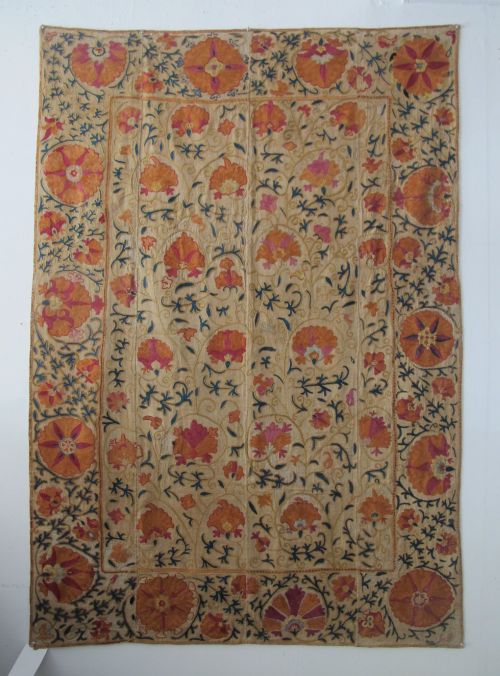
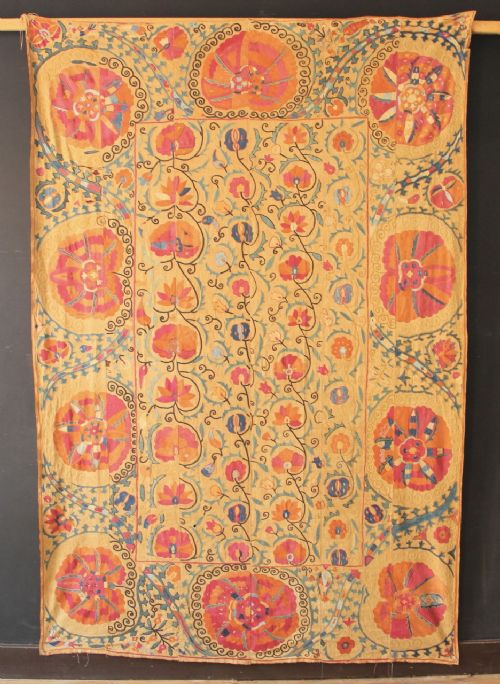
A hand embroidered floral suzani represents traditional Central Asian needlework, originating primarily from regions such as Uzbekistan with historical connections to places like Bokhara, Samarkand and Shakhrisabz. These textiles were traditionally created as part of a bride's dowry, taking the form of large wall hangings, covers or smaller nim suzani panels.
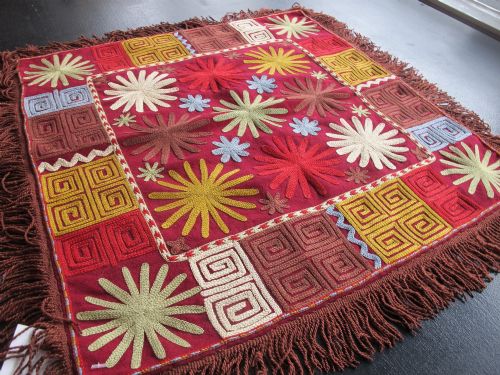
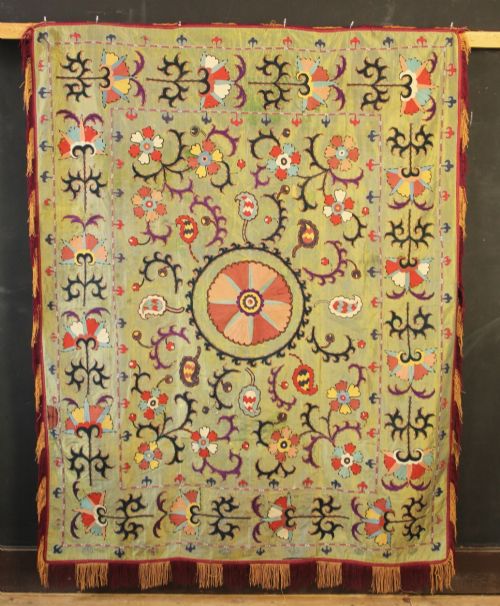
Buyers browsing this selection will encounter pieces spanning from the nineteenth century through to the early twentieth century, including distinct formats like prayer designs and architectural layouts. The examples listed display characteristic Central Asian tribal motifs rendered in silk thread upon foundational grounds of cotton, silk, wool or linen.
How they were made
Artisans executed these works using fine silk threads to embroider intricate botanical and floral designs onto woven grounds of cotton, linen or silk, sometimes employing velvet as a base material. The needlework frequently incorporates specific regional stitch types, such as tambour or surface embroidery techniques traditionally practised in Uzbek workshops.
Makers utilised natural dyes to achieve rich hues on grounds of red, yellow or green, creating high-contrast compositions that defined traditional folk art across Central Asian regions. These panels were often constructed from multiple narrower widths of fabric stitched together before embroidery commenced.
Makers occasionally left tiny intentional irregularities in symmetry, believing complete perfection belonged to the divine alone.
What varies in quality
The density and precision of the silk thread embroidery dictate the visual impact of each piece, distinguishing fine artisan work from simpler regional output. Finer examples display meticulous stitch control that maintains clarity across complex floral medallions and architectural motifs.
The choice of ground fabric and the preservation of the original natural dyes influence the overall character of the textile. Panels maintaining vibrant, stable colours on intact silk or cotton grounds hold greater visual cohesion.
The Hand Embroidered Floral Suzani Glossary
- Suzani
- A traditional embroidered textile panel originating from Central Asia, typically worked in silk thread on a cotton or linen ground. These pieces often feature large floral and medallion designs.
- Nim Suzani
- A smaller or half-sized variant of the traditional suzani panel, often measuring under half the dimensions of a full-size hanging. They were produced for specific domestic spaces or as portable covers.
- Bokhara
- A historic Central Asian city and prominent centre for textile production and trade. Suzanis attributed to this region often display distinct architectural or refined floral compositions.
- Lakai
- A Central Asian tribal group known for distinctive, energetic embroidery styles. Their work frequently incorporates compact geometric elements alongside floral motifs.
- Ground
- The foundational woven fabric upon which the embroidery stitches are applied. Materials range from plain cotton and silk to velvet and wool.
Hand Embroidered Floral Suzani: Frequently Asked Questions
How were suzanis used originally?
These textiles served primarily as dowry items, created by brides and family members to furnish the domestic interior.
Families utilised them as wall hangings, decorative covers for beds, or wraps for ceremonial items.
How do I hang a suzani?
Mounting a textile requires careful distribution of weight to prevent strain on the historical fabric and silk embroidery.
Conservators often recommend professional framing behind UV-filtering glass or stitching a cotton sleeve to the reverse for a concealed rod mounting.
How can I tell regional suzani styles apart?
Regional attribution relies on analysing the specific motifs, colour palettes and stitch density unique to centres like Bokhara, Samarkand or Shakhrisabz.
Tribal works such as Lakai embroidery often feature smaller, bolder geometric integration compared to urban workshop pieces.