


Hand Carved Storage Trunk
These hand carved storage trunk examples are solid timber chests built to hold linens and dowries, offering heavy utility with deep regional character.
Hand Carved Storage Trunk
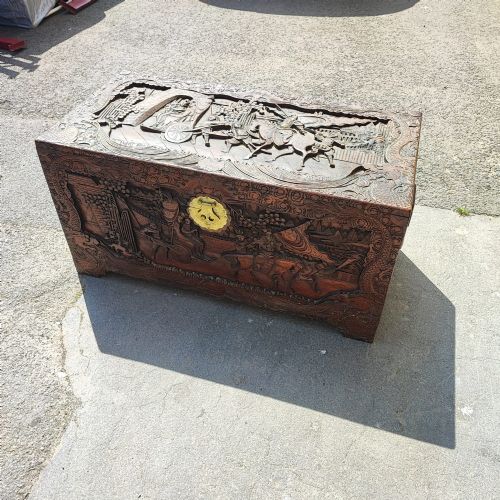
A hand carved storage trunk is a substantial timber chest designed for holding textiles, blankets, and personal valuables. When you examine the options on this page, you will find pieces ranging from traditional Chinese camphor wood chests to European painted marriage coffers.
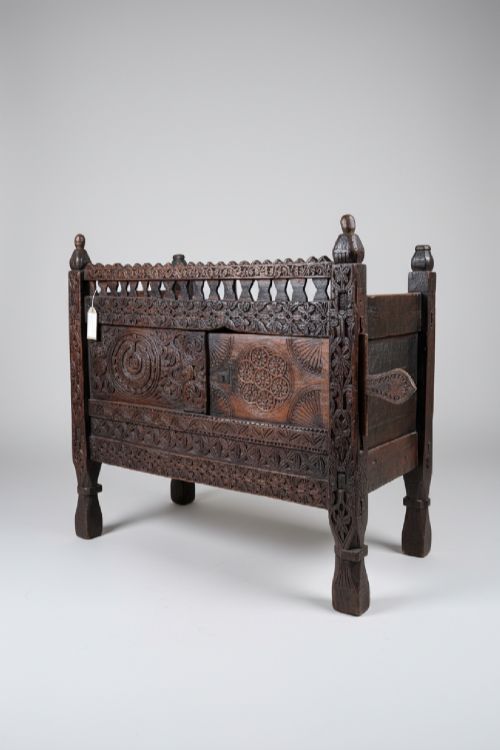
The selection leans heavily toward Oriental camphor wood examples alongside nineteenth-century oak, pine, and cedar items. You will also encounter regional pieces like Spanish painted blanket chests and Arts and Crafts oak coffers.
Forms vary from simple primitive shepherds coffers to ornate dowry chests and luggage trunks. Most items date from the nineteenth century, with occasional pieces from the early decades of the twentieth century.
Materials and construction methods
Makers utilised native timbers suited to each region, with camphor wood being particularly common for its aromatic qualities and natural insect resistance. Oak, pine, cedar, and padouk also form the structural carcasses of these boxes.
Surface decoration relies on deep hand carving, lacquer work, and painted pigments in styles including Swat Valley folk art and Moorish motifs. Iron and brass hardware often provides structural reinforcement and handles for transport.
Camphor wood chests retain their distinct herbal aroma after a century or more, acting as a built-in time capsule of old scents.
Factors of quality and execution
The standard of a hand carved storage trunk depends primarily on the depth and crispness of the timber carving. Superior examples display intricate, well-defined relief work rather than shallow or hurried chisel marks.
Construction integrity separates everyday utility boxes from finer dowry pieces, particularly in the fit of the lid and the stability of the joints. Original paint or lacquer surfaces in good preservation also elevate the standing of European and Chinese chests.
Jack Grimble Pollard
The Hand Carved Storage Trunk Glossary
- Camphor wood
- An aromatic timber native to Asia, prized for its distinct scent and natural ability to deter moths from stored woollens and linens.
- Cassone
- A traditional Italian large painted chest or marriage coffer used historically to hold the bride's trousseau.
- Dowry chest
- A box commissioned or collected to hold household goods, textiles, and valuables accumulated for a marriage.
- Cofer
- An archaic spelling of coffer, denoting a heavy timber chest used for secure storage of precious items.
- Padouk
- A dense tropical hardwood known for its reddish colour and durability, utilised in quality storage boxes.
Hand Carved Storage Trunk: Frequently Asked Questions
What were hand carved storage trunks used for?
These chests served primarily for storing household textiles, winter blankets, and personal dowry items. Their sturdy construction also made them suitable for use as luggage during travel.
In many cultures, they formed a central part of a household's movable wealth, keeping valuable garments safe from dampness and insects.
How do I care for a camphor wood chest?
Keep the wood away from direct heat sources and direct sunlight to prevent the timber from splitting or drying out. Dust the carved surfaces gently with a dry cloth.
Avoid using modern chemical polishes on antique lacquer or painted finishes, as these can damage the original surface.
Are these chests heavy to move?
Most of these pieces are constructed from dense hardwoods like camphor, oak, or padouk and have substantial iron or brass fittings. This makes them inherently heavy, particularly when filled with textiles.
Many incorporate original metal carrying handles to assist with transport between rooms or during travel.
How can I tell a Chinese export chest from a European one?
Chinese export chests are predominantly made from camphor wood and feature deep relief carvings depicting landscapes, figures, or foliage. European pieces in the evidence are typically constructed from oak or pine and often feature painted decoration or folk art motifs rather than deep wood carving.