

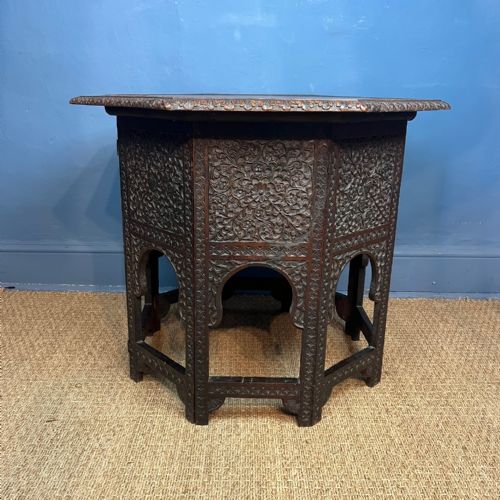
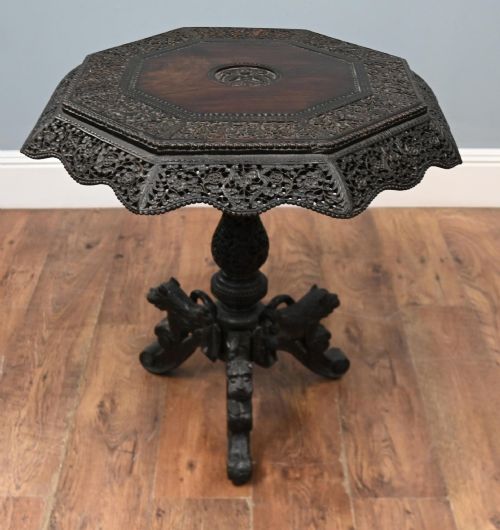
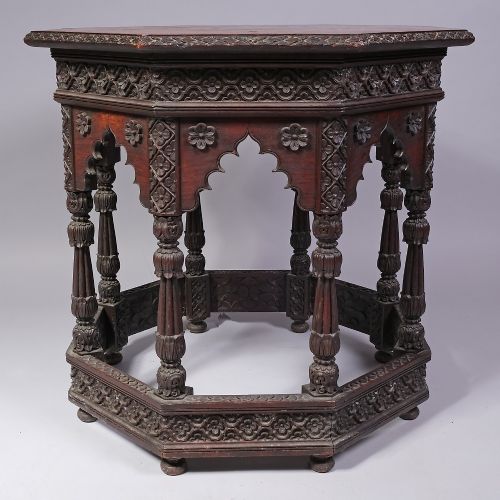
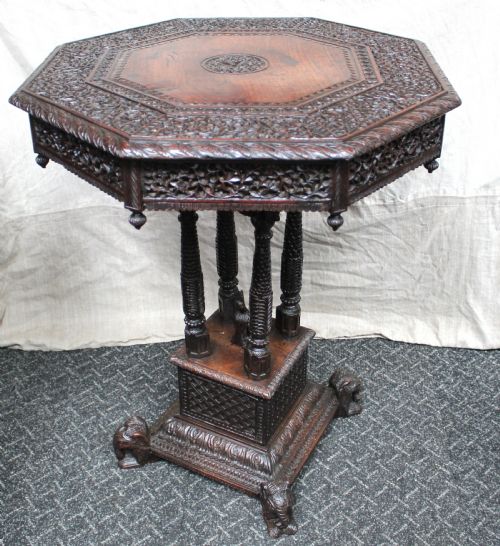


Hand Carved Octagonal Table
A hand carved octagonal table brings intricate colonial craftsmanship and geometric form into a room, offering a functional surface steeped in regional artistry.
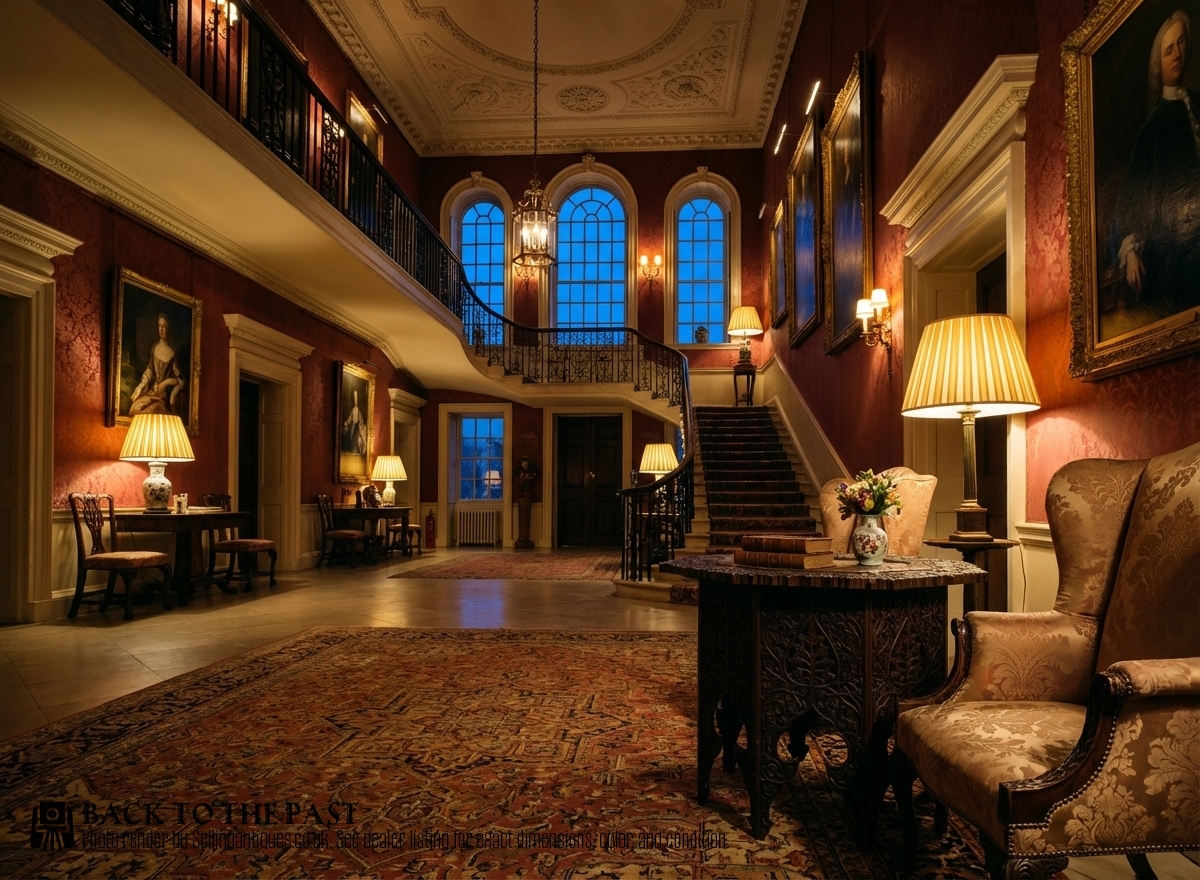
Hand Carved Octagonal Table
A hand carved octagonal table combines eight-sided symmetry with dense surface decoration, originating predominantly from nineteenth-century colonial workshops and eastern export trades. You will frequently encounter forms such as occasional tables, side tables, and coffee tables produced across India, Burma, and China.
The regional styles vary distinctly across the selection, ranging from the deep foliage of Anglo-Indian and Anglo-Burmese pieces to the characteristic motifs of Chinese export work. These items function primarily as low coffee tables or compact side surfaces, often designed with folding bases or elaborate figural supports.
Makers utilised specific regional timber traditions, meaning many examples feature folding tripod bases or intricate figurative legs carved into the shape of elephants and camels. The geometric top provides a stable platform while displaying the dense chip-carving and pierced decoration typical of the period.
What varies in quality
The depth and crispness of the hand carving separate standard commercial export items from exceptional artisan pieces, where every leaf and scroll retains sharp definition. The quality of timber selection also dictates longevity, with dense hardwoods showing less structural movement than softer secondary woods over decades of use.
Integration of specialised elements such as bone inlay, metal tops, and figural bases determines the complexity of the piece, with higher-grade examples maintaining tight joints in folding mechanisms. The precision of the geometric eight-sided geometry and the symmetry of the border work indicate the skill of the original workshop.
Hand Carved Octagonal Table Retail Price Guide 2026
Typical asking prices for hand carved octagonal table among the pieces listed under this phrase on Sellingantiques today, from the lower quarter to the upper quarter. They describe what is for sale here now, not the wider market.
Listings feature teak, walnut, padauk, and hardwood alongside specialised elements including bone, copper tops, and red lacquer finishes.
Liberty and Co
The Hand Carved Octagonal Table Glossary
- Anglo-Indian
- A designation for decorative objects and furniture made in India during the British period, combining British furniture forms with local carving traditions. These pieces often feature dense foliage and deep relief work.
- Padauk
- A heavy, durable tropical hardwood with a reddish-orange hue that darkens with age, frequently utilised in nineteenth-century eastern furniture. It provides a stable base for intricate hand carving.
- Ebonised
- Wood treated with a chemical stain or dark finish to imitate expensive ebony. This technique was popular in nineteenth-century workshops to create dramatic contrast against inlaid or carved details.
- Ocassional table
- A small, movable table designed for specific, temporary uses in a room such as holding a lamp or books. They are common in nineteenth-century domestic interiors.
Hand Carved Octagonal Table: Frequently Asked Questions
How do I care for a carved wooden surface?
Dust the intricate carvings regularly with a soft, dry brush to prevent dirt accumulation in the recesses. Apply a neutral beeswax periodically to maintain the timber moisture without building up heavy residue.
Avoid placing these items in direct sunlight or near heat sources to prevent the dense tropical hardwoods from drying out and splitting over time.
Were these tables made for export?
Many nineteenth-century pieces were produced specifically for the European export market, combining local materials and carving techniques with familiar Western furniture shapes. Workshops in regions like the Bombay Presidency and Burma catered directly to British tastes.
This fusion resulted in portable furniture formats, such as folding tables and occasional stands, which could be easily transported home by colonial administrators and travellers.
How can I identify the regional style?
Examine the specific motifs and carving depths present on the octagonal top and structural supports. Anglo-Indian pieces typically display dense scrolling foliage and geometric borders, while Burmese examples often feature deep figural elements.
Chinese export versions incorporate distinct dragon carvings and traditional iconography, separating them clearly from South Asian workshops.
Are the folding bases original?
Many Anglo-Indian and Anglo-Burmese tables feature removable or folding spider bases designed for compact storage and transport. These clever structural mechanisms rely on interlocking wooden segments rather than metal hinges.
Checking the fit of the intersecting joints helps confirm whether the base and the octagonal top were created together in the same workshop.