




Hand Carved Asian Table
These hand carved asian table pieces bring tactile depth and regional character to a room through dense figurative relief and solid timber construction.
Hand Carved Asian Table
A hand carved asian table encompasses a diverse group of low tables, side tables, coffee tables, and console tables originating from traditions across China, Japan, India, and Indonesia. When exploring this selection, buyers frequently encounter 19th-century pieces alongside early 20th-century examples spanning the Victorian, Qing Dynasty, and Taisho periods.
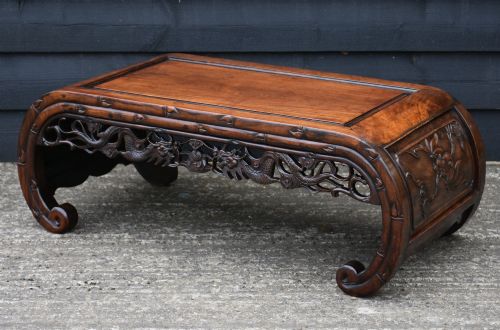
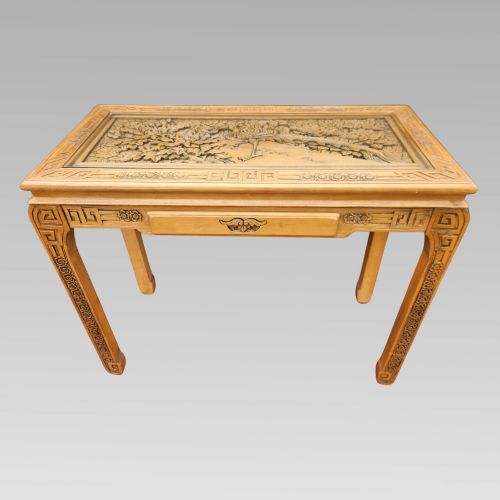
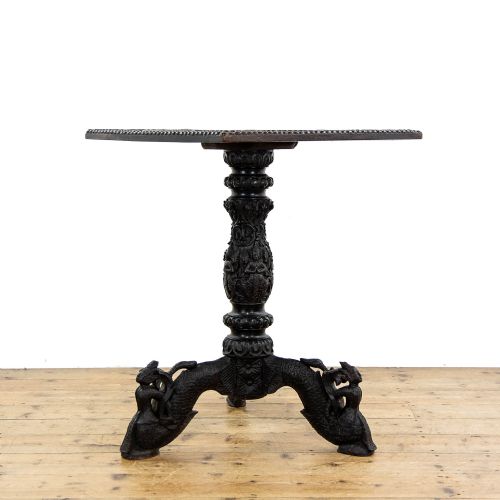
The domestic forms include nests of tables, plant stands, tripod tables, and low opium tables designed for versatile placement in sitting rooms and hallways. Surfaces frequently display elaborate carving depicting dragons, flora, and narrative motifs rooted in Chinese Export, Anglo-Indian, and Asian Folk Art traditions.
Makers utilised dense timbers such as rosewood, teak, and general hardwoods to support deep sculptural relief on aprons, legs, and tops. These functional objects bridge utility and decorative sculpture, serving as focal points within both traditional and eclectic interiors.
What varies in quality
The distinction between tiers of work rests on the crispness and depth of the chisel technique used on the hardwood. Superior examples display sharply defined scales, feathers, and facial expressions on dragons or figures, whereas lower tiers show softened, shallow incision work.
Listings feature hardwood, teak, and rosewood constructions spanning the Victorian era through the 1930s.
The Hand Carved Asian Table Glossary
- Opium Low Table
- A low-profile domestic table traditionally used in East Asia for resting items near floor seating. These pieces often feature carved aprons and dense rosewood construction.
- Root Wood
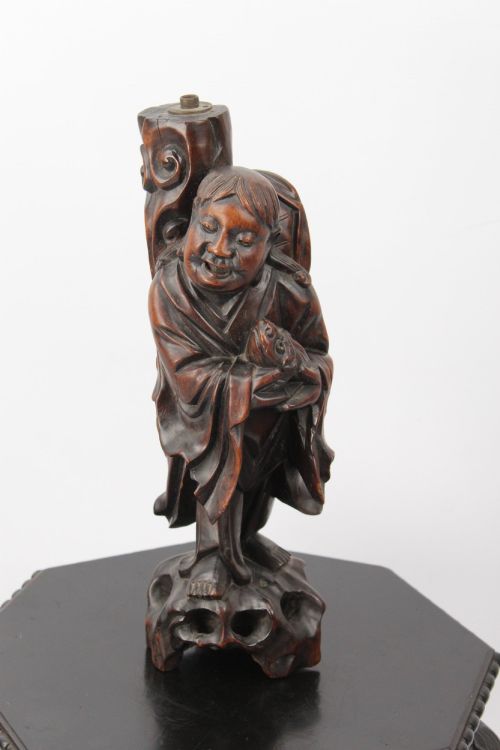
- Timber sourced from the root system of a tree, prized for its gnarled, twisting grain and organic irregularities. Artisans shape these sections into lamps and occasional tables.
- Nest of Tables
- A set of graduated tables designed to slide neatly beneath one another when not in use. They appear in teak and hardwood varieties across early twentieth-century listings.
- Anglo-Indian
- A style describing furniture made in India under British influence, combining local carving traditions with European furniture forms. Pieces typically utilise dense regional hardwoods.
Hand Carved Asian Table: Frequently Asked Questions
How do I style a hand carved asian table?
These tables anchor a room when placed beside neutral upholstery where their detailed woodwork can command attention without visual competition. Their low profiles and varied surface areas suit living spaces as coffee tables or plant stands.
Pair them with restrained modern items to let the dense relief work stand out. Placing a lamp or a single ceramic object on top completes the arrangement without cluttering the carved surface.
What woods were used for these tables?
Carpenters relied on heavy, durable timbers such as rosewood and teak to support intricate, deep-relief carving. These dense materials allowed artisans to carve complex dragons and foliage without compromising the structural integrity of the legs and aprons.
Some pieces also utilise root wood, which presents a twisted, organic grain unique to each individual trunk system. This variety in timber accounts for the substantial weight typical of these Asian tables.
How do I identify a Qing Dynasty table?
Qing Dynasty furniture is generally distinguished by its use of heavy Chinese hardwoods like rosewood and formal motifs including imperial dragons and traditional symbolism. Construction adheres to classical joinery methods without modern metal fasteners.
Examining the depth of the carving on the apron and legs provides clues to the era, as workshop standards during this period emphasised precise hand-chiselled detailing. Comparing the patina and wear patterns to known examples helps confirm the nineteenth-century origins.
Can I use a nest of tables in a small room?
A nest of tables offers exceptional versatility for compact spaces because the smaller units tuck entirely beneath the largest table when floor space is needed. You can separate them across a room to hold drinks or books during gatherings.
Their carved wooden surfaces add texture to tight corners without demanding a permanent footprint. Selecting a teak or hardwood set ensures the pieces withstand the frequent movement required in smaller layouts.