

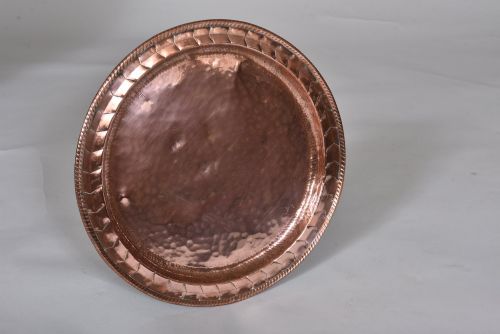
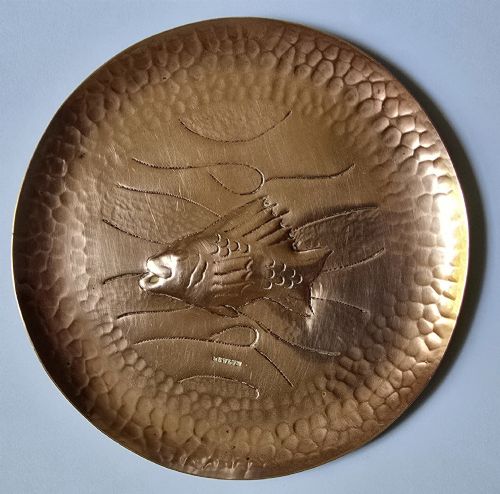


Hammered Copper Dish
A hammered copper dish brings tactile warmth and handcrafted metalwork into a room, spanning the Arts and Crafts and Art Nouveau movements.
Hammered Copper Dish
A hammered copper dish encompasses decorative trays, chargers, card trays, bowls and centrepiece dishes created during periods from the Victorian era through the early twentieth century. These items were fashioned for domestic display and utility, carrying the distinct surface texture left by the maker's hammer.
The versions most commonly met on this page belong to the Arts and Crafts and Art Nouveau styles, alongside Anglo-Indian Raj period examples. They range from small visiting card trays to large decorative chargers and pedestal bowls.
How they were made
Makers shaped sheet metal by hand, raising and sinking the copper into vessels and trays while leaving visible hammer marks across the surface. Repoussé techniques were utilised to push and hammer designs into relief from the reverse side.
Some pieces incorporate brass accents, enamelled cabochons set into the metalwork, or animal motifs, combining copper with contrasting materials to enhance the visual depth of the design.
Hammered Copper Dish Retail Price Guide 2026
Typical asking prices for hammered copper dish among the pieces listed under this phrase on Sellingantiques today, from the lower quarter to the upper quarter. They describe what is for sale here now, not the wider market.
Listings span the Victorian era through the 1920s, featuring copper, brass, and enamel across Arts and Crafts and Art Nouveau styles.
What varies in quality
The distinction between standard production and superior work lies in the crispness and depth of the hand-hammered texture and repoussé relief. Finer examples display deliberate craftsmanship in floral motifs or animal designs rather than monotonous surface stamping.
Design complexity also separates pieces, with pedestals, enamel cabochons, and pie crust edges indicating more ambitious workshop production. The weight of the metal and the harmony between the copper and applied brass or enamel elements dictate the overall presence of the object.
Newlyn
The Hammered Copper Dish Glossary
- Repoussé
- A metalworking technique where the artisan hammers a design into relief from the reverse side of the sheet metal. This method creates tactile ornamentation on chargers and trays.
- Cabochon
- A polished gemstone or enamel piece cut in a convex form without facets. These are frequently set directly into the metalwork of Arts and Crafts vessels.
- Charger
- A large decorative plate or tray used historically for display rather than dining. These substantial pieces often feature elaborate hammered or chased borders.
- Tazza
- A shallow bowl or dish raised on a pedestal foot. They serve as centrepiece dishes in decorative metalwork collections.
- Pie crust edge
- A decorative rim shaped with undulating curves resembling pastry work. This technique finishes the borders of trays and bowls.
Hammered Copper Dish: Frequently Asked Questions
What is a hammered copper dish?
A hammered copper dish is a hand-shaped metal vessel or tray featuring visible marks from the artisan's hammer. These items include card trays, chargers, and pedestal bowls.
They reflect the design priorities of late nineteenth and early twentieth-century movements like Arts and Crafts and Art Nouveau.
How were these dishes used historically?
These pieces served both decorative and functional roles in the home, from holding calling cards in an entrance hall to displaying fruit or flowers as a centrepiece.
Larger chargers were primarily intended for visual display on walls or sideboards rather than practical dining use.
How do I care for antique copper?
Antique copper benefits from gentle dusting and minimal interference with its natural surface evolution. Harsh chemical cleaning agents strip the historic patina that collectors value.
Keeping the metal away from excessive moisture preserves the integrity of any enamel or brass elements.
How do I identify Arts and Crafts copper?
Arts and Crafts copper pieces display hand-beaten textures, organic motifs, and visible evidence of individual craftsmanship. Stigmatised stamps or workshop marks sometimes appear on the reverse.
They often share stylistic traits with contemporary decorative ironwork and brassware from the same period.