

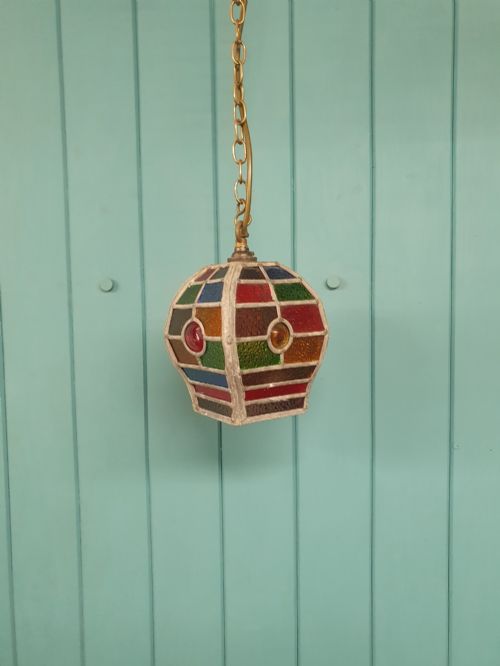
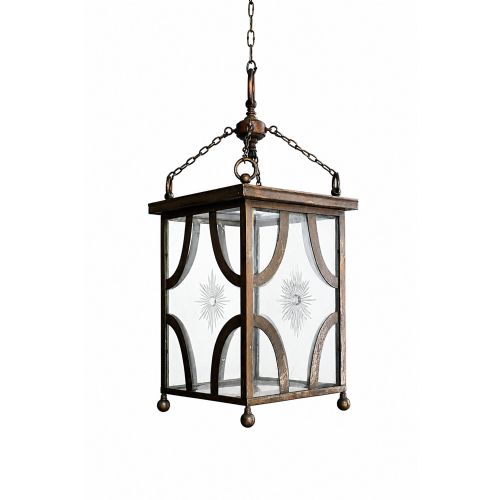
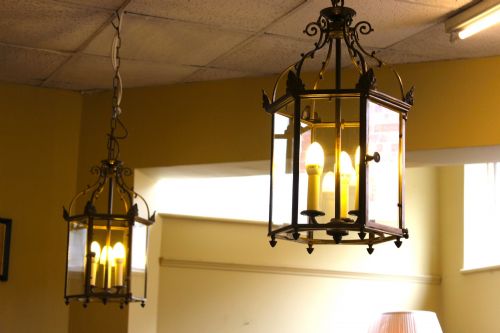
Hallway Lantern Pendant
A hallway lantern pendant hangs ready to catch the eye the moment a visitor steps across the threshold.
Hallway Lantern Pendant
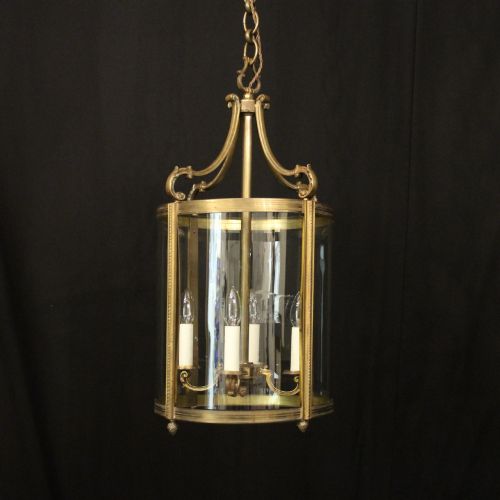
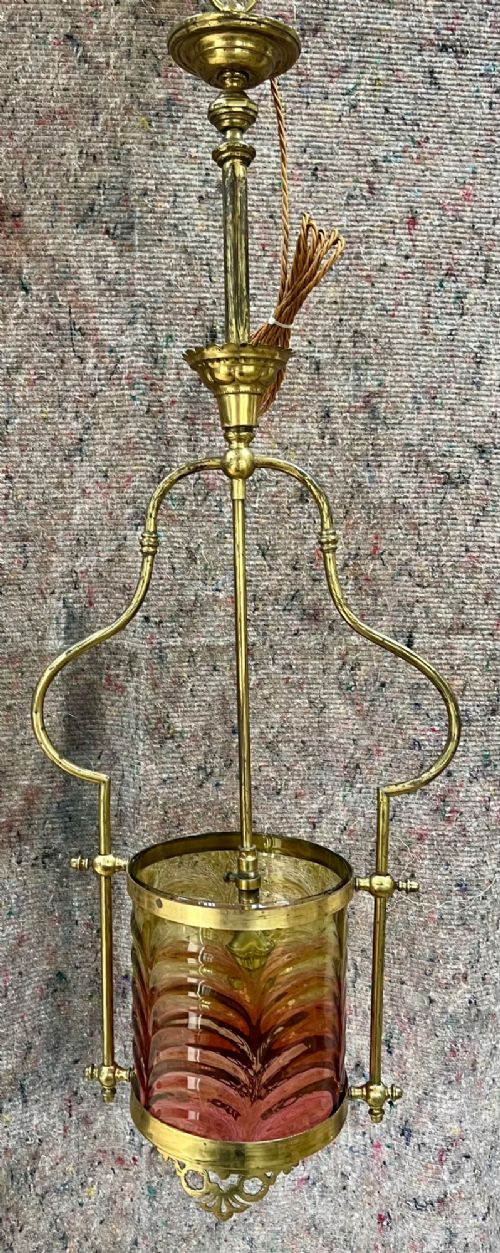
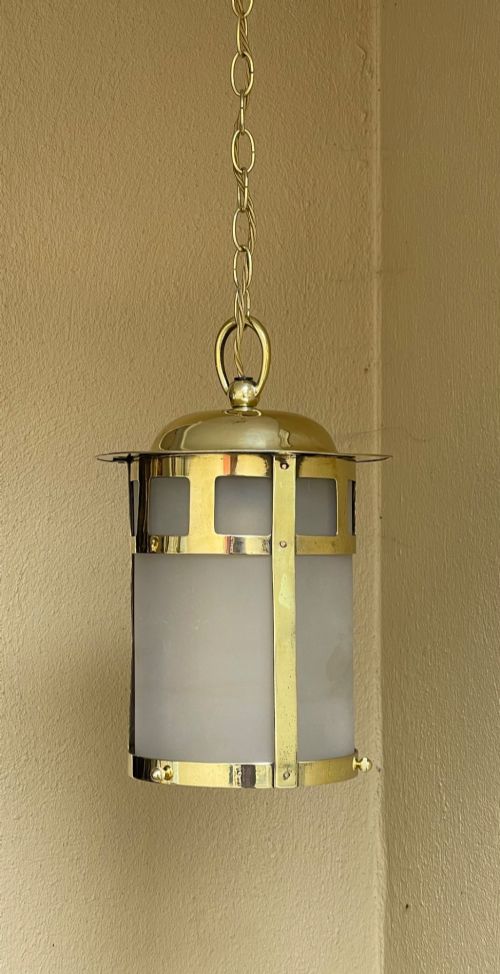
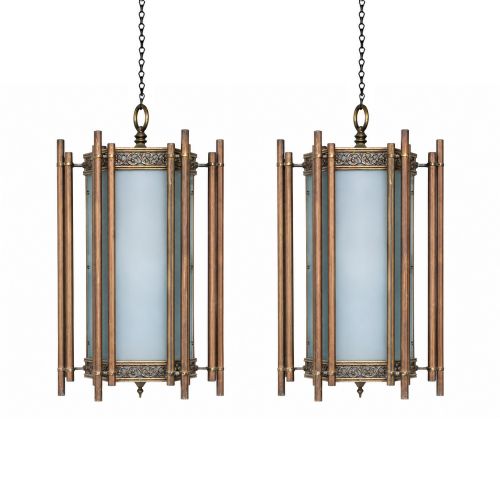
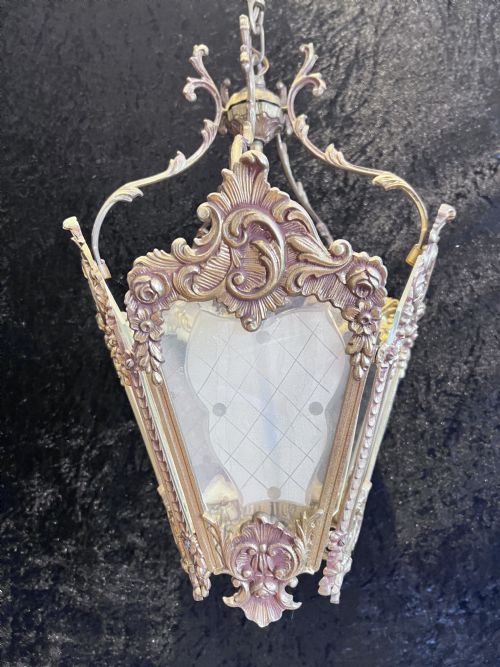
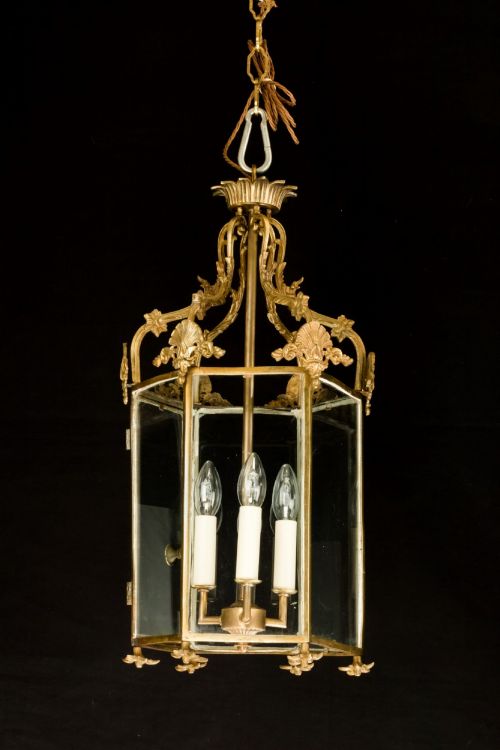
A hallway lantern pendant brings overhead illumination to entrance spaces, combining structural metal frames with transparent or translucent glazing. The pieces gathered here span from the nineteenth century through the Art Deco and Arts and Crafts eras, drawing on Victorian, Edwardian, and French design traditions.
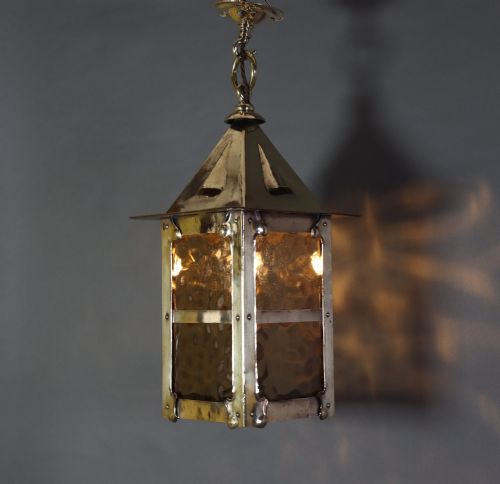
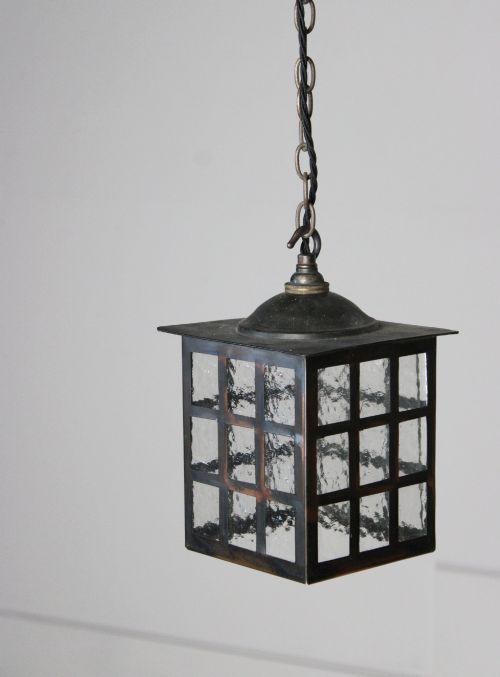
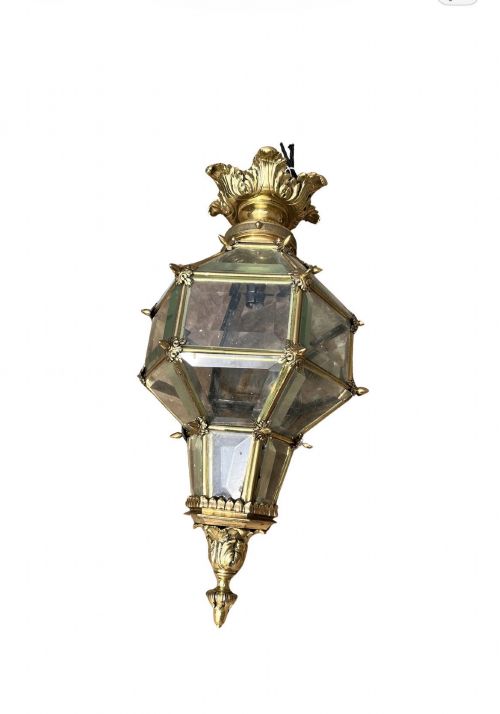
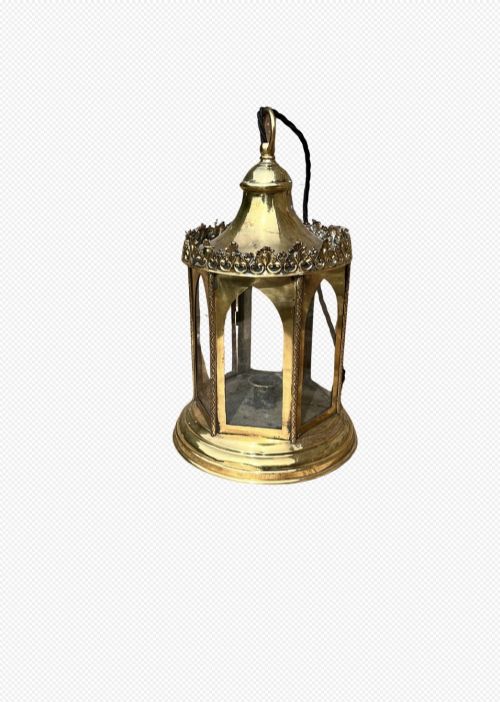
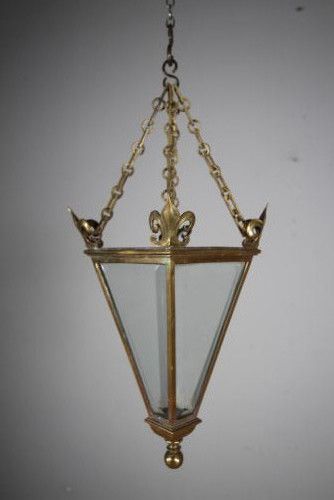
Brass frames dominate the selection, appearing alongside copper, bronze, gilt bronze, and wrought iron. Forms range from simple hexagonal shapes and small glass pendants to monumental French and American hanging lanterns.
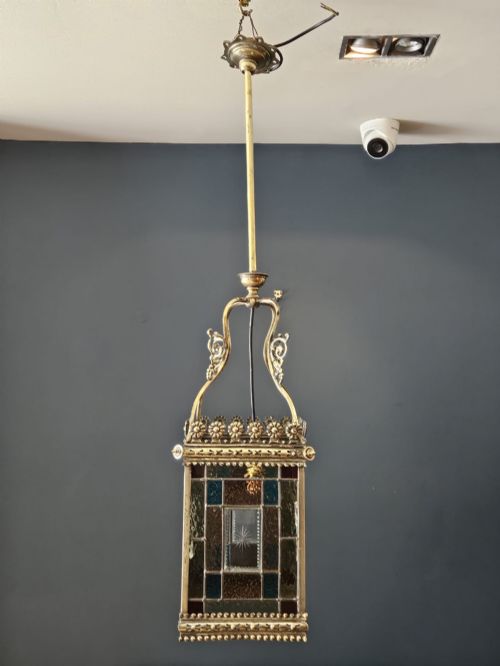
The aesthetic vocabulary stretches across distinct periods and styles, including Gothic Revival, Art Nouveau, Neo-Classical, and French Louis XVI style. Many examples utilise clear, frosted, leaded, stained, or cut glass panels to diffuse the internal light source.
Materials and construction methods
Metals such as brass, copper, and bronze form the durable skeletons of these lanterns, shaped into frames, collars, and decorative mounts. Gilt bronze and wrought iron provide alternative weights and surface textures, from gilded neoclassical ornamentation to heavy hammered dark iron.
Panels of glass are fitted directly into the metal frameworks, employing leaded joints, moulded profiles, or cut glass sections. Some early pieces retain evidence of candle illumination before subsequent conversion to electricity, while others incorporate multiple internal light clusters.
The selection includes pieces spanning the Victorian and Edwardian eras, alongside Art Nouveau, Art Deco, and Gothic Revival movements.
Distinctions in craftsmanship and design
Subtlety of casting and metalwork separates standard production lanterns from exceptional examples. Fine chasing on bronze mounts, precise geometric leadwork, and crisp detailing in styles like Art Nouveau or French Louis XVI indicate superior workshop output.
Scale and proportion govern the presence of a hanging lantern, with larger monumental pairs and heavier cast frames demonstrating greater architectural ambition than simpler utilitarian hallway lights.
F and C Osler
The Hallway Lantern Pendant Glossary
- Gilt bronze
- Bronze that has been coated with a thin layer of gold, providing a rich metallic sheen common in French decorative lighting.
- Lead glass
- Glass manufactured with lead oxide to increase brilliance and weight, frequently utilised in decorative panels and cut ceiling fixtures.
- Hexagonal
- A six-sided geometric form commonly employed in the construction of traditional hall lanterns to distribute light evenly.
- Arts and Crafts
- A design movement emphasising handcraftsmanship, simple forms, and honest materials, reflected in straightforward brass and copper lantern frames.
- Art Deco
- A style characterised by streamlined geometric shapes and modern industrial influences, prevalent in lighting from the nineteen-twenties and thirties.
Hallway Lantern Pendant: Frequently Asked Questions
How high should a hallway lantern hang?
A hanging lantern needs sufficient clearance beneath it for people to walk underneath safely. In standard hallways, the bottom of the fixture typically sits at least seven feet above the floor.
For double-height entrance halls or stairwells, the pendant can hang lower to balance the vertical volume and draw the eye upward.
Were these lanterns originally electrified?
Many nineteenth and early twentieth-century examples began life burning candles or oil before being adapted for modern wiring. Traces of early internal burners or candle sockets often remain visible upon close inspection.
Subsequent rewiring allows these historic fixtures to function safely with contemporary electrical standards while preserving their original exterior metalwork and glass.
Can these lights go outside?
While historic porch lanterns were designed to withstand sheltered exterior environments, indoor hall fixtures lack weatherproofing seals. Exposing interior pendant lights to direct rain or damp conditions risks damaging delicate brass, iron, and electrical components.
Checking the specific construction of each piece ensures it matches the exposure levels of the intended entrance space.
How do I identify French styles?
French lanterns often display distinctive decorative vocabularies such as gilt bronze mounts, neoclassical symmetry, or moulded glass panels. Styles range from ornate Louis XVI revival details to clean twentieth-century bronze forms.
These pieces typically emphasise sculptural metal casting and refined proportions distinct from heavier British or American counterparts.