
Hallway Hat Tree
A hallway hat tree organises daily outdoor garments while anchoring an entrance hall with period character.
Hallway Hat Tree
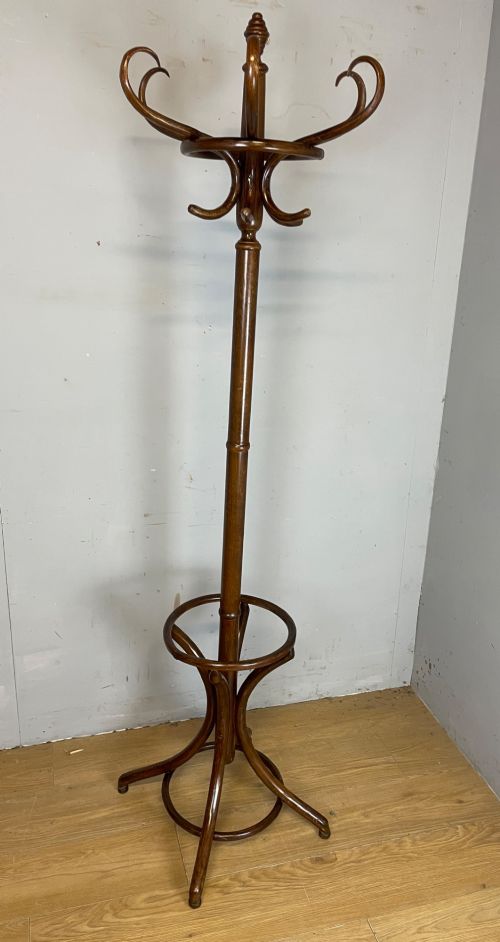
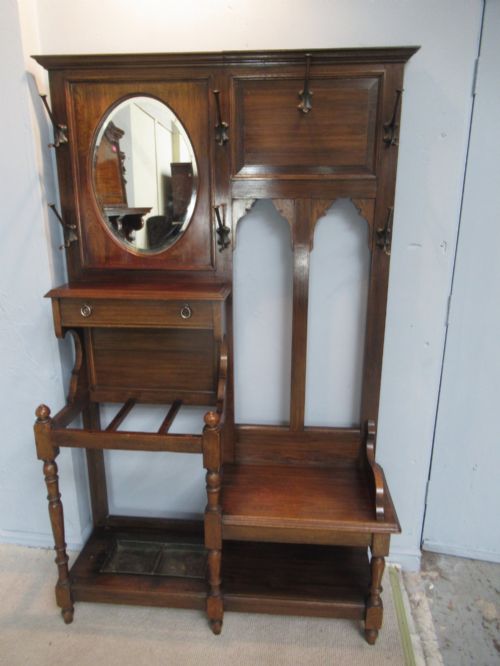
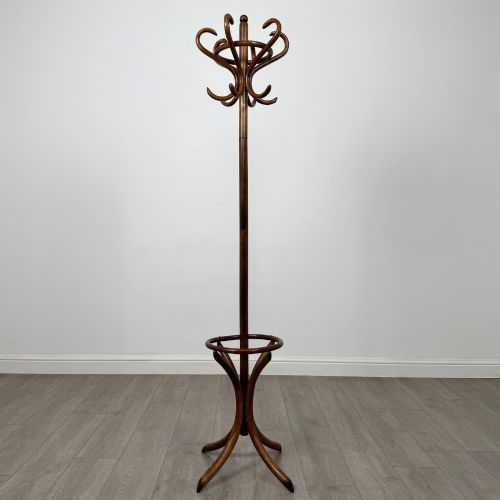
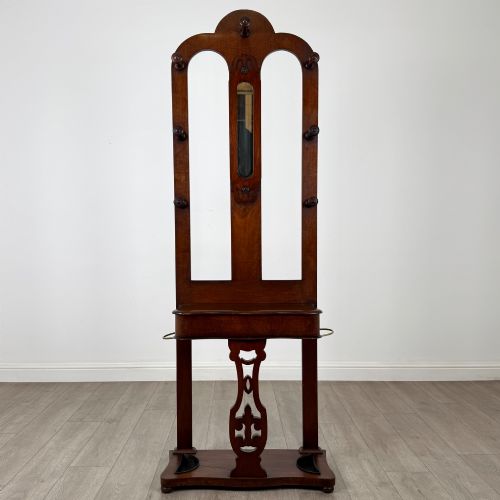
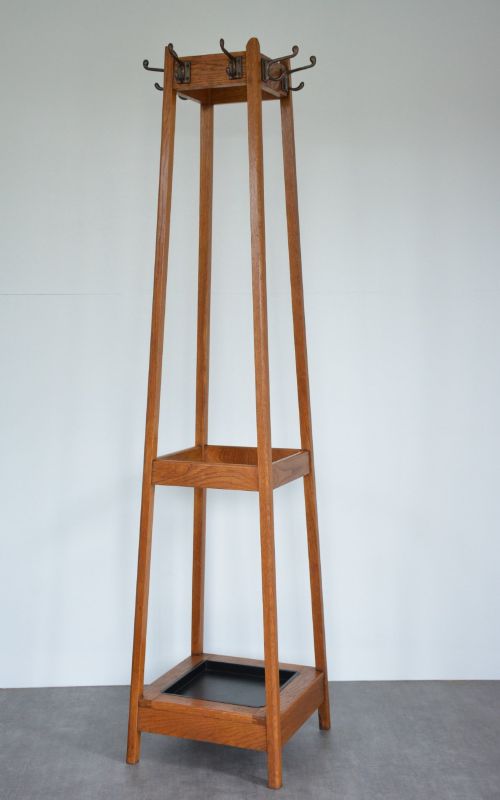
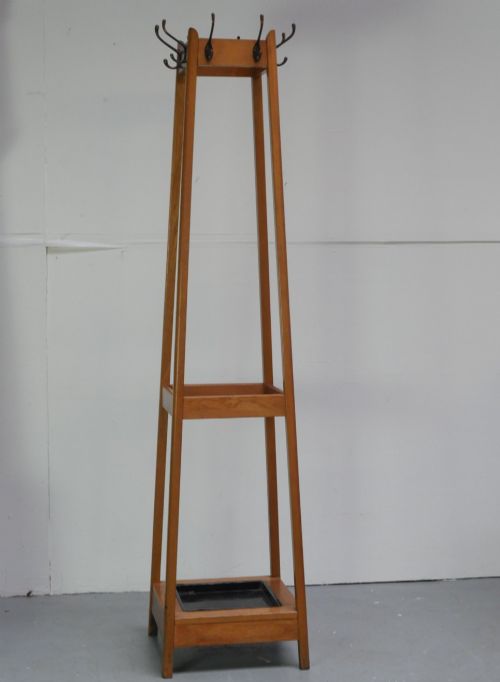
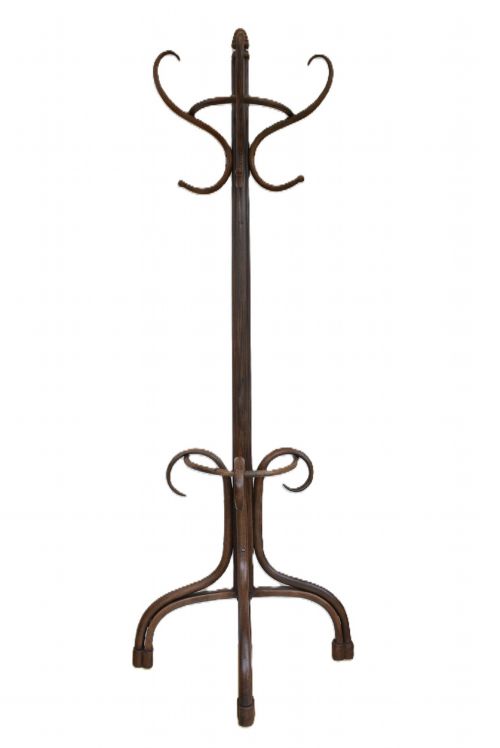
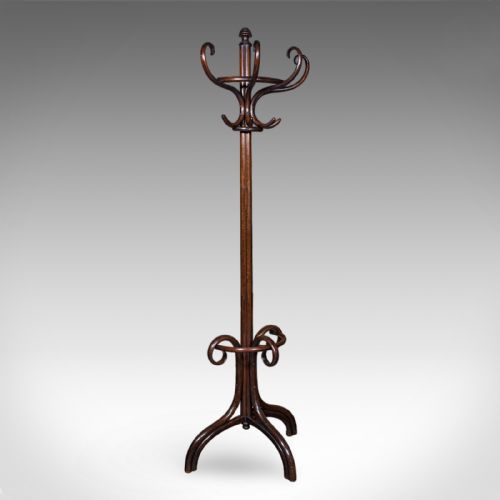
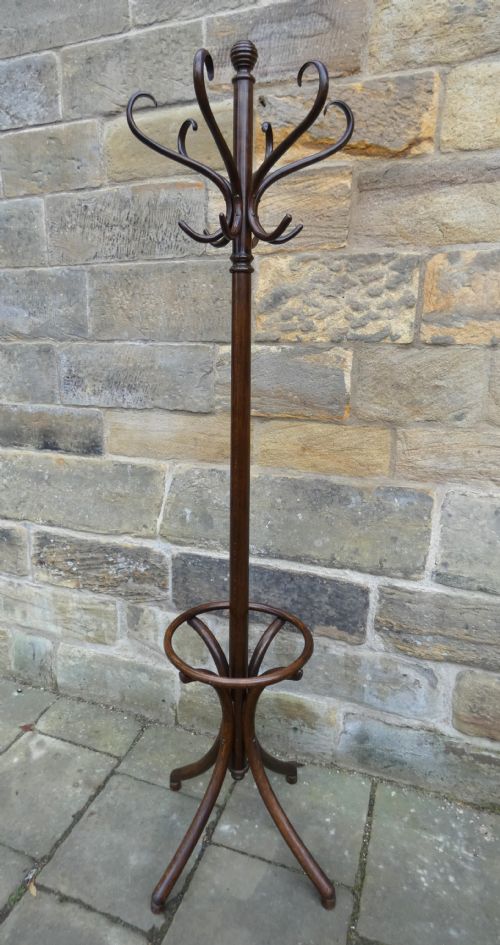
A hallway hat tree provides dedicated hanging space for outdoor wear, hats and walking sticks within an entrance hall. The pieces on this page span the nineteenth century through the early twentieth century, taking the form of substantial timber hall stands or lighter upright coat trees.
Victorian and Edwardian versions appear frequently alongside Arts and Crafts and Art Nouveau designs. Buyers encounter robust oak or mahogany hall stands fitted with mirrors and umbrella holders, as well as steam-bent beech bentwood models originating from the turn of the twentieth century.
Materials and construction
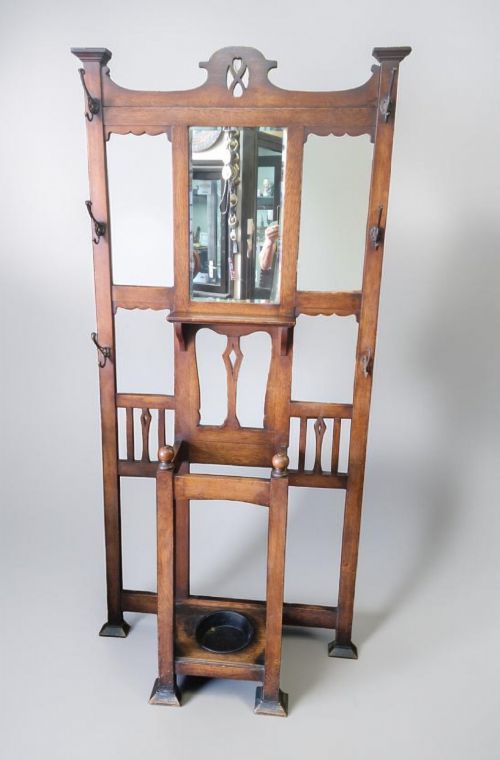
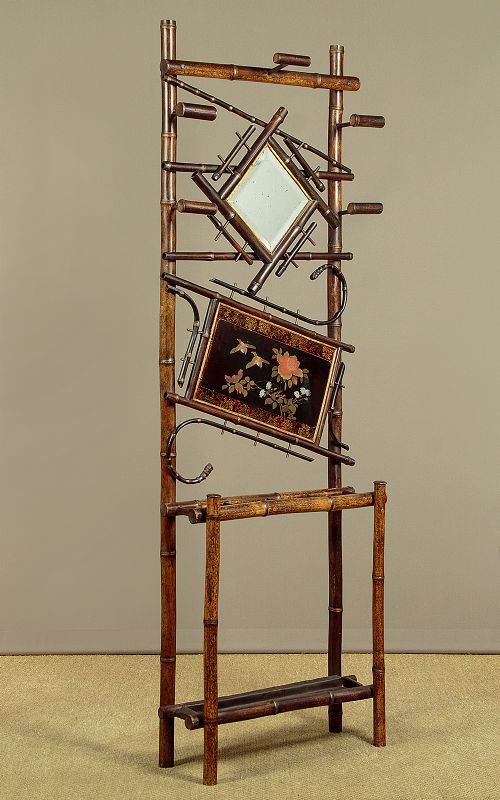
Carpenters constructed traditional hall stands using hardwoods such as oak, walnut and mahogany, frequently incorporating carved details, applied panels and brass or cast iron coat hooks. Many examples include integrated drip trays and metal umbrella holders designed to handle wet weather gear.
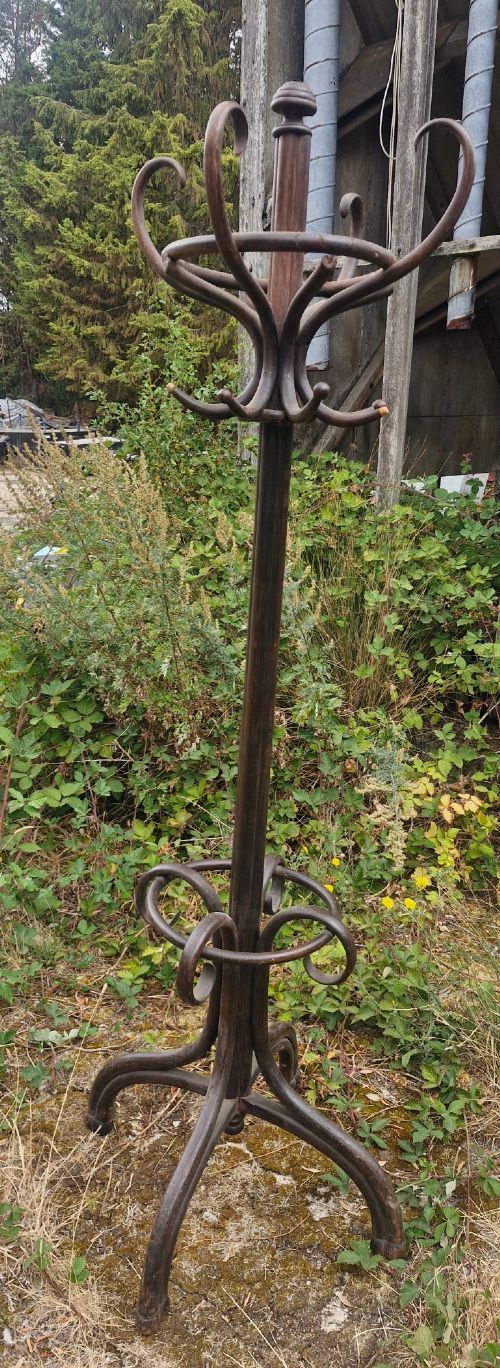
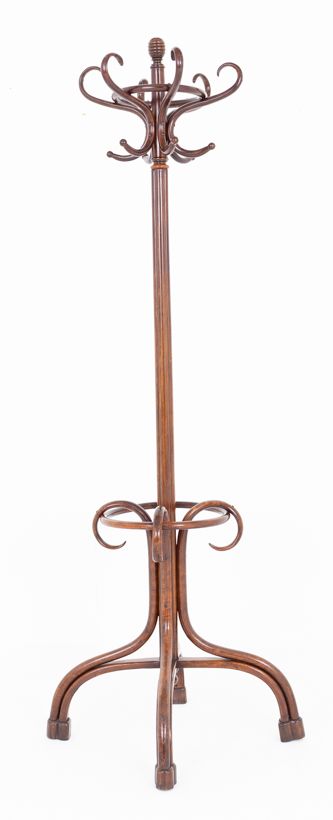
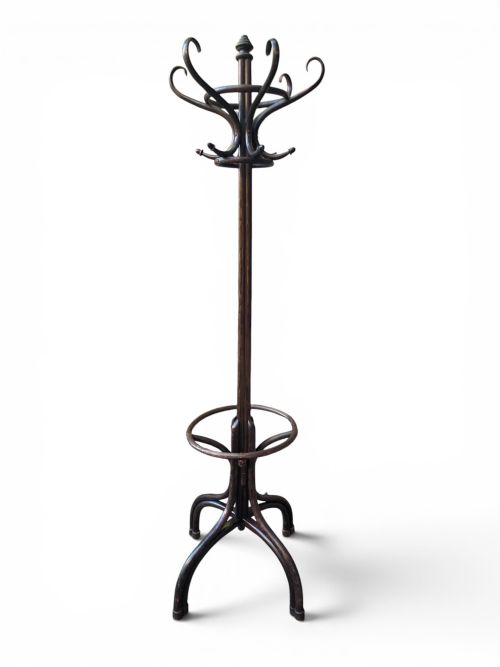
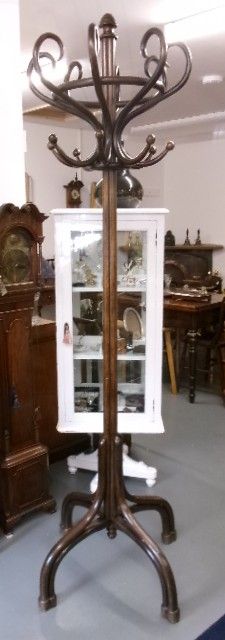
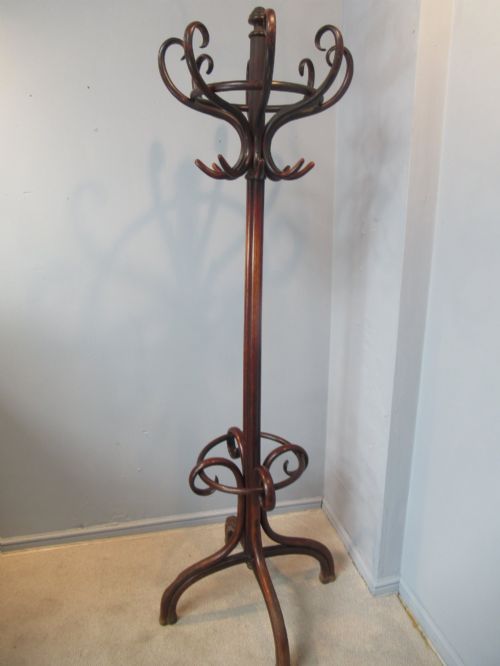
Bentwood examples utilise steam-bent beech shaped into curved frameworks and scrolling hook assemblies, offering lighter profiles. Bamboo and cow horn occasionally appear as alternative framing and decorative materials in specific aesthetic and nineteenth-century pieces.
Periods represented span from the Victorian era through Art Deco and the early twentieth century.
Distinctions in construction and finish
Quality rests upon the integrity of the timber framing and the original condition of structural joints. Pieces displaying hand-carved ornamentation, such as Greenman motifs, or documented workshop attribution demonstrate higher levels of craftsmanship.
The survival of original elements like brass drip trays, backing mirrors and matched coat hooks distinguishes superior examples. Bentwood variations depend on the smoothness of the steam-bent curves and the stability of the central upright column.
Thonet·Astrola·Jas. Shoolbred
The Hallway Hat Tree Glossary
- Bentwood
- Furniture formed by steaming timber until pliable and bending it into curved shapes. This technique created light, durable coat stands popular in the late nineteenth and early twentieth centuries.
- Hall Stand
- A substantial hallway piece combining coat hooks, hat pegs, a central mirror and umbrella storage. These items served as functional entrance furniture in period homes.
- Greenman
- A decorative architectural carving depicting a human face emerging from or entwined with foliage. This motif appears on carved oak furniture from the Victorian and Arts and Crafts periods.
- Demi Lune
- A half-moon shape used to describe hallway stands designed to sit flat against a wall. This profile maximises floor space in narrow corridors.
Hallway Hat Tree: Frequently Asked Questions
What is a hallway hat tree used for?
A hallway hat tree provides practical storage for coats, hats, scarves and umbrellas in an entrance passage. It keeps outdoor garments organised and accessible near the front door.
Period models often include built-in mirrors for final checks before leaving the house, alongside drip trays to catch rainwater from walking sticks and umbrellas.
How do I fit one in a small hallway?
Selecting a half-round or demi-lune format allows the piece to rest flat against a wall without obstructing narrow walkways. Bentwood designs also offer a visually lighter footprint than heavy oak hall stands.
Measuring the available floor space and checking the height of the ceiling ensures the upright frame and hanging garments clear architectural mouldings.
How do I care for antique timber?
Dusting the wood regularly with a dry cloth prevents the accumulation of grit in carved details and joints. Applying an occasional wax polish maintains the moisture and natural sheen of oak, mahogany and walnut.
Keeping the furniture away from direct heat sources and sudden temperature shifts protects the timber from warping and prevents glued joints from drying out.
How do I date a hat tree?
Examining the timber species, construction methods and decorative style helps determine the period of manufacture. Victorian and Edwardian pieces frequently feature heavy carved oak or mahogany, while bentwood examples typically date from around nineteen hundred to the nineteen thirties.
Hardware such as brass coat hooks and cast iron umbrella wells also provide clues regarding the manufacturing era and subsequent updates.