
Hallway Coat Tree Rack
A hallway coat tree rack organises outerwear efficiently, combining hooks, rails and umbrella holders in a single piece.
Hallway Coat Tree Rack
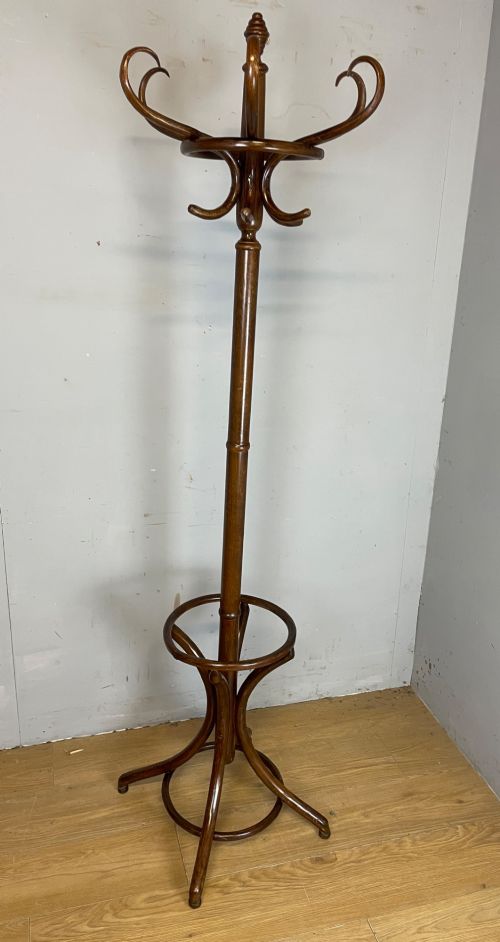
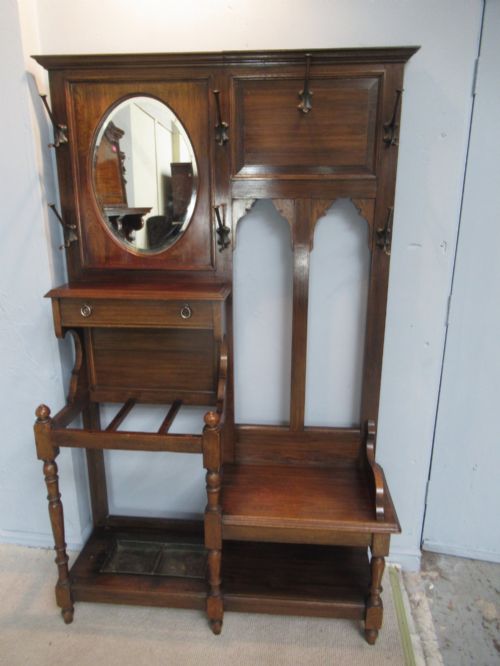
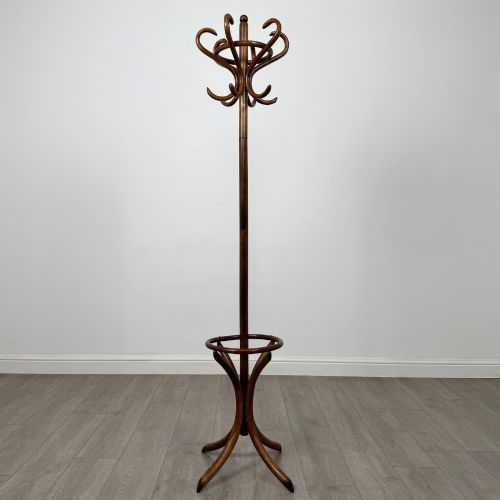
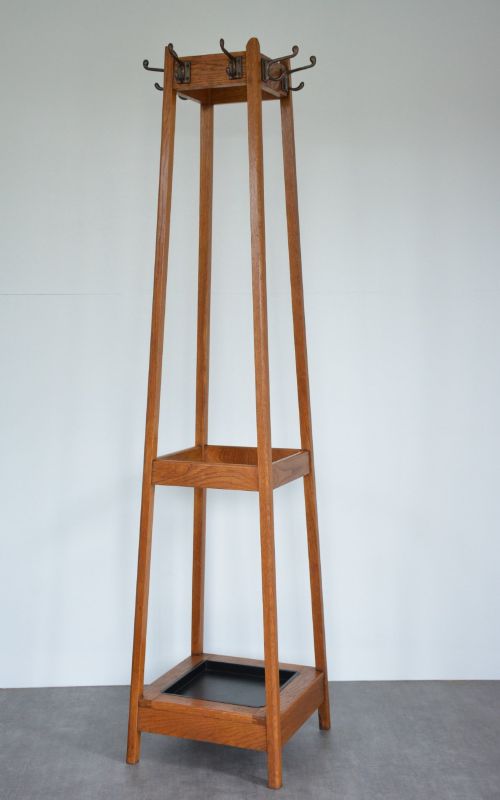
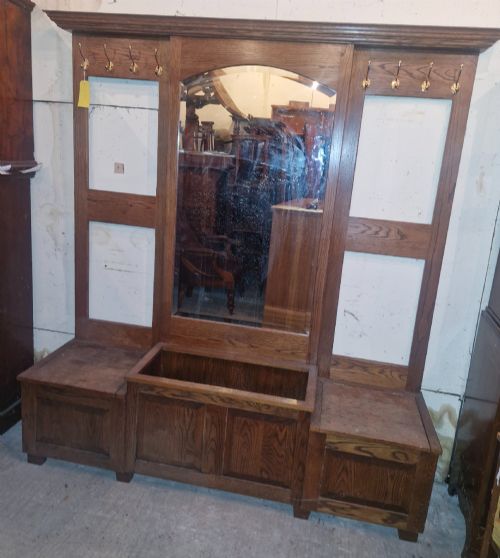
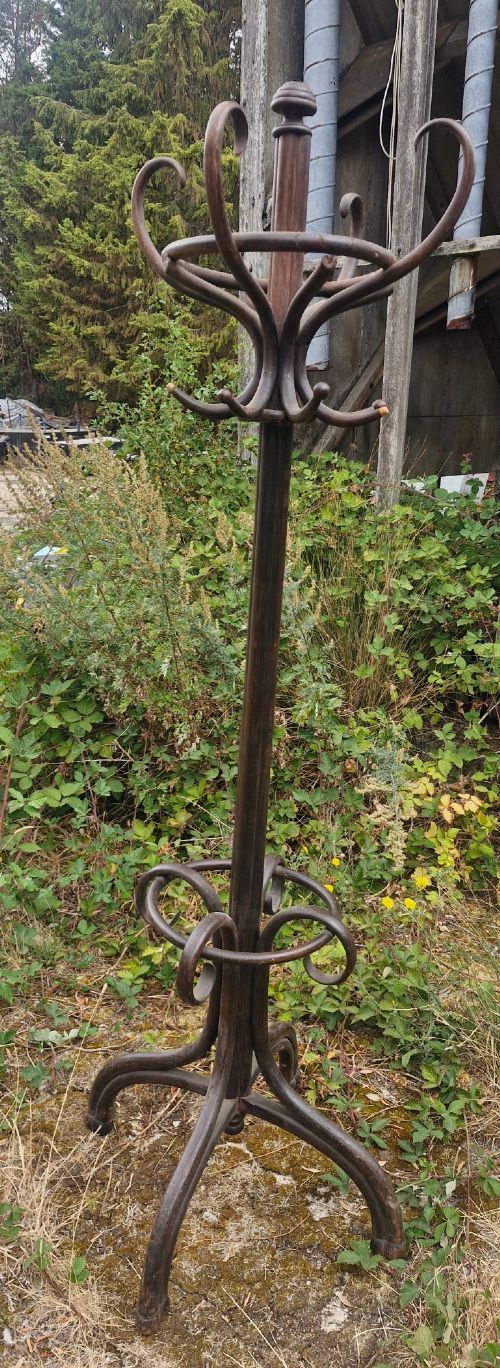
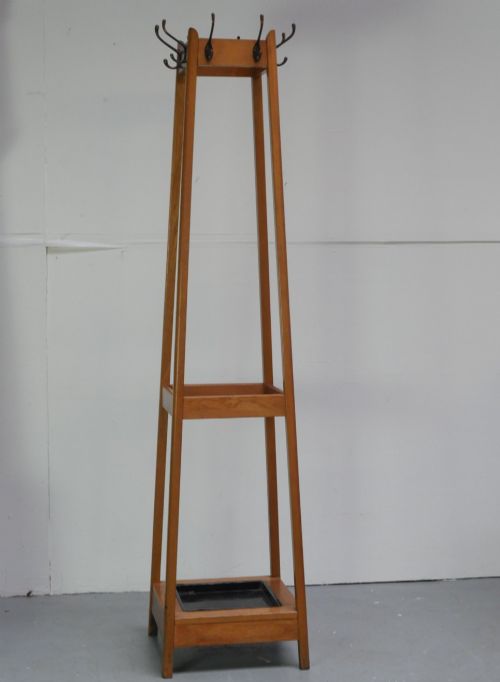
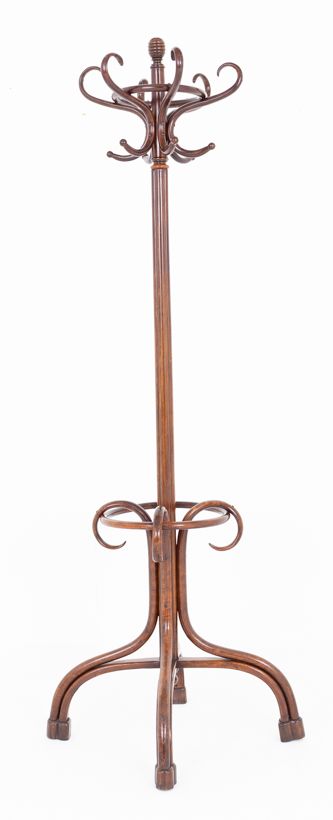
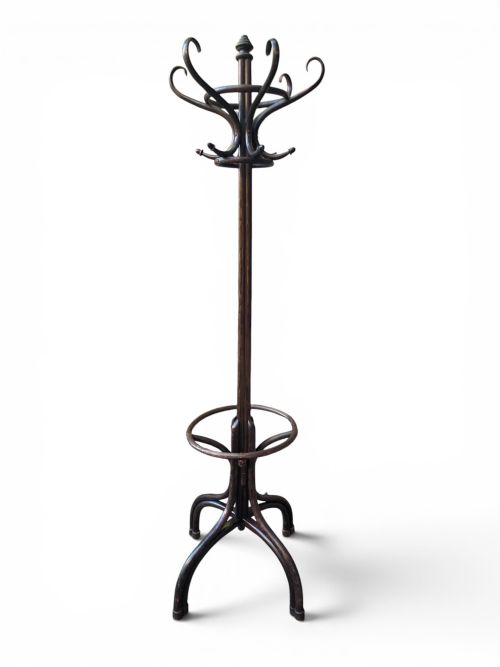
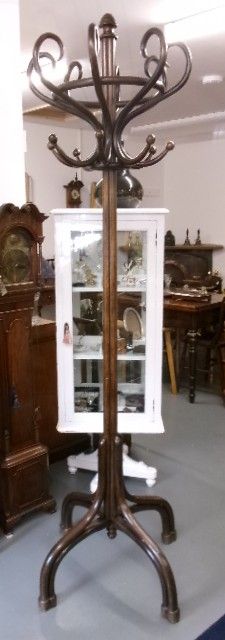
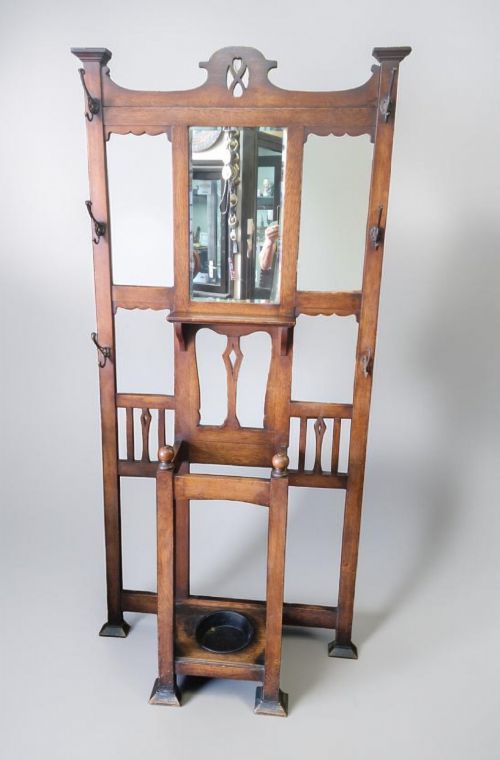
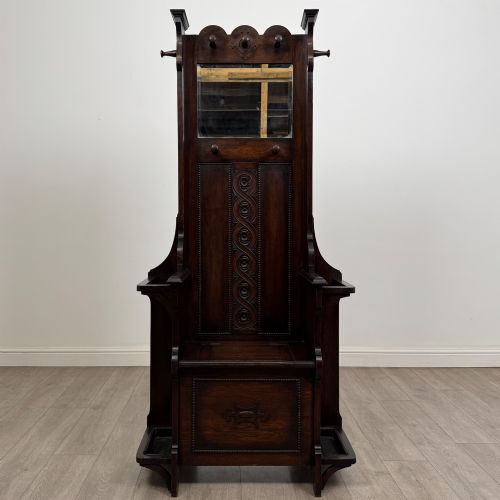
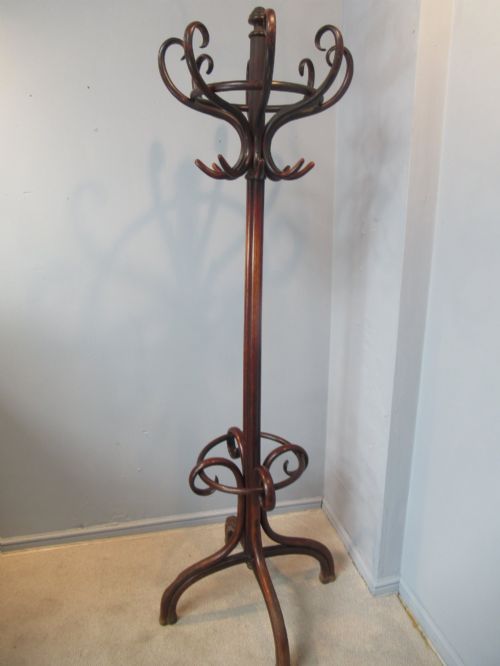
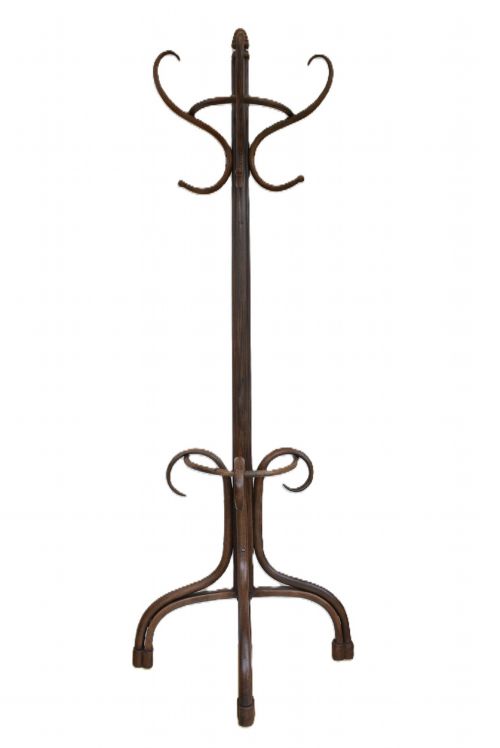
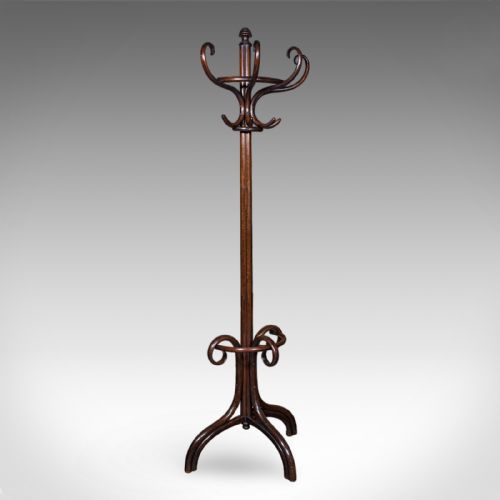
A hallway coat tree rack serves as the primary storage point for outdoor garments, hats and walking sticks upon entering a home. These items range from sturdy oak hall stands with integrated seats and drip trays to slender bentwood designs built for tight entrance spaces.
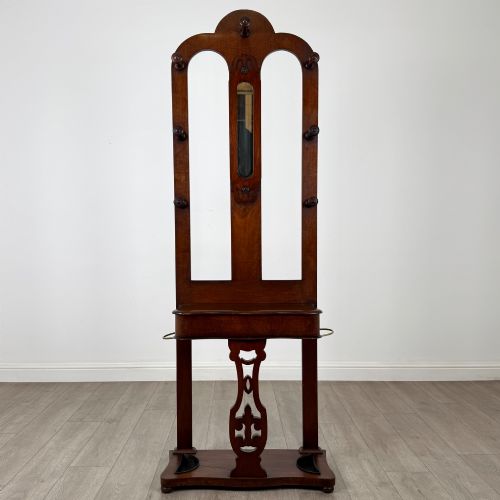
The pieces appearing on this page span the Victorian and Edwardian periods up through the Art Deco and mid-century eras. Oak, mahogany and steamed beech dominate the forms, frequently incorporating brass hooks and cast iron parts.
Buyers meet both substantial timber hall furniture and lighter revolving bentwood frames. Many incorporate mirrors, glove boxes and umbrella holders alongside the standard rows of coat hooks.
How they were made
The construction relies heavily on solid hardwoods like oak, walnut and mahogany, alongside steamed beech for flexible bentwood frames. Carpenters joined structural members using mortise and tenon joints, while bentwood manufacturers utilised heat and moisture to curve timber into continuous loops and arches.
Metal components added durability and function, incorporating cast iron for heavy base frames and drip trays, alongside brass for double hooks and rail brackets. Applied carved ornamentation, such as the prominent Greenman motifs, adorned oak panels during the late Victorian and Arts and Crafts periods.
Materials span solid hardwoods, cast iron, brass and glass, with functional additions like umbrella drip trays.
What varies in quality
The distinction between ordinary and superior pieces rests on the weight of the timber and the integrity of the joinery. Heavier oak and walnut frames with panelled backs and original bevelled mirrors represent higher standards of cabinetmaking.
Minor variations appear in the hardware, where solid brass hooks and heavy cast iron drip trays signal better production than stamped sheet metal fittings. Bentwood pieces maintain greater structural stability when the steam-bent sections retain rigid circular geometry without warping at the stress points.
Jas. Shoolbred·Astrola
The Hallway Coat Tree Rack Glossary
- Bentwood
- Furniture formed by steaming timber until pliable and bending it into curved shapes. This technique produced lightweight, resilient coat stands popular throughout the late nineteenth and early twentieth centuries.
- Hall Stand
- A large freestanding hall furniture piece incorporating coat hooks, a mirror, umbrella stands and frequently a small bench seat with storage beneath. They anchored the entrance space of period homes.
- Drip Tray
- A shallow metal basin placed at the base of a coat stand to catch moisture from wet umbrellas. These trays are often removable for easy cleaning.
- Demi Lune
- A half-moon shape used in the design of hall stands intended to sit flush against an entrance wall. This profile maximises floor space in narrow hallways.
Hallway Coat Tree Rack: Frequently Asked Questions
Where should a hall stand go?
These pieces belong in an entrance hall or porch where coats and umbrellas accumulate. They require sufficient floor space and clearance to allow easy access to hooks and seats.
Positioning them near the main entrance protects interior rooms from wet outerwear and muddy sticks by centralising storage at the threshold.
How do I care for bentwood?
Bentwood coat stands require stable indoor humidity to prevent the steam-bent timber from drying out or splitting. Dust them regularly with a dry cloth and avoid excessive moisture.
Applying a traditional beeswax polish periodically helps maintain the sheen of the beech or mahogany surfaces without building up heavy residues.
Did all hall stands have mirrors?
Mirrors frequently appeared on larger oak and mahogany hall stands from the Victorian and Edwardian eras. They allowed a final check of attire before stepping outside.
Many lighter bentwood and bamboo versions omitted mirrors entirely to maintain an open, slender profile suited to smaller vestibules.
What is a hall tree?
A hall tree is an alternative term for a freestanding coat stand, often featuring vertical posts with multiple tiers of branching hooks. They function as versatile storage units for hats, coats and scarves.
Unlike fixed wall racks, these freestanding structures can be moved between rooms as storage needs change.